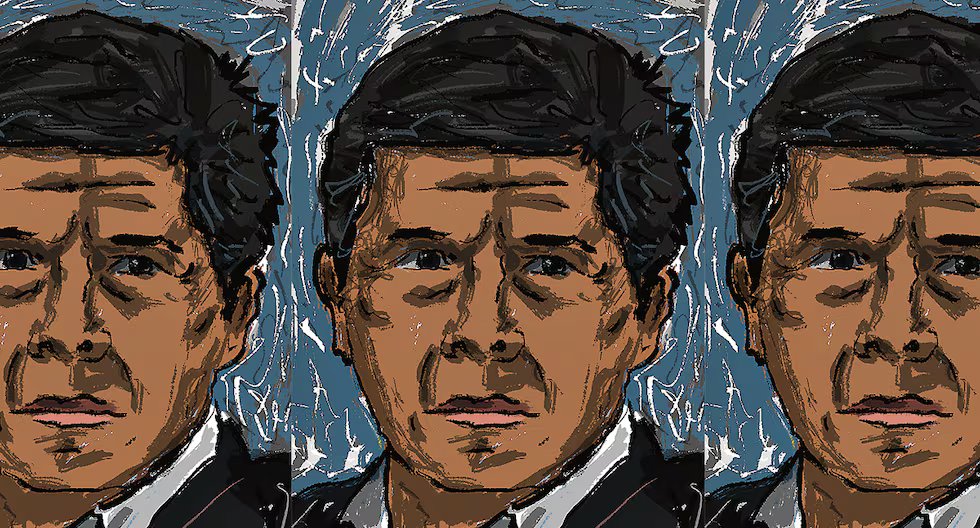
This Tuesday, an embarrassing event was recorded in the Chamber of Deputies. Three groups prevented the lifting of the immunity of former President Pedro Castillo so that the Public Ministry could advance in the investigations initiated three years ago for the alleged crimes of illegal sponsorship, abuse of authority and own passive bribery, in relation to the promotions of officers of the Armed Forces and the National Police during his government. As is known, this is a case that has various testimonies from officers who were irregularly left out of that year’s process.
The three groups we are referring to are Together for Peru, Obras and Ahora Nación. The first two voted against the motion that proposed constitutionally accusing the former president and the third abstained: a way of not appearing as accomplices of the accused before public opinion, but which, in any case, blocked the development of the investigation.
Thus, the initiative obtained 54 votes in favor (from the Popular Force, Popular Renewal and Good Government Party benches), 43 against and 11 abstentions. That is, it obtained the support of the majority, but not the 66 votes – equivalent to half plus one of the total members of the lower house – that it required to be approved. It remains to be established what happened to the 22 deputies who simply did not vote. On the other hand, it is known that at first there were discrepancies within the Good Government Party. Finally, however, the bloc aligned itself with the majority decision, which suggests that the unpleasant experience of having been a tailgate of other parties, determined to carry out a radical agenda and close defense of the former coup leader, has made them reflect. But the behavior of Jorge Nieto’s supporters in the face of the attempt to amnesty Castillo and several of his henchmen for their participation in the events of December 7, 2022, promoted by Together for Peru, Obras and Ahora Nación, will be the test of whether such reflection has occurred…
In any case, the attitude of the aforementioned benches has reminded us of the shameful shields to which we were accustomed in previous parliamentary formations. Only, on this occasion, we have not witnessed the effort of certain congressmen to protect their peers (what was known at the time as ‘otoronguism’), but rather someone who held – and distorted – a higher function. We speak, then, of mere ‘vests’.