A cement brand that seeks to become a ‘love brand’, a company that finds new ways of using its products in consumers themselves; and a campaign that can take two years to hit the market because it needs to convince authorities, overcome obstacles and support an idea that few believed in at the beginning. Peruvian advertising is showing that, behind a good idea, there can be much more than a clever commercial.
The most recent proof came from Cannes. This year, Peru won 16 Lions and two Grand Prix at Cannes Lions, a historic result for the local creative industry. The figure becomes more relevant when you look back: the first Peruvian Lion arrived in 1999, 45 years after the creation of the festival, in 1954. It was a bronze for a detergent promotion that offered 10% more product. It was not even a great brand-building campaign, recalled Alberto Goachet, Partner and CEO of Grupo Fahrenheit.
Since then, the road has been long. But the change is not only in the number of awards that the country receives, but in the way in which companies understand creativity and the role it can play in their businesses.
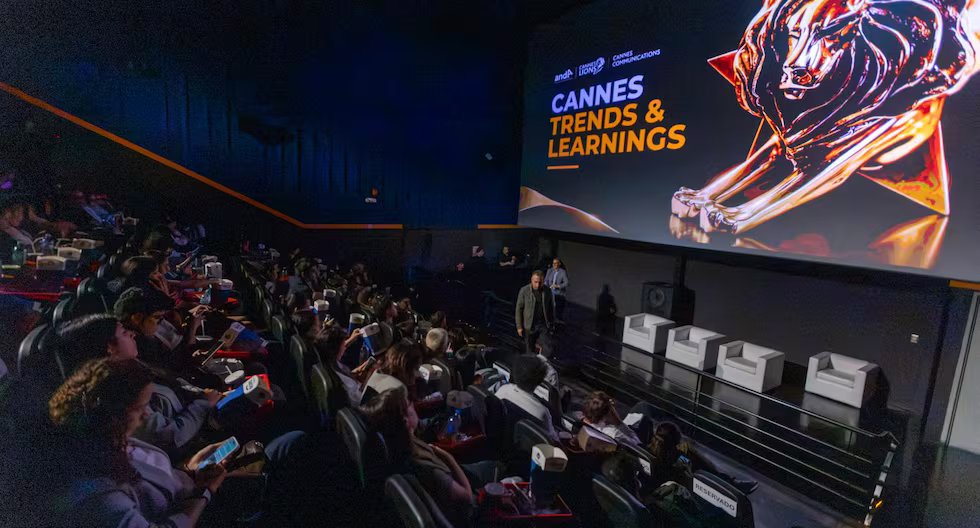
“We are no longer a phenomenon that appears from time to time in Cannes. Those of us who have gone in recent years know that we are no longer seen as a surprise, but rather as “casitos” in Cannes,” commented Goachet during the Cannes Trends & Learning meeting, an event in which the main trends and learnings of the festival were reviewed.

Peruvian advertising is showing that, behind a good idea, there can be much more than a clever commercial. (Photo: Mario Zapata)
For the executive, this evolution also reflects a transformation of Cannes Lions itself. For decades, the festival was dominated by agencies and traditional advertising pieces: television commercials, radio and print ads. Local agency clients had a much smaller presence. That began to change in the late 1990s and early 2000s, when large advertisers understood that creativity could become a competitive advantage.
Goachet recalled the case of Procter & Gamble, whose CEO decided to approach Cannes to understand why competitors like Unilever were connecting with consumers through fresher and more innovative brands. From that experience, changes emerged in the way of working and building brands, with cases such as Old Spice, which went from being perceived as a traditional brand to becoming a proposal associated with entertainment.
“Cannes has made an evolution over the years. Before it was practically just creativity, pure creative ideas, and the business was not seen. Today that evolution means having a real impact,” he explained.
One of the signs of this change is found in a category that, at first glance, seems to have little room to awaken emotions: cement. How can a product associated with construction and a functional decision become a brand that people want to relate to?
That was one of the challenges that Unacem took on. During the event, Gabriel Barrio, the company’s commercial manager, said that the starting point was recognizing that cement had a much greater importance in daily life than consumers perceived. It is present in homes, schools, hospitals and, in general, in the infrastructure that improves the quality of life.

Peruvian advertising is showing that, behind a good idea, there can be much more than a clever commercial. (Photo: Mario Zapata)
“With cement we have homes, education, health. All the gaps that the country has to cover so that we have a better quality of life have to do with construction and, therefore, with cement,” he explained.
The company then decided to stop communicating only the characteristics of the product and build a purpose around the protection of Peruvian families through good construction. To do this, it developed three axes of communication: safe construction, social infrastructure and women’s football.
The bet also involved changing the relationship between advertiser and agency. Barrio acknowledged that the campaign did not meet several of the commercial criteria that are usually required before approving an initiative. It was not directly aimed at selling more cement, it did not promise immediate profitability and it could not be implemented in the short term. “I had all the ‘no’s,’ but it really was a great idea,” he recalled.
The decision was to work on this idea without abandoning the pressure for short-term commercial results. The executive maintained that a brand needs to balance both horizons: allocate part of its resources to immediate objectives and another part to building value in the long term. In the case of Unacem, the campaign went through changes in municipal authorities, technical difficulties and postponements before coming to fruition.
The result, according to Barrio, was a campaign that obtained more than 100 recognitions at different international festivals and that led the brand to be among the eight most creative at Cannes Lions that year.
But the learning that the case leaves behind is not limited to the creativity of the piece. For Barrio, a company must build a work culture that allows agencies to propose disruptive ideas, share risks and receive timely feedback. “For me, this all comes down to respect: respecting our partners that we work with,” he said.

Peruvian advertising is showing that, behind a good idea, there can be much more than a clever commercial. (Photo: Mario Zapata)
The relationship between brands and their audiences is another of the changes that Goachet identifies in the industry. Consumers are no longer just recipients of messages, nor do content creators have to limit themselves to amplifying them. They can also become collaborators of companies, detect innovation opportunities and even participate in the development of new products.
The executive gives as an example the case of Vaseline, a brand that found opportunities in the uses that consumers themselves gave to their products, even when these moved away from their original purpose. Instead of questioning those practices, the company was able to acknowledge them, engage its creators, and explore new line extensions.
“Influencers are no longer just amplifiers of a message. They can participate together with the brand, make innovation and become co-creators,” he said.
The opportunity is to listen before designing a campaign. Companies may have innovation areas and budgets allocated to research, but they are not always sufficiently connected to the daily habits and needs of their customers. For this reason, Goachet recommends creating spaces for conversation with creators and consumers, identifying behaviors that have not yet been explored and validating them before turning them into a commercial proposal.
This view also changes the way we measure success. A campaign should not necessarily be evaluated only by the sales it immediately generates. It can restore the relevance of a brand, modify consumer perception or drive a conversation with social impact. The challenge is to identify that value and demonstrate it with concrete indicators.
The transformation also extends to the tools with which marketing teams work. Artificial intelligence occupies more and more space in industry discussions.

Peruvian advertising is showing that, behind a good idea, there can be much more than a clever commercial. (Photo: Mario Zapata)
Francisco Carvajal, CMO Latam of Integra Metrics, considered that companies should start by identifying what problem they need to solve before deciding what technology to use. AI can be a valuable tool, but it is not necessarily the answer to all challenges.
The executive also warned that technology needs human support and judgment to offer useful results. Otherwise, you may end up returning responses that confirm what the user wants to hear, rather than what they really need to know.
Another pending task is in measurement. Today, e-commerce can evaluate conversions, media focuses on reach, and brand areas follow recall indicators. For Carvajal, the industry needs to move towards a more integrated measurement that allows us to understand the total impact of a campaign from different dimensions.
For Anna Lenka Jáuregui, BCP Marketing and Communications Manager, one of the main challenges for companies is not to let commercial urgency end up displacing long-term initiatives. Brands have immediate objectives to meet, but they also need to reserve time and resources to develop proposals that may take longer to materialize.
The relationship between companies and their agencies is also decisive. Goachet considered that the best results appear when both parties stop working from a supplier-client logic to build a horizontal relationship, based on trust, respect and the possibility of taking risks together.
The executive recalled that more than 20,000 campaigns arrive at the Cannes festival and only around 3% obtain recognition. So the Peruvian jump is nothing more than his fight in a competition that required perseverance, work and the ability to sustain an idea, even when the road becomes complicated.