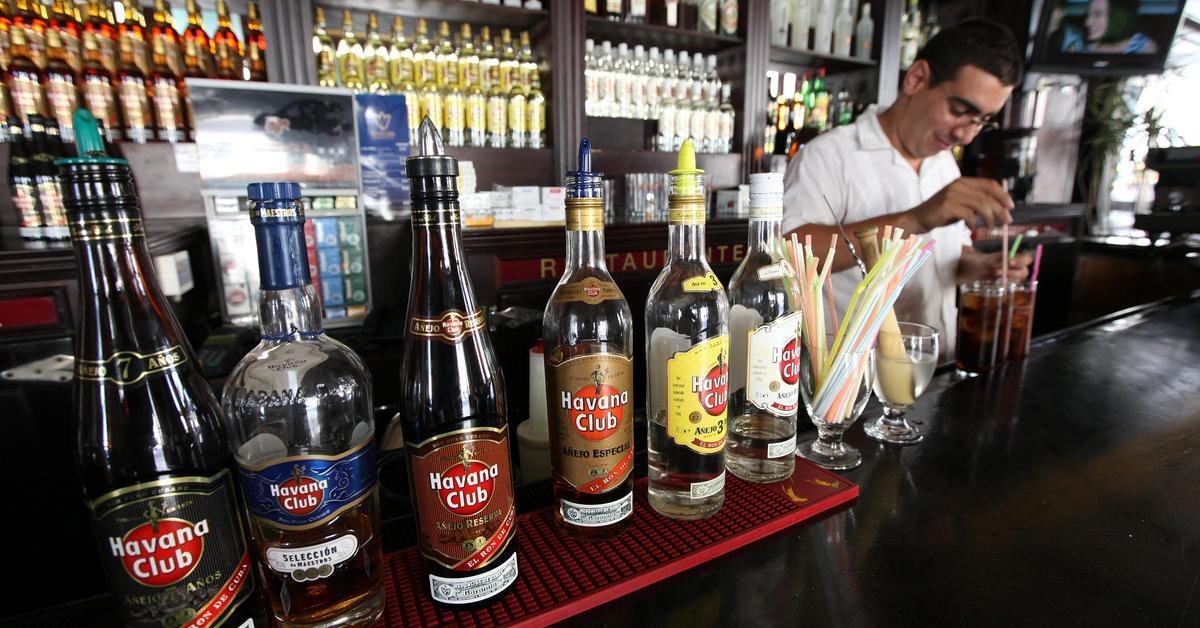

Madrid/A US court ruled this Tuesday against Bacardi, ratifying the rights of the Cuban state company over the Havana Club rum brand in the US.
The 4th Circuit Court of Appeals, based in Richmond, Virginia, rejected Bacardi’s lawsuit against the US Patent and Trademark Office (USPTO), thus supporting the renewal of the trademark that was granted in 2016 to the Cuban state company Cubaexport, despite Bacardi’s strong objections.
The company expressed its discomfort with the decision, considering that it represents “a 10-year grace period granted to the Cuban Government to renew a brand that was previously stolen.” However, the victory could be short-lived, since the registration was valid for a decade and expires this month. Furthermore, in 2024 the United States approved a law that prevented recognition of brands confiscated by the Cuban regime, so there would be no option to renew the concession.
Furthermore, in 2024 the United States approved a law that prevented recognition of brands confiscated by the Cuban regime, so there would be no option to renew the concession.
The legal battle for the right to use the rum name began when the Bacardi family, which produced the drink on the island, decided to leave Cuba after Fidel Castro came to power in 1959. The company claims that it bought the rights to Havana Club from the Arechabala family, which produced the rum until its distillery was confiscated.
Cubaexport was the owner of the marketing rights in the United States since it registered the trademark in 1976, until, in 2006, it was denied a renewal in accordance with the embargo laws that prevented it from paying for the license without first obtaining an authorization from the Office of Foreign Assets Control (Ofac) of the Department of the Treasury that had not been granted.
The state company challenged the denial of the permit in court, which it lost after a ruling in 2012. Later, in January 2016 and during the thaw that occurred under Barack Obama, OFAC changed its decision and issued a specific license that authorized Cubaexport to “conduct all transactions” and make payments “necessary to renew and maintain the registration of the Havana Club trademark.” With the amount paid, Cubaexport obtained the license for the next ten years, until 2026.
Bacardi tried, without success, to resort to administrative channels, which is why it ended up filing a lawsuit in 2021 that sought to reverse the measure, contrary to its interests. The company accused the United States Patent and Trademark Office of making a decision “fraudulently” and its senior officials – including its then director, Kathi Vidal – of violating current legislation by renewing the registration of the disputed trademark ten years after its expiration in 2006.
The courts then dismissed the case, considering that Bacardi – based in Bermuda – could not sue the patent agency directly. In 2024, the appeals court temporarily revived the case, considering that the requirements to enter into the merits of the issue were met. However, the ruling has been negative for the rum factory.
In 1960 the Arechabala family distillery, which had produced rum since at least 1930, was confiscated by Fidel Castro’s government along with its other assets, without any compensation.
Ramón Arechabala, the company’s sales manager who spent time in prison after the expropriation ordered by Castro, escaped the country and arrived in Miami in 1966 with the secret recipe for Havana Club rum. After a few years, he sold the rights to the brand and the original recipe to Bacardi.
After a few years, he sold the rights to the brand and the original recipe to Bacardi.
In 1974, Arechabala’s trademark registrations in the United States for Havana Club rum had expired and that was when Cubaexport registered the trademark. Cuba Ron SA and the French company Pernod Ricard are the owners of Havana Club, lthe brand with the greatest growth within the beverages they offer. Although the market has deteriorated in recent years – also at a global level – the product remains relatively strong.
In 2022, the company sold more than 4.6 million cases of rum, an amount that dropped to 3.1 in 2025. However, Havana Club recorded an 8% growth in its international sales and a 55% increase in brand value, thanks to the sale of high-end rums. Germany, France, Italy, Spain and the United Kingdom are its largest importers and the product is among the most sold rums in the world, although behind Bacardi.