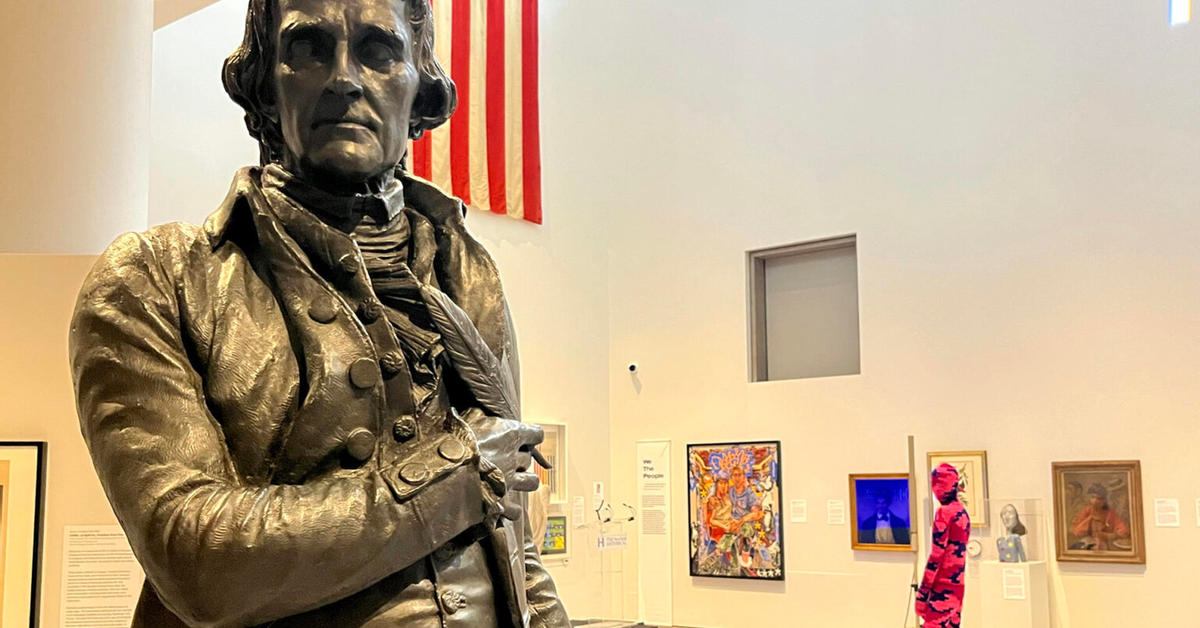
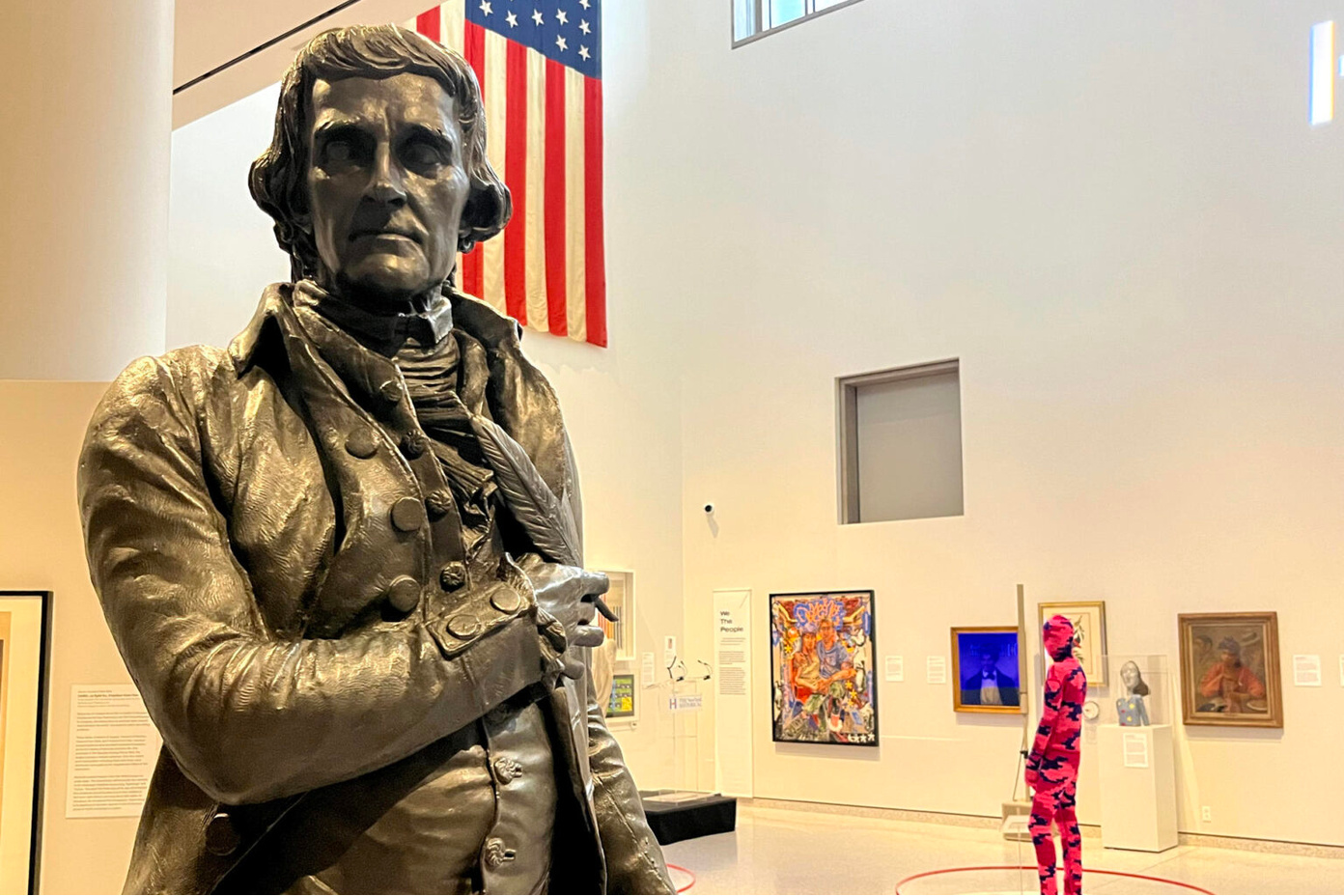
New York/The New York Historical, New York’s first museum, reviews democracy in the United States in a new exhibition on the occasion of the 250th anniversary of the Declaration of Independence, highlighting the historical value of the protests.
The sample, Democracy Matters (Democracy Matters), which opens this Thursday but was presented to the press today, brings together objects from the 18th century to today that explore the evolution of the concept of democracy and invites us to consider the meaning of being American.
The tour focuses on key moments for democratic rights, including voting, freedom of worship, expression and protest, the latter being key, according to historian Valerie Paley, senior vice president and director of the institution’s library, told EFE.
It can be seen “not only that the right to protest is incorporated into our system, but that the United States was born from a great protest: the slogan of ‘no taxation without representation’ that culminated in New York, in July 1776, when colonists tore down the statue of King George III as a gesture of rejection,” he explained.
The United States was born from a great protest: the slogan of ‘no taxation without representation’ that culminated in New York, in July 1776, when colonists tore down the statue of King George III as a gesture of rejection
The statue, Paley adds, was melted down and turned into bullets for the War of Independence (1775-1783), but some elements survived thanks to loyalists to the British Crown and are in the Historical collection, such as the tail of the horse he was riding, which is also on display.
Paley noted that, above all, “protest fuels conversations” and acknowledged that “it can be violent” but also “lead to extraordinary political change,” so it is “important that we have that right to keep those conversations alive.”
Among the treasures in the exhibition is a very rare print of the Declaration of Independence, on display only until July 5, and displayed alongside a nearly unpublished document known as the Declaration of Independence, which was signed by Loyalists.
The gallery is dominated by a huge flag of 34 stars, a symbol of union that was flown in the Civil War (1861-1865) and that did not change, even though the Confederacy adopted its own banner, because President Abraham Lincoln rejected a national break.
Another of the axes, around that time, is racial injustice and its relationship with citizenship: there is, for example, the portrait of Dred Scott, whose demand for rights led to a Supreme Court ruling in 1857 that denied citizenship to any person of African descent, which was later annulled.
The figure of the ornithologist John James Audubon, a European immigrant, is also contrasted with that of a Japanese-American couple interned after Pearl Harbor, through a drawing of the former and a brooch of the latter that represented the same bird.
The Four Freedoms proclaimed by Franklin D. Roosevelt appear on colorful Norman Rockwell posters calling for ‘Save Free Speech’ and ‘Buy War Bonds’, alongside other works of art depicting more recent struggles.
The painting ‘American Dreamer’, by James Harrington, portrays a young Mexican beneficiary of the DACA program, with the American flag fading behind him, which suggests “the disintegration of a dream” but also his “fusion” of identities
In that sense, the painting ‘American Dreamer’, by James Harrington, portrays a young Mexican beneficiary of the DACA program, with the American flag fading behind him, which suggests “the disintegration of a dream” but also his “fusion” of identities.
The exhibition also inaugurates a new wing of the museum, the Tang Wing for American Democracy, which covers some 6,600 square meters of facilities, some of them still to be completed, and which seeks to be “a space for national conversation,” Historical said.
The director of the museum, Louise Mirrer, highlighted the milestone of the inauguration in the context of the 250th anniversary of the United States and announced that visitors will be able to visit the museum during extended hours and pay what they want for admission during that period, in addition to enjoying a special program of activities.
The Tang Wing, named in honor of its patron, philanthropist and historian Agnes Tang, encompasses a ‘Shoe Museum’, now open, and the ‘American LGBTQ+ Museum’, opening in 2027, as well as educational classrooms, a conservation studio and a rooftop.