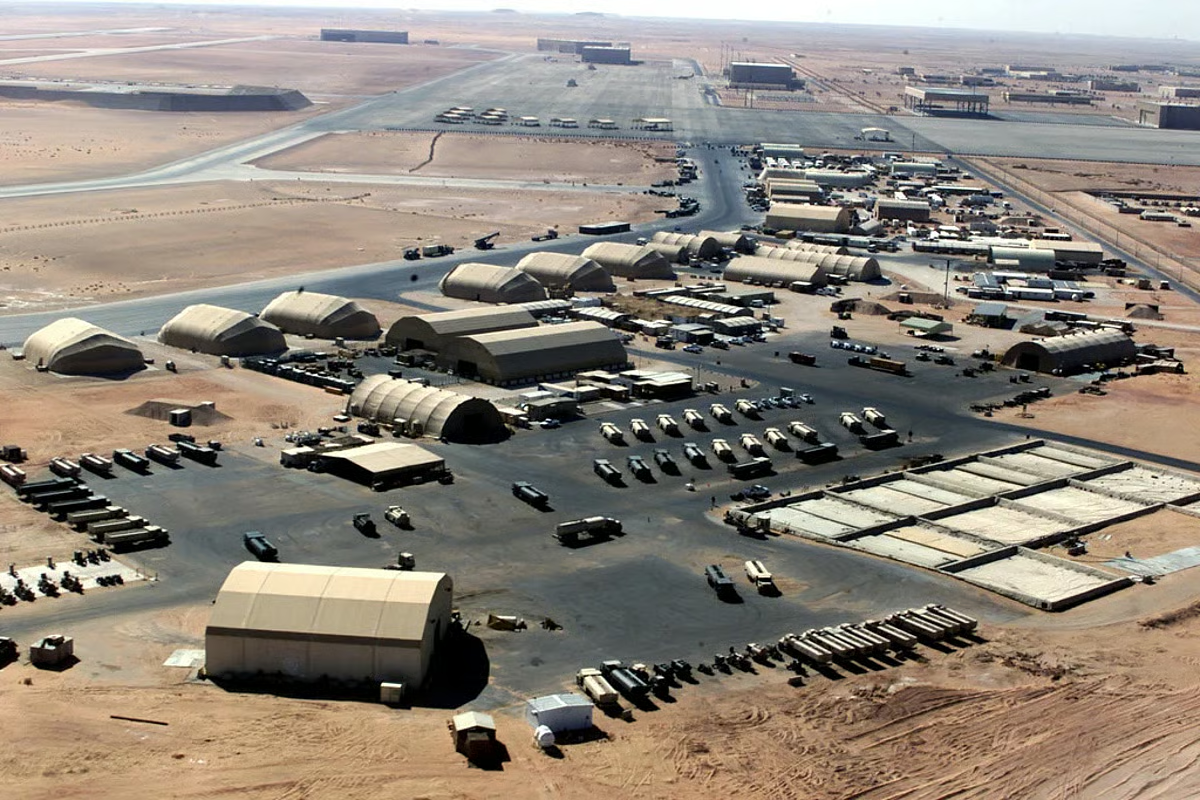
In recent weeks, United States military forces have introduced advanced anti-drone technology developed in Ukraine, in the context of the war with Russia, to reinforce the security of a strategic air base in Saudi Arabia.
The news was released this Wednesday, April 22, by Reuters, which cited sources close to the process. The command and control platform Sky Map is already operational at Prince Sultan Air Base and aims to stop drone attacks that have caused extensive material damage and the death of at least one US soldier.
The decision to adopt the Sky Map system — developed by the Ukrainian company Sky Fortress — is a recognition of Ukraine’s technological advancement after four years of war against Russia. According to Reuters, Ukrainian officials personally went to the Saudi base to train the US military on how to operate this platform, which is widely used to detect and intercept Iranian-made drones, such as the Shahedwhich the Tehran regime has supplied to Vladimir Putin’s army.
Prince Sultan Air Base is located approximately 640 kilometers from Iran and has been the target of successive waves of attacks. The site’s vulnerability was exposed in March 2026, when an E-3 AWACS radar plane was destroyed and several KC-135 refueling planes were damaged in an attack.
Political setback for the Trump administration
This move comes just a month after the US president; Donald Trump has publicly rejected an offer of help from his Ukrainian counterpart, Volodymyr Zelenskiy.
At the time, Trump said in a Fox News interview that the US “didn’t need help defending against drones.”
However, Hudson Institute analysts interviewed by Reuters emphasize that there are persistent gaps in US air defense coverage globally, which will have forced the Pentagon to look for “field-tested” solutions in Ukraine.
How the system works
Sky Map uses rapid processing of radar data and a network of more than 10,000 acoustic sensors, allowing immediate response with interceptor drones.
The base also has systems Merops, interceptor drones from the company Project Eagle (which, however, caused problems as during a test one of the devices lost control and collided with a block of sanitary facilities); the Coyote, interceptors from RTX (formerly Raytheon), used for short-range defense; and the FAAD, a Northrop Grumman command platform that provides threat tracking data.
Despite the recent investment of 350 million dollars (around 328 million euros) by the Pentagon to reinforce defenses against drones, the integration of software Ukrainian is seen as a vital piece to fill gaps that traditional North American and newer systems are failing to resolve.