More and more of us are consulting artificial intelligence platforms like ChatGPT, we use them to generate images or because they make our work easier. However, this virtual boom has real impacts: the water and electricity consumption caused by the AI boom is unsustainable in the long term.
The expansion of the sector triggers the demand for energy and CO2 emissions that aggravate climate change: “In 2025, AI-related data centers consumed more than 448 terawatt-hours of electricity, equivalent to the electricity consumption of France” indicates Kaveh Madani, environmental engineer at the United Nations Institute for Water, Environment and Health, and co-author of the report titled “The Environmental Impact of AI Energy Consumption, impact on carbon, water and territory” (full report here).
“Sometimes, to have fun, we generate images. But an AI-generated image consumes 60 times more energy than a textual response” Madani points out.
“By 2030, data center electricity consumption is expected to generate around 400 million tonnes of CO₂. Offsetting that amount of emissions would require around twice as many trees as there are in the entire UK!” says Kaveh Madani, researcher at the UN Institute for Water, Environment and Health.
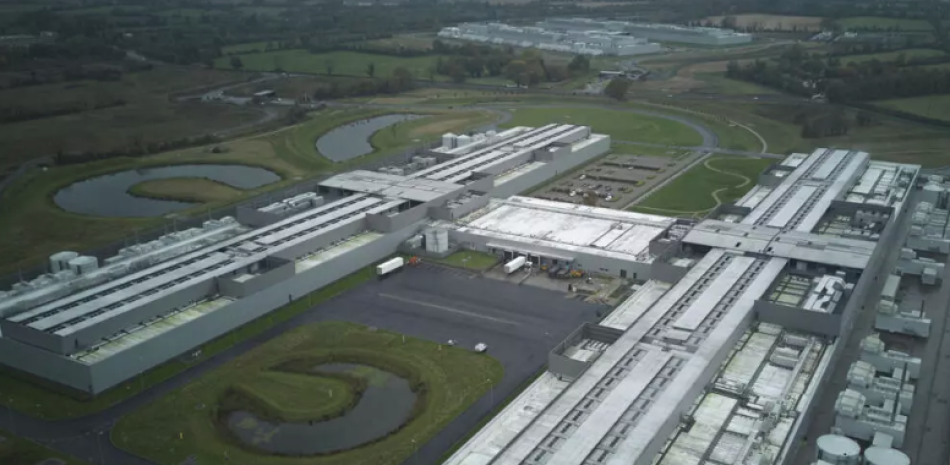
In addition to energy, fears are growing that data centers will deplete water resources in the areas most affected by drought because these infrastructures need water to cool the servers.
“We have calculated that the water consumption associated with energy production to power AI data centers is around 4.5 billion cubic meters of water, which is equivalent to about 2,000 Olympic swimming pools,” adds Miriam Aczel, co-author of the report.
Despite these warnings, specialists emphasize that they do not seek to denigrate artificial intelligence: “It is an incredible technology. But in our report we recommend more transparency about the energy and water consumption of data centers, as well as more efficient systems, and incorporating AI into climate policies,” Aczel tells RFI.
The example of Querétaro, a State with recurrent droughts and that is filled with data centers
More transparency is precisely what Teresa Roldán, environmental activist from Voceras de la Madre Tierra in Querétaro, the Mexican state that concentrates the largest data processing capacity in the country, demands.
The state authorities of this territory in central Mexico have rolled out the red carpet to more than 20 data centers, exempting them from environmental manifestation, a document in which companies detail their policy to prevent and mitigate environmental damage linked to their activities.
Querétaro is also one of the entities of the Mexican Republic that suffers the most from droughts. According to the Mexican National Meteorological Service, the surface area of the state affected by drought episodes has been increasing continuously since 2015, reaching 94% of the territory in 2024.
“The communities surrounding the data centers spend months without water and the entire metropolitan area of Querétaro has suffered blackouts,” warns Teresa Roldán.
In a telephone conversation with RFI, the activist denounces the rise of a sector that does not bring jobs to rural communities, occupies agricultural land and lacks transparency: “How much water are they using? What is their energy consumption? All of this is hidden”points out Roldán.
In 2023, according to data collected by the newspaper El País with the support of the Pullitzer Foundation, the Microsoft company obtained a concession to exploit 25 million liters of water from an overexploited aquifer in Querétaro.
In the UN report, the authors highlight the example of the case of Ireland, “a small country with a disproportionate load of data centers,” according to the experts write. In this European nation, data centers represent 21% of electricity consumption, to the point that the energy operator paused new authorizations for connection to the Dublin region’s electricity grid until 2028.
In Chile, France and Spain, discontent against data centers has also been growing due to their environmental impact. And in the United States, protests are multiplying against data centers that are driving up energy demand and, therefore, the cost of electricity.