Ukraine has sharply escalated its campaign against Russian shipping and oil infrastructure over the past week, striking dozens of shadow fleet tankers in the Kerch Strait and Sea of Azov while long-range drones knocked out another major refinery, deepening a fuel crisis now affecting nearly every Russian region.
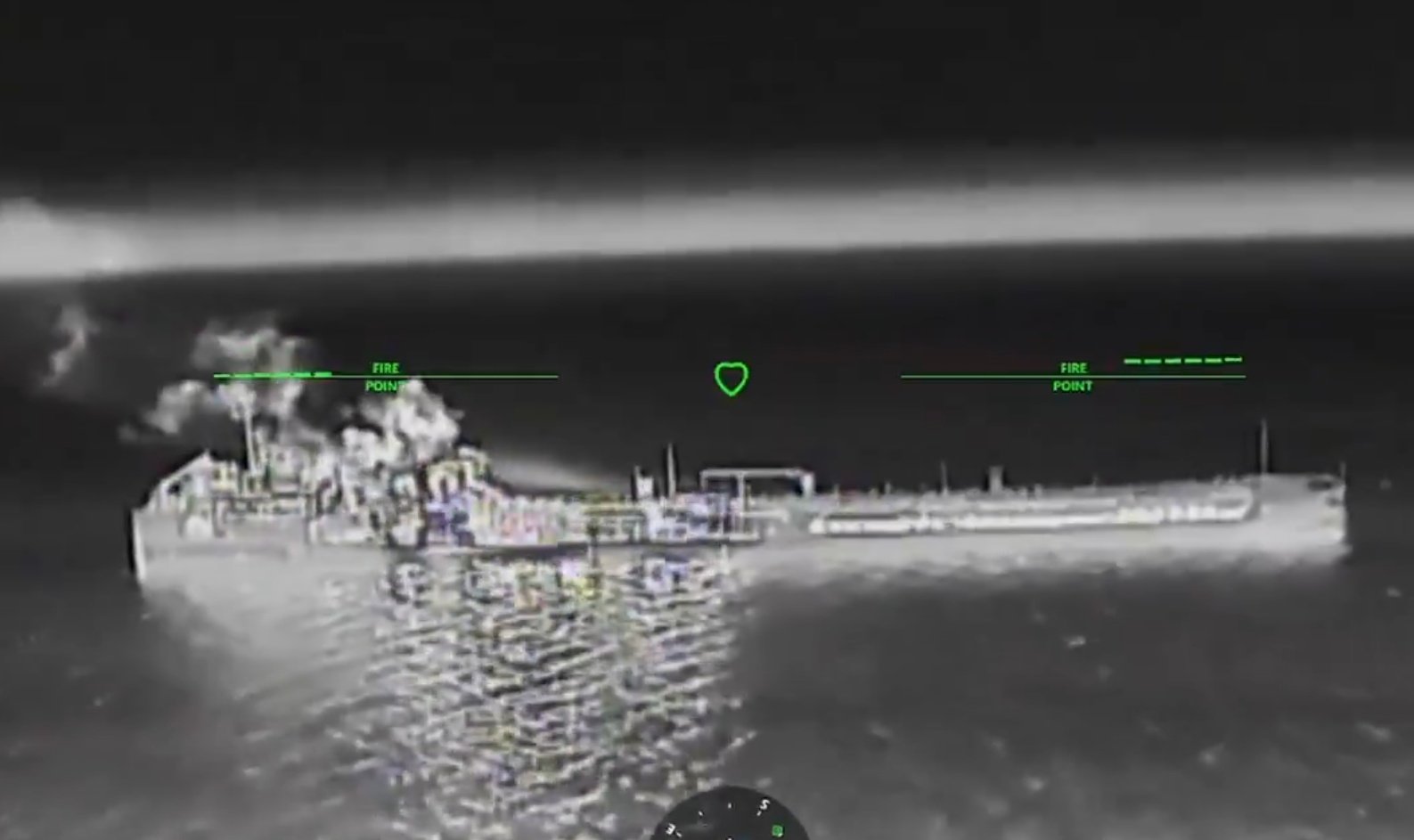
Ukrainian drone forces struck more than 20 Russian shadow fleet vessels over a 72-hour span, hitting at least 19 tankers with FP-2 kamikaze drones. The first strikes, overnight Sunday into Monday, set fire to a pair of tankers each carrying around 7,000 tonnes of fuel on the Taganrog-Crimea route. The following night, Ukrainian forces destroyed eight more tankers, named by military outlet Defense Express as Venera-3, Sanar-1, Sanar-17, Climene, Teti, Alexey Savrasov, Penelope and one unidentified vessel, all small, Russian-flagged tankers of around 7,000 deadweight tonnes linked to sanctioned crude transport. Ukraine’s Unmanned Systems Forces said more than nine further tankers were hit by drone swarms above the Kerch Strait. Russia confirmed damage to two tankers and injuries to two sailors, while satellite fire-monitoring systems showed a blaze covering more than a square kilometre in the Kerch Strait shipping channel. At least one vessel was left adrift, its crew forced to abandon ship.
Among the vessels hit was a Chevron-chartered tanker, which was struck by a drone off Russia’s Black Sea coast. The Marshall Islands-flagged suezmax Yasa Polaris was hit while inbound for Caspian Pipeline Consortium loadings near Novorossiysk.
The campaign, part of a 40-day operation authorised by president Volodymyr Zelensky, aims to cut into oil export revenue that funds roughly a quarter of Russia’s state budget and to disrupt the sea link supplying fuel to occupied Crimea.
Refineries came under renewed pressure too. On July 6, Ukrainian drones struck the Omsk refinery, Russia’s largest and a leading gasoline producer, in a strike from more than 2,400 km inside Russian territory, hitting the primary processing unit and halting output. It was the sixth major Russian refinery forced to shut fully or partially since the start of June. Lukoil’s Nizhny Novgorod refinery, the country’s fourth-largest, was struck again on July 2, days after restarting from a strike on June 24.
The combined pressure has pushed the resulting fuel crisis into nearly all of Russia’s 83 regions, with more than 50 officially reporting shortages and several, including Irkutsk and Transbaikal, declaring a state of heightened alert. Crimea imposed a full ban on fuel sales to ordinary motorists last month. Elsewhere, purchases are commonly capped at 20-30 litres per vehicle, with jerry can filling largely prohibited. Industry estimates put Russian gasoline output at around 85,000 tonnes a day against peak summer demand of roughly 110,000 tonnes, a shortfall of about 25,000 tonnes daily. Analysts estimate a quarter to a third of Russia’s refining capacity is currently offline; the central bank cited “a temporary contraction in motor fuel production” as an inflation risk when it trimmed interest rates by only a quarter point this week. President Vladimir Putin has acknowledged the shortages but called them “not critical,” while Moscow has banned gasoline and jet fuel exports and is exploring fuel imports to ease the strain.
Kyiv’s maritime campaign has also opened a diplomatic rift beyond Russia. Ukraine has told Athens it will keep attacking Russian vessels on the high seas under its right of self-defence per Article 51 of the UN Charter, Euractiv reported, after a Ukrainian sea drone carrying 100 kg of explosives, reportedly aimed at a Russian tanker, was found near the Greek island of Lefkada in May. Greece lodged three formal protests and sought an apology, citing fears the Mediterranean could become a war theatre and hit tourism. Kyiv apologised publicly while privately signalling no change in policy, and said Athens had breached a 1996 friendship treaty requiring consultation before going public.