The last war can be called the “War of Hormuz”. Today, after I gave birth War Finally, can this strait be transformed from a blackmail card into a common economic asset? The short answer: Yes, but not in a European-style “common market” format, nor in an economic union between Iran and the Gulf states. What is realistically possible is the creation of a functional economy around the strait: a joint maritime administration, an insurance and risk fund, secure trade and customs corridors, energy connectivity, and port and logistics projects extending from Musandam, Fujairah, and Sohar to Bandar Abbas, Jask, and Jebel Ali. That is, an economy of interests, not an economy of complete political reconciliation.
The importance of the idea stems from the size of the bet: before the war, Hormuz was transiting about 20 million barrels per day from Oil And petroleum products, i.e. approximately one-fifth of global consumption of petroleum liquids, and more than a quarter of seaborne oil trade. As for liquefied natural gas, the strait carried about a fifth of global trade, most of which was from Qatar to Asia. This means that the Hormuz disturbance does not strike Iran Or just the Gulf, but it hits Asian factories, electricity prices, ship insurance, and markets Inflation In the world. But the war also revealed that geographic strength can turn into collective weakness. Closing or disabling the Strait does not give Iran a free “weapon,” but rather isolates its southern ports, stifles the trade of small merchants in Bushehr and Bandar Abbas, raises the cost of imports, and makes any lifting of sanctions less beneficial. In contrast, countries cannot Gulf Relying endlessly on American protection or on limited bypass lines. FThe UAE Saudi Arabia has the capacity to bypass Hormuz via Fujairah and Yanbu, respectively, but the available excess capacity does not compensate for the usual flows. As for Qatar andKuwait andBahrain andIraq It is more exposed, especially in imported gas, products and energy.
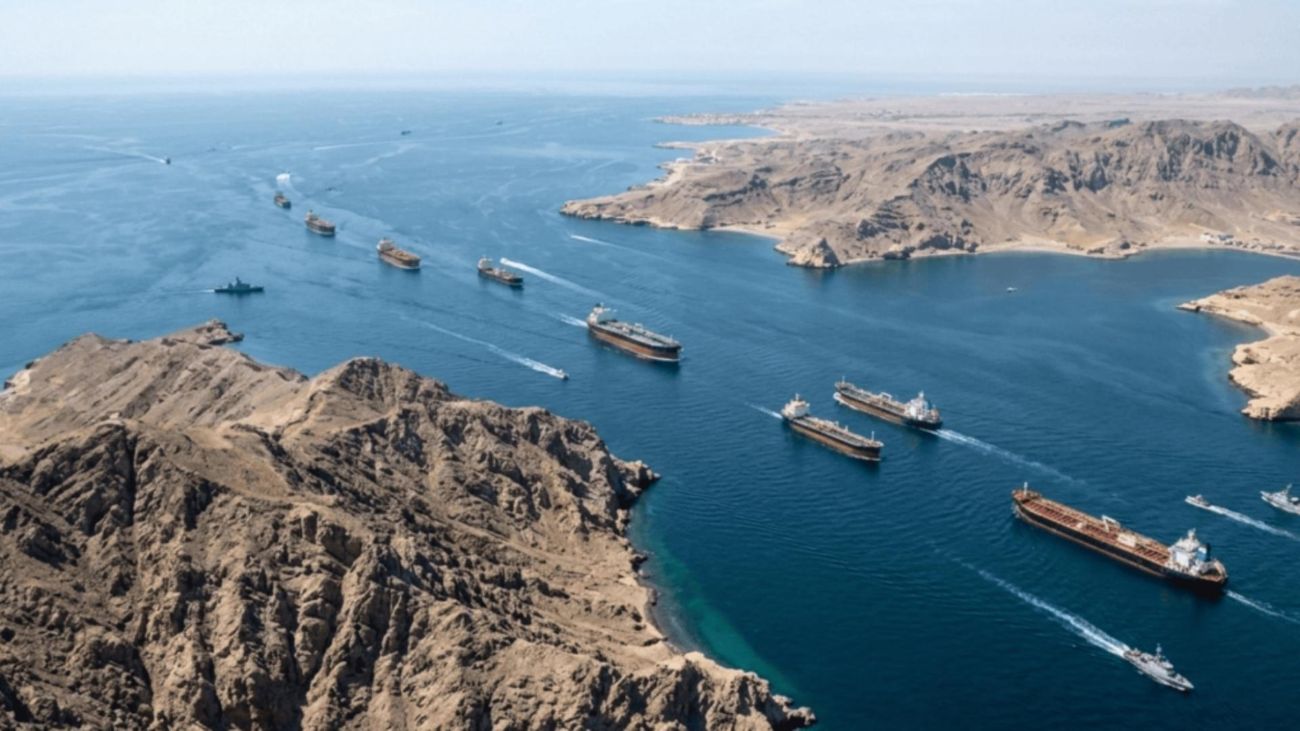
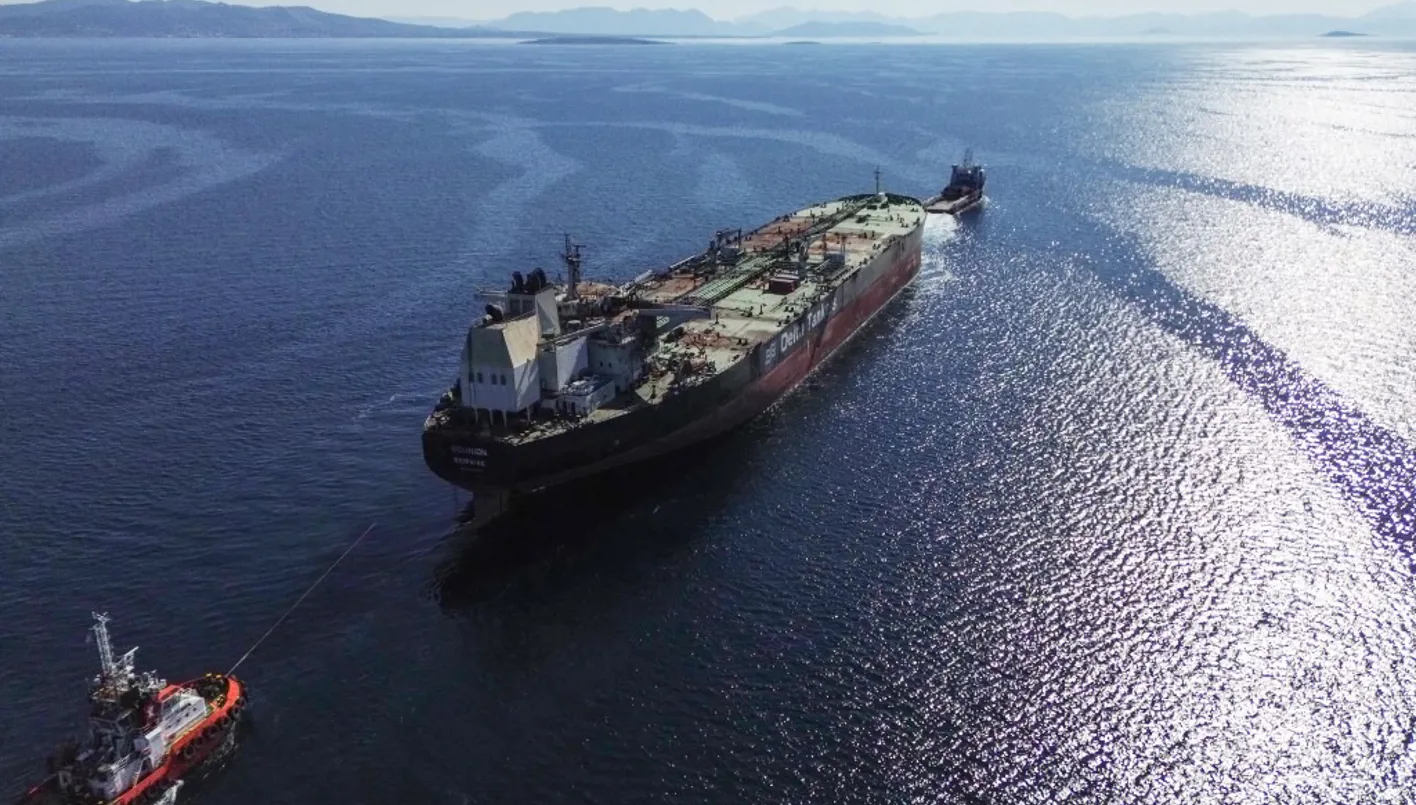
Oil tankers pass through Hormuz (AFP)
Militarization is the most dangerous
The idea of a “shared Hormuz economy” is less romantic than it seems at first glance. Certainly, this is not a call to trust Iran, but rather an attempt to make disrupting the Strait costly for everyone, including Iran, and to make opening it profitable for everyone. Politics alone did not prevent extortion, and militarization alone did not prevent danger. What is required is to engineer interests that make maritime security a common regional good. The first pillar of this economy is a civilian-naval body for Hormuz, not a joint military command, which includes the Emirates andOman Iran, along with the Gulf states and Iraq as stakeholders, and under the supervision of the International Maritime Organization. Its mission is not to give anyone the right to control, but rather to regulate navigation services: pilotage, rescue, pollution control, exchange of ship data, mine clearance, and determining emergency corridors in times of crisis. The difference here is fundamental: there are no political transit fees, nor sovereign “brotherhood,” but rather a transparent service fee that is subject to international law, and does not infringe on the right to cross international straits.
The second pillar is a regional fund for marine insurance and risks. During the war, the cost of insurance and chartering tankers turned into an indicator of fear no less important than the price of oil. When the cost of a tanker needing to cross Hormuz amounts to hundreds of thousands of dollars per day, the Strait becomes a risk tax on every barrel, every shipment, and every consumer. Therefore, a fund could be created financed by small percentages of producers, ports, and large importers in Asia, not to compensate companies alone, but to reduce the risk premium through joint guarantees, financing demining, early warning systems, and environmental compensation in the event of accidents. The third pillar is to transform opposite ports into a network, not into competing islands. The UAE owns Jebel Ali and Fujairah, Oman owns Sohar, Duqm and Musandam, and Iran owns Bandar Abbas, Jask and Bushehr. Instead of being lines of contact, these ports could become nodes in a single economic corridor: advance customs inspection, green lanes for food, medicine and spare parts, shared storage areas, and re-export services that do not pass through sanctioned financial channels. Here, Oman can play the role of a “safe transferor,” because it stands on the edge of the strait, and maintains relations with Iran, the Gulf, and the West, and because Oman’s trade with Iran has already risen to more than $1.3 billion in 2024. The fourth pillar is linking energy, not just exporting it. The experience exists: the Dolphin project transports gas from Qatar to the Emirates and Oman, and provides part of the needs electricity Water and industry. This model can be expanded from a single line logic to a grid logic: stronger electrical interconnection, shared emergency gas reserves, strategic fuel storage, and linking renewable energy centers in the Gulf. The greatest danger is not only the cessation of an oil tanker, but also the cessation of gas, which powers electricity, desalination, and industry. In a region whose cities depend on energy to desalinate water, cool buildings, and operate ports, energy security becomes part of the security of daily life.
But the biggest obstacle remains Iran. Any joint economy that includes Tehran faces three problems: sanctions, the Revolutionary Guard, and lack of trust. No investor will pump money into an area that could be turned into a minefield by a military decision. The Gulf countries will not accept giving Iran new income from the Strait if it is used to finance missiles, drones, or proxies. Therefore, any Iranian involvement must be conditional on three restrictions: financial transparency, confining revenues from Strait services to monitored civilian accounts, and separating shipping management from military services. Without this, the shared economy turns into a legitimization of blackmail rather than a cure for it.
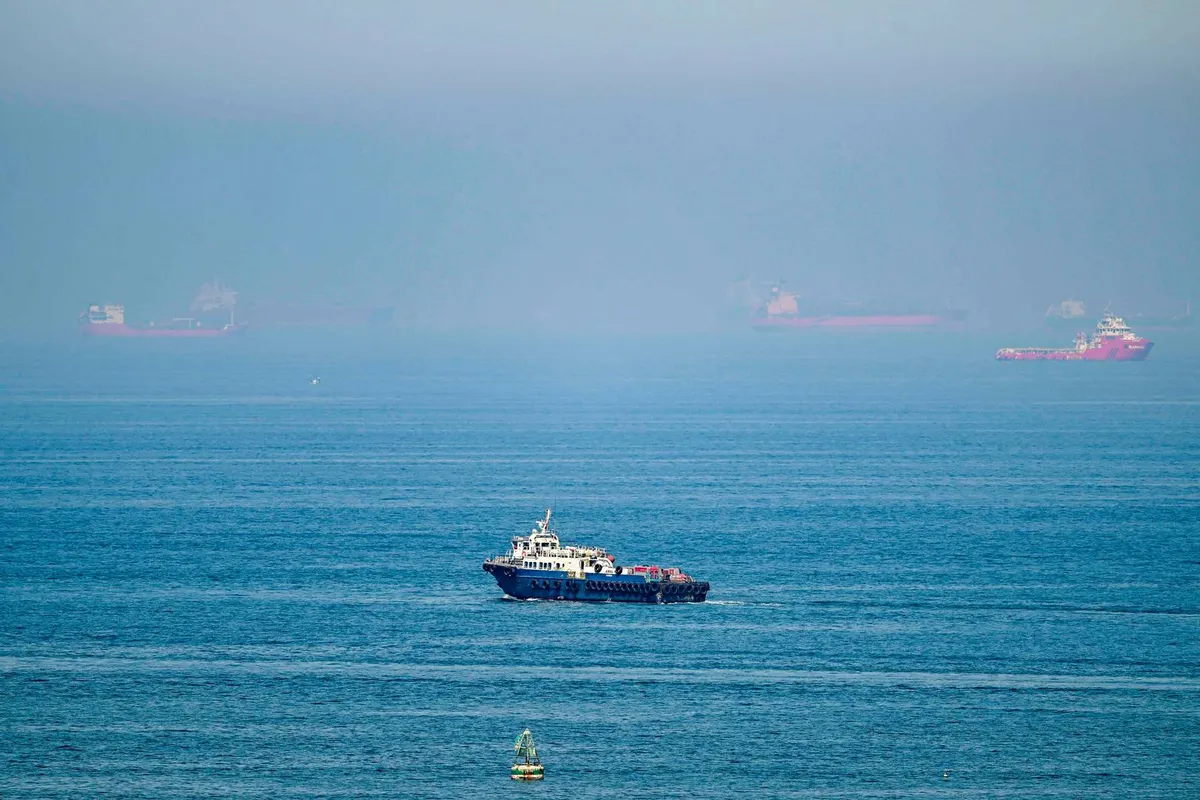
Strait of Hormuz (AFP)
Bypass Hormuz
On the other hand, the Gulf states cannot be satisfied with the logic of “bypassing Hormuz”: pipelines to the Red Sea and Fujairah are necessary, but they do not eliminate geography. Building complete alternatives requires years and huge investments, and does not solve the problem of Qatari gas, nor Kuwait and Iraqi trade, nor daily imports. Also, turning each country into a single logistical fortress raises costs and weakens integration. The best is to combine two paths: the path of deterrence and avoidance, and the path of joint management of the strait.
The Sultanate of Oman is the only one capable of transforming geography into permanent mediation. Musandam is not a geographical margin, but rather a balcony on the most important energy corridor in the world. Khasab, Sohar and Duqm could be developed as a logistics triangle: Khasab for safety, rescue and maritime surveillance services, Sohar for trade and industry, and Duqm for strategic depth outside the strait. Thus, Oman becomes an “employment guarantor” and benefits economically from its position without turning into a tool in the hands of Iran or… US. As for the UAE, it is the most prepared to translate the idea economically, because it has the largest logistical infrastructure in the Gulf. Jebel Ali alone handled 15.5 million TEUs in 2024, and Fujairah granted… Abu Dhabi An oil port outside Hormuz. Therefore, the UAE can lead the commercial and insurance aspect, provided that Iran expresses its actual remorse for targeting the UAE with drones and missiles more than targeting Iran, and that it can restore confidence in it.
Saudi Arabia does not have direct access to the Strait like Oman, Iran, and the UAE, but it has an oil interest. The East-West line gives it flexibility that others do not have, but Riyadh’s interest is not in bypassing Hormuz, but rather in preventing Iran from monopolizing the definition of its rules. Therefore, it can be the largest financier of the Maritime Stabilization Fund, and link this to Asian energy security, especially with China andIndia Japan and South Korea are the markets most exposed to any crisis in the Strait.
Will a “shared economy” be born from this? Yes, if the shared economy is understood as layers and not as a single leap. The first layer within 90 days: installing safe corridors, removing mines, returning the traffic separation system, and reducing security. The second layer within a year: a risk fund, customs lanes for basic goods, a data platform for ships, and an agreement not to disrupt navigation. The third layer within three years: joint investments in ports, storage, energy, and electrical and gas connections. Then Hormuz becomes an area of intertwined interests, not just a line of contact. But failure is also possible. The project will fail if Iran demands political transit fees, or if the Gulf states insist on excluding them completely, or if Washington treats the Strait only as a pressure tool, or if China turns it into a single card of influence. It will fail before that if maritime security remains in the hands of the military alone. What is required is not to remove politics from the Strait, as this is impossible, but rather to restrict politics to economic rules that make obstruction a loss, not a gain.