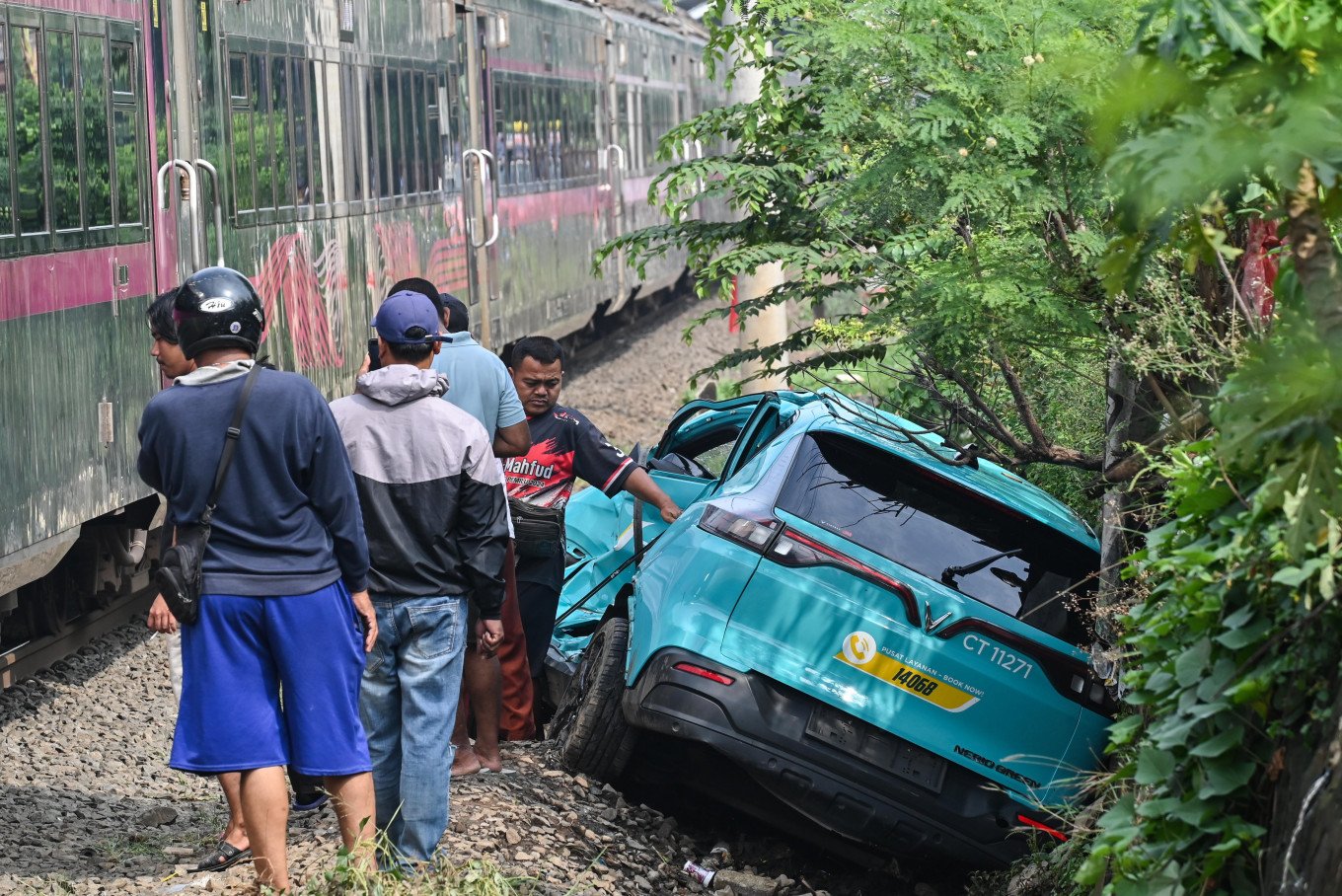
ince she was a child, Karma, 60, has lived with the sound of trains passing over a level crossing near her home on Jl. Ampera, East Bekasi, West Java, and with the memory of occasional fatal accidents at the crossing.
But nothing compared to the horrific tragedy on Monday night, when an intercity train slammed into a commuter train killing 16 passengers, all of them women, drawing nationwide scrutiny to the issue of unguarded crossings.
“People getting hit, or motorcycles struck by trains, that happens quite often. There was even a couple hit on their way to work,” she said when The Jakarta Post visited the site on Tuesday.
Despite the repeated incidents, this has not deterred locals from using the crossing, as it remains an essential route to workplaces and public facilities, including hospitals.
“If this road didn’t exist, we’d have to take a long detour. We still want to be able to cross, but at the very least there should be a proper gate so people can stop from a distance,” said Karma, who travels to a nearby hospital twice a week for dialysis.
Read also: Bekasi deadly train crash renews railway safety concerns

Every Monday, Wednesday and Friday morning.
She added that residents took turns manning a makeshift bamboo barrier at the level crossing, but accidents continued to recur.