Last Thursday, the respected independent organization Reporters Without Borders (RFS) revealed a new setback in freedom of expression in Costa Rica. In your World Press Freedom Index 2026 We dropped two places, to 38th place. In 2021 we had occupied the fifth placeonly surpassed by Norway, Finland, Sweden and Denmark. But starting the following year we began a dizzying decline. The reason is well known: the government offensive against journalists and independent media.
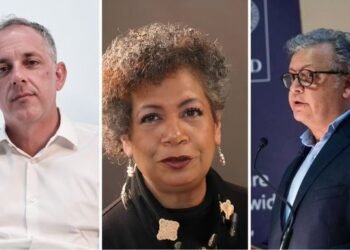
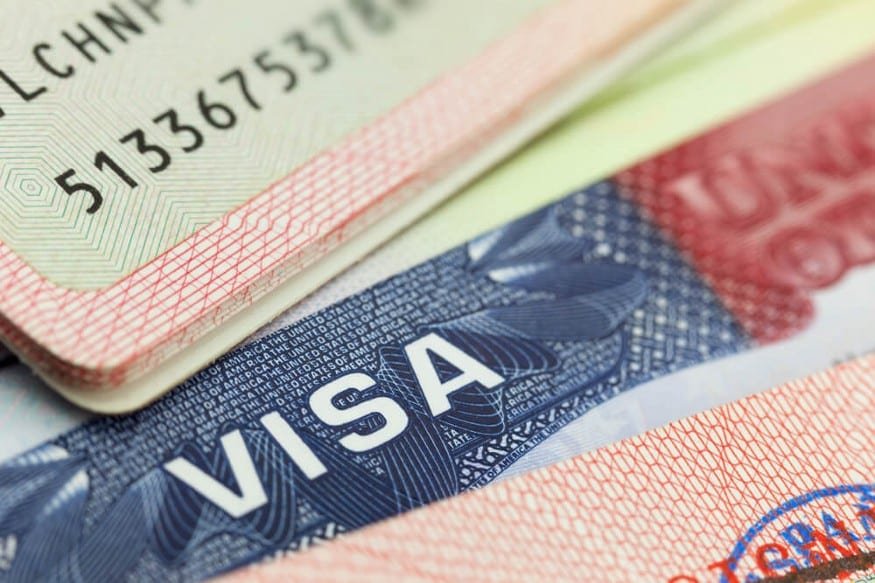
Two days after that announcement, a new and unexpected blow to independent journalism was made public. This time it was extraterritorial in nature: the withdrawal of entry visas to the United States to five of the seven members of the Board of Directors of La Nación SA, publishing company of this newspaper, The Tile and The Financier.
In the absence of explanations for the decision or objective reasons that support it, it is only possible to reach one conclusion: its purpose has been to punish the editorial line of The Nation and, at the same time, try to break our journalistic autonomy. Hence, although it is the sovereign power of your government, we consider it a serious attack on freedom of expression.
Applying such a measure to almost the entire collegiate body of a press organ is unprecedented in our history. We do not even know of any similar case in other democratic countries. Its seriousness cannot be underestimated.
The punishment has already materialized, with damage to five people with impeccable resumes. The attempt to get us to give up our independence and the principles that have guided us for almost eight decades will not succeed. On the contrary, it gives us new energy to move forward. Our Board of Directors said it well in a statement following the decision:
“Under no circumstances will these events alter the commitment or independent exercise of journalism that has characterized The Nation for 79 years.
“We renew our fundamental commitment: to report with rigor and truthfulness on facts of public interest, to investigate them in depth, to maintain a reasoned criticism of national and international events and to contribute to the preservation of democratic values and fundamental freedoms that sustain our coexistence as a society.”
We do not intend to establish ourselves as martyrs or heroes for what happened, but rather to denounce its possible motives and reiterate that, as a journalistic team, we will continue to fulfill our ethical, professional and civic tasks. These are the main reasons for our existence and roots in society.
Perhaps the content that the withdrawal of visas wanted to penalize is that in which we have questioned, with respect, substance and clarity, decisions made by the current US government. If such were the case, many other media outlets, in many other countries, as harsh or more severe in their criticism, would have experienced the same thing.
That this has not been the case leads to another hypothesis, more feasible and more disturbing: that the purpose is to charge us for our vigorous independence of judgment and criticism towards President Rodrigo Chaves and his government. It is hard to believe, because it would imply that the United States government decided to become an instrument of its autocratic impulses, but, unfortunately, other facts give even more support to the assumption.
The decision was disclosed in three media usually close to the Presidency, with details of the names and expiration dates of the current visas of those affected, before they were informed. It is almost impossible for them to have left the American Embassy. Furthermore, this has been the same pattern observed, starting in February 2025, in the other cases of Costa Ricans stripped of their visas.
Regarding some of them, it was possible to point out, as a possible (although not legitimate) reason, close relations with the Chinese company Huawei. In the majority, however, the common element has been President Chaves’ animosity toward the people affected, almost all of them popularly elected or in positions of high responsibility. Among them are the constitutional magistrates Paul Rueda and Fernando Cruz; former president and Nobel Peace Prize winner Óscar Arias; the then acting president of the Legislative Assembly, Rodrigo Arias, and the deputies Francisco Nicolás and Vanessa Castro.
In our editorial On April 2, 2025, following the withdrawal of Óscar Arias’ visa, we wrote the following: “…if something so serious and unjustified is chosen against a former president and deputies, what could happen to other people whose positions are considered unacceptable by the White House, or who simply generate anger among its highest officials?
Today we have very solid reasons to assume that it is not just, or even so much, a question of what people think in Washington; many elements also point towards Zapote. The convergence of both makes both the method and the purposes that animate it alarming. They not only seriously violate freedom of expression, but also the integrity of our democracy.
*This article was originally published in The Nation.