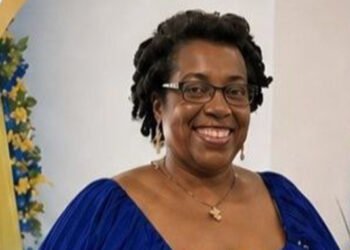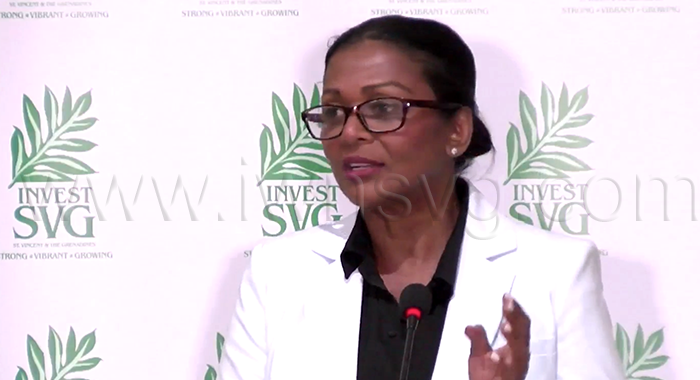
Newly appointed Executive Director of Invest SVG, Anna Young, has told Vincentians in the British Virgin Islands (BVI) that there must be “no division” between home-based and overseas nationals, urging them to see themselves not just as returnees but as co-builders of St. Vincent and the Grenadines’ economic future.
Young, who said she returned to SVG after 36 years abroad and reported to work on Wednesday, one day after landing in the country, framed her own return as proof that diaspora reintegration and investment are both possible and urgently needed.
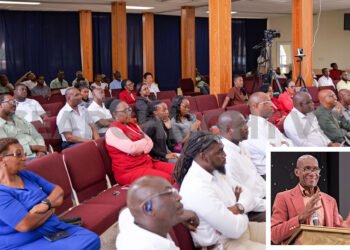
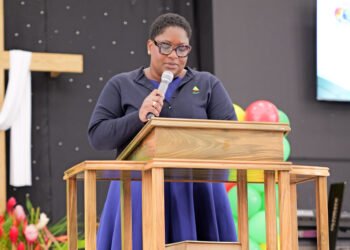
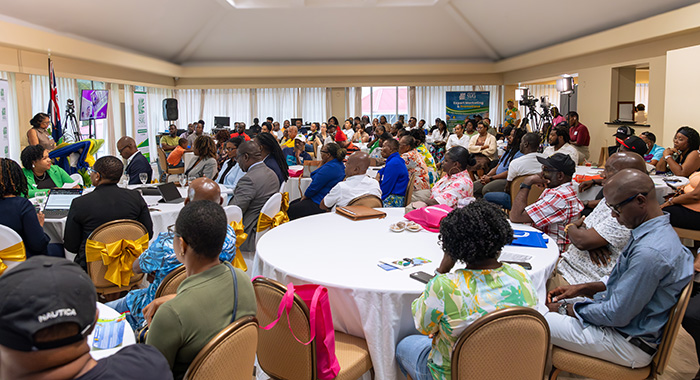
Young made her first major speech since taking up her new role as she addressed the Vincentian diaspora in the BVI on Saturday, as the investment forum, which has visited London, moved to the BVI, where one-fifth of the population is said to be Vincentians.
She told the forum that the long-standing distinction between Vincentians “home” and “away” is unhelpful and out of step with the country’s development needs.
“There must no longer be a division between home-based Vincentians and the diaspora Vincentians, those living abroad,” she said.

“We all know that, whether by need or not, we journeyed and left the place we loved, the place we called home, often to achieve a better life, but never forgetting where we are from.”
She stressed that identity, not physical location, is the determining factor.
“We’re the same people, whether you live in St. Vincent, whether you live here. I’m one week in on the other side,” Young said.
“Because whether you are living in Layou – I am from Layou – or Layou was once home to your parents or your grandparents or your great grandparents, you are Vincentian.”
She said being Vincentian goes beyond being born in the coutry.
“Tonight we say it clearly: Vincy by birth, Vincy by descent, Vincy by identity, first generation, second generation, third generation, Vincy by choice. Home is where the heart is. Welcome home, and we are one people.”
Young, however, said that Invest SVG was not merely inviting Vincentians in the diaspora to “come back” sentimentally, but to participate structurally in national development.
“We are inviting you to build with us,” she said. “It’s your home, whether you are, dare I say it, a babysitter, a dog walker, a nurse, a teacher, a trades person, a business owner, a professional, a global professional. Your skills, your experience and your contribution matter.”
She emphasised that investment is broader than money, telling the forum, “It is human, it is intellectual, it is relational, and we need all of it to build St. Vincent.”
Young said recent days of meetings in the BVI had already shown what cross-border connections can achieve, citing interest from local merchants in stocking Vincentian products.
“That is not just trade; it is visibility, confidence and expansion for our producers and entrepreneurs back home. It shows what is possible when we connect our people across borders.”
Young said the government has identified four key pillars to drive economic transformation: tourism, the green economy, the blue economy and the creative industries.
“These are not abstract sectors,” she told the audience. “They are living, growing areas of opportunity that you can all take advantage of.” [0:29:07]
The INVEST SVG head said tourism remains a cornerstone, expanding from traditional models into eco-tourism, boutique experiences, heritage tourism and high-value niche offerings.”
The green economy, she explained, includes renewable energy, climate-smart agriculture, sustainable construction and environmental innovation.
The blue economy covers “our oceans, fisheries, marine transport, coastal development and emerging ocean-based initiatives,” Young said.
On creative industries, Young pointed to culture as export, noting tha the creative industries capture “our music, film content, digital content, fashion, arts and cultural exports – our identity expressed globally…
“These four pillars define where opportunity lies for you, each of you,” she said, adding, “And they define where we want you involved.”
Young used much of her address to outline how Invest SVG itself is being reshaped to meet these ambitions and make it easier for diaspora capital and expertise to enter the system.
“To support this, the government is repositioning Invest SVG to focus on export and trade development, foreign direct investment, financial services development and diaspora investment mobilisation,” Young said.
She said this repositioning is about ensuring that investment is not only encouraged but actively facilitated.
“We are not asking you to navigate the system alone. We walk with you every step of the way. That is what Invest SVG will do for you and has repositioned itself to do.”
Young described Invest SVG as “an active facilitator”, not a passive agency.
“At Invest SVG, we walk with investors through every stage of their journey, and we will do that for you as well,” she said.
“We support with business registration and establishment, investment structuring and project development, accessing incentives and concessions, coordinating permits and approvals, engaging with ministries and agencies to help facilitate your initiatives, [and] ongoing investor support and aftercare once you have launched.”
She said Invest SVG recognises that the process has not always been seamless.
“So we are also strengthening… the broader investment framework through ongoing legislative reform,” Young said, adding that the Investment Act and Tourism Aid Act are under review, with the aim of allowing Invest SVG to operate as a true “one stop” for investors.
“These reforms are designed to improve transparency and consistency, strengthen investor protection, align investment with national development priorities, enhance coordination across government [and] establish a more streamlined facilitation system…
“The objective… is simple,” Young said. “Clarity, predictability and confidence.”
Young said investors already benefit from a range of incentives, including duty-free concessions on approved imports, corporate tax holidays and sector-based tax deductions, reductions, withholding tax exemptions in qualifying cases, work permit and entry facilitation for key personnel, access to land for strategic projects, investor aftercare and support services and other concessions.
“These incentives… are designed to make viable projects more competitive and sustainable,” Young told the forum, adding, “You can succeed in St. Vincent.”
She said that to support investors further, Invest SVG is building a vetted ecosystem of service providers.
Young mentioned construction and project development professionals, architects and sustainable design experts, engineers, quantity surveyors and project managers, legal and investment advisory professionals, real estate and land acquisition specialists and among others, hospitality professionals.
“What this means is you actually have, in most cases, the professionals, the experts, the services you need for your businesses when you come to St. Vincent, because investment does not succeed in isolation. It succeeds in ecosystem.”
She told the forum that diaspora investment is not supplementary, it is strategic, adding that in a world of shifting capital and heightened competition, diaspora resources are central, not marginal, to the country’s development plans.
“The global economic environment is shifting. Capital is more selective. Competition for investment is stronger, and resilience has become the defining requirement for small economies,” Young said.
“In this context, diaspora investment is not supplementary. It is strategic, because you bring not only capital. You bring confidence, credibility and connection.”
She said the choice for overseas Vincentians not as an either-or between their adopted homes and SVG:
“I am inviting you to belong fully to both,” Young said,
“… St. Vincent and the Grenadines is not divided between home and abroad. It is one nation, one people, one identity, working together, and together, we will build. Home is where the heart is… Welcome home, come home, invest, build and let us rise together,” she said.