1. Only one law issued
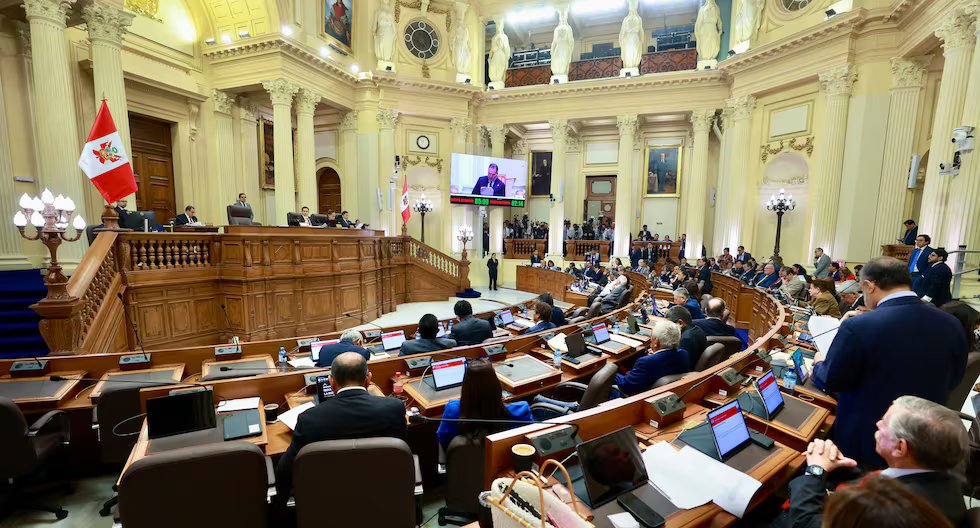
The delegation of powers granted to the Executive Branch is the only norm that Congress managed to approve in its first 100 days. This encapsulated the work of up to 12 commissions. To date, the Senate has received four other files from the Chamber of Deputies, but to date they have not been reviewed.

The Senate approved granting powers to the Executive to legislate on matters of citizen security and the El Niño Phenomenon. (Photo: Congress)
2. Proposed proposals
The repeal of the College of Artists is one of the files approved by the Chamber of Deputies, and is pending review in the Senate. The 2027 budget law and the election of magistrates of the Constitutional Court are two other issues that are on the agenda to be resolved in the new legislative flow before the end of 2026.
3. Ethics cases
The sanction against deputy Julian Pérez (Together for Peru), prosecuted for a case of aggression, should be resolved before the end of November. The case of Catherin Palomino (Together for Peru) is pending, accused of asking her workers to assume the cost of business cards, paintings and food.
4. The controversy
Much of the first 100 days was focused on interchamber gridlock over the Senate’s amending power. From the Chamber of Deputies, the left bloc alleged that the texts approved in their jurisdiction cannot be changed. The issue has been pending review to specify the scope of the regulations.
5. Work in committees
In deputies, the technical work of Roxana Rocha (RP) stood out, and what was questionable was the work of Giannina Avendaño (JP) in the presidency of the Constitution Commission. In the Senate, the positive thing was that the Special Procedures Commission carried out the BCR appointments, but Carlos Mesía (FP) did not have a good handle on the Constitution debates.
6. The fight
The fight between Senator Iber Maraví (JP) and Interior Minister César Astudillo – also a FP senator – was the most questionable act of the first 100 days. The altercation occurred during the debate on the delegation of powers in the Senate Constitution Commission and involved the intervention of other members of the upper house.

Iber Maraví discussed with ministers and other legislators. (Congress / YouTube)
7. The first resignation
Senator Jorge Gavidia resigned from the Good Government Party bench after the vote of the delegation of powers, although said party has just announced his expulsion with the aim of blocking his incorporation into another parliamentary group. The group has also initiated a process against Senator Juver Flores for the same dissenting vote.
8. The good
The Senate approved the ratification of Julio Velarde as president of the Central Reserve Bank (BCR), at the proposal of the Executive Branch. He also appointed Oswaldo Molina, José Ricardo Stok and Juan José Marthans, thus completing the BCR board of directors.
9. The danger
The Chamber of Deputies began the debate on the Small Mining and Artisanal Mining (ASM) law late and must make a decision on the validity of the Reinfo that ends in December 2026. Some parties insist on expanding the Reinfo, because they estimate not achieving consensus on the ASM law before the end of the year.
10. Two management styles
On the one hand, the president of the Senate, Miguel Torres, has shown greater work in communication leadership. On the other hand, the president of the Chamber of Deputies, Óscar Reto, has maintained a low profile. In November, both have entered into dispute over the approval of the Congressional budget.