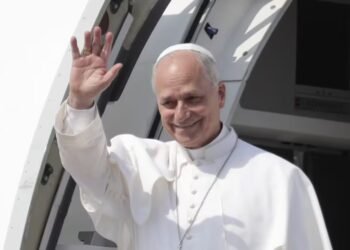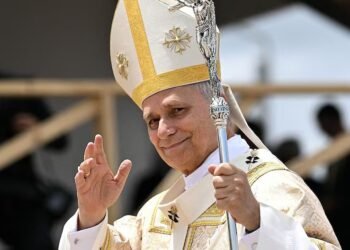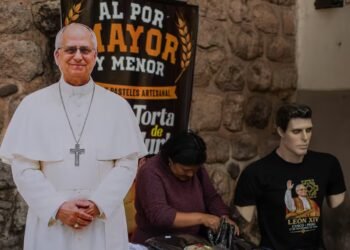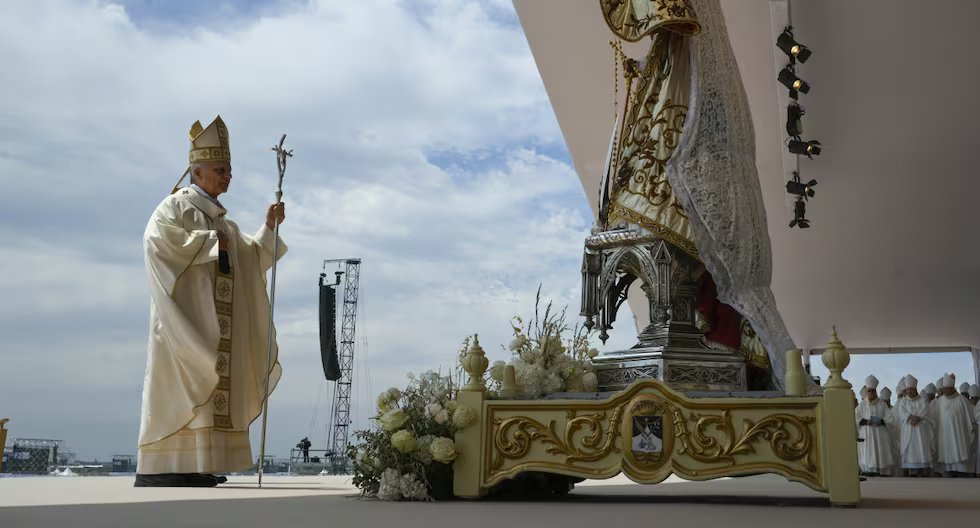

The only leader in the world, capable of gathering multitudes, is the Pope Leo XIV. On a polarized planet, plagued by conflicts and wars, with militant leaders, he is the only universally accepted figure. His messages have addressed all modern problems: the abuse of technology, migration, social and economic inequality, the place of the marginalized. Connecting the experience of ordinary people with phrases of compassion and support is a sign of his moral wisdom. While for most politicians in the world, their parties prevail over the interests of their countries, in León’s actions, and in his concise and true phrases, there is a vocation for the essential.
It is curious to see, however, that in Peru and Latin America the number of Catholics has decreased in recent years. A report of the Pew Research Centerbased on surveys from 2024, indicates that in Peru between 67% and 88% of the adult population declares themselves Catholic. It is at least 9% less compared to the measurement of the previous decade. This is a trend that extends throughout Latin America. In other continents such as Asia and Africa, Catholicism is on the rise.
A Pope is a representative, a messenger, a mediator. Saint Peter was considered the stone on which the Church is founded. A fresco by Perugino in the Sistine Chapel shows him kneeling in front of Christ, who hands him the keys. Throughout the Middle Ages, many of the Popes were martyrs. In the year 452, Pope Leo the Great manages to convince the Hun Attila not to sack Rome. More than a century later, Pope Gregory organizes the administration, promotes liturgical songs and expands the domain of the Church. In the 16th century, Pope Julius, who rode a horse in armor, commissioned the works of art we know today from Michelangelo and Raphael. Already in the 20th century, John XXIII called the Second Vatican Council and is responsible for a modernization that has marked the course of the Church.
Born in a suburb of Chicago, Prevost, Pope Leo XIV, has extensive experience in his stays in Rome and Peru. His ancestors are Italian immigrants. One version states that he is related to Sucre. He was nationalized Peruvian in 2015, at the initiative of José Pérez Guadalupe, then Minister of the Interior, and with the decisive support of Prime Minister Pedro Cateriano. Son of an administrator and a librarian, he chose the name León in homage to Leo XIII, for his social sensitivity.
The demonstrations on his tour through Argentina, Uruguay and Peru show that he has managed to give shape to a need, based on hope. Thanks to Fernando Carvallo, I learned of his message to the Argentine prisoners. He spoke to them about the dignity of human life and the paths that always exist. He remembered that Christ was crucified between two thieves and the people preferred that Barabbas be freed. His emotion of solidarity and his reflections lead to the idea of a universal feeling, the essence of the dignity of each individual. The fact that he reminds us that we are all part of the same species, a conviction based on the power of words, will maintain his legacy. If politicians were reasonable, they should learn something from all this.