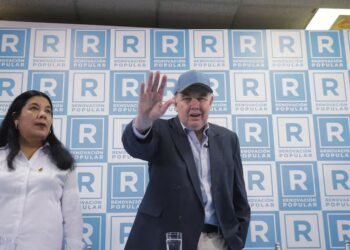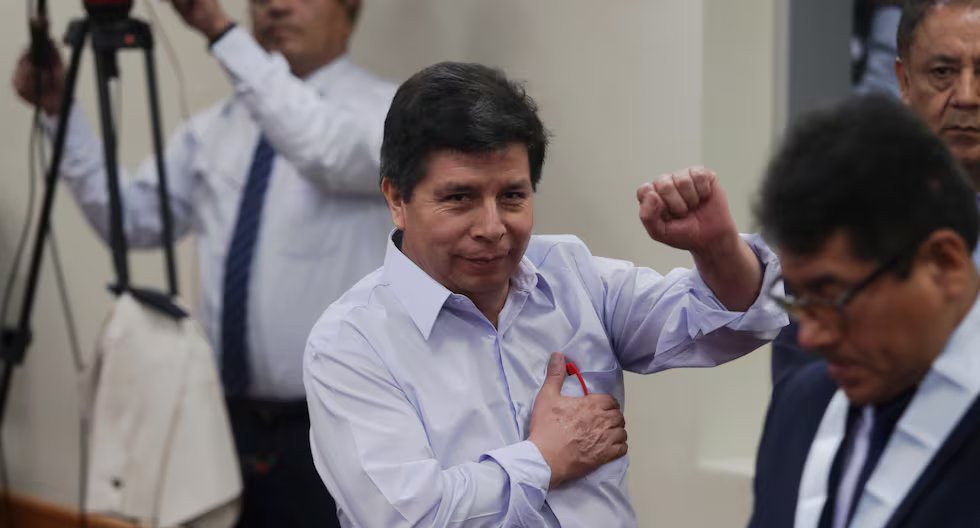
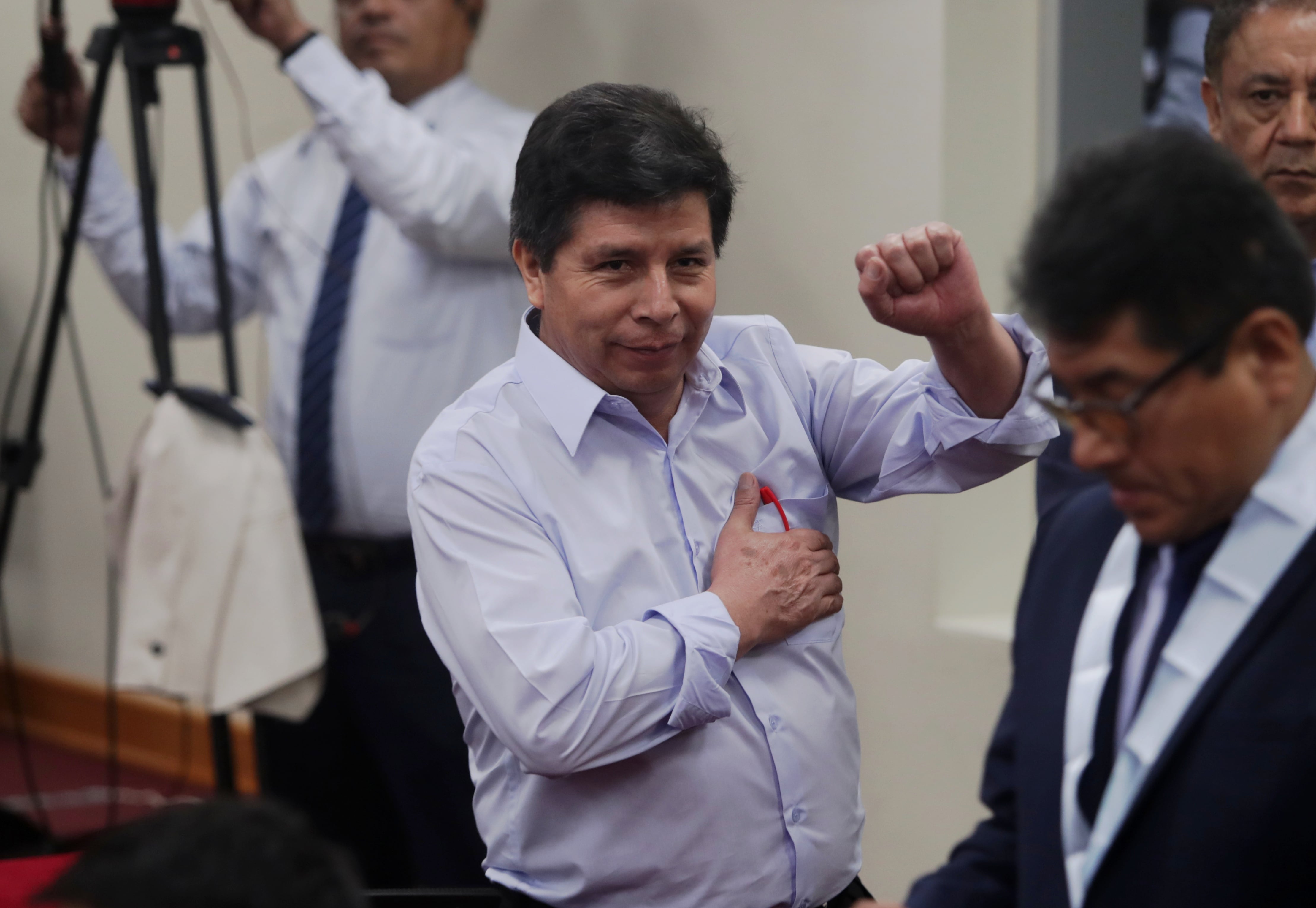
The amnesty project for the coup plotter Pedro Castillo promoted by deputy Catherine Palomino (Together for Peru), close to the former head of state and current president of the Justice Commission in the Lower House, loses two of its first adherents.
Parliamentarians Andrea Medina and Jenny Samanez, from the Civic Obras Party, decided to withdraw their signatures from the bill less than a week after it was formally presented. Medina sent a document to the senior officer of the Deputies, Hugo Rovira, on November 5, in which he requested that his signature be withdrawn. Samanez did the same on November 4, 2026.
Medina explained that his decision was individual, as a signatory, and that it did not bind the other deputies who signed the legislative initiative. However, he did not specify other reasons for his decision.
When consulted by this newspaper, Samanez stated that she decided to withdraw her signature after learning about the scope of the project she had signed.
“(I have seen that you withdrew your signature from the amnesty project for Castillo…) As soon as I found out what it was about, I withdrew my signature,” he said.
Asked if the spokesperson for the group and the president of the party, Ricardo Belmont, asked her to sign the proposal, Samanez pointed out that the person who invited her to sign it was Roberto Sánchez, former presidential candidate for Together for Peru and current head of the Cabinet of Advisors of the left-wing bench in the Senate.
“Mr. Sánchez asked me. He himself asked me (to sign the project),” he added.
For his part, the spokesperson for the Civic Obras Party, Víctor Piñán, pointed out that the decisions of his colleagues were individual and did not respond to a bench position.
Asked about the possibility of other legislators withdrawing their signatures, he responded: “I think not on the part of Obras.”
For now, the future of the project will depend on the position adopted by the members of the Good Government bench. Its three representatives on the Justice Commission could define the fate of the initiative.
Of the 20 members of this working group, nine belong to left-wing groups and eight to right-wing parties. The remaining three are Romina Uribe, Edgar Gonzáles and Rossana Alayza, from the Good Government, whose votes could tip the balance in one direction or another.
The rule contemplates two types of amnesty: one for the events related to the message of December 7, 2022 and another for acts linked to social protests. However, it excludes from this benefit the crimes of genocide, crimes against humanity, war crimes and serious violations of human rights.
In the first case, the initiative includes all the people who have participated in the previous or preparatory acts, the preparation, writing, reading, dissemination, endorsement, accompaniment or administrative execution of the speech that Castillo issued on December 7, 2022.
“The amnesty includes all persons who have participated in the events indicated in article 4, at any level of authorship or participation, and regardless of their procedural situation,” the document indicates.
The second case extends the amnesty to events that occurred from July 28, 2021 until the day before the regulation came into force, provided that they occurred in the context of protests, mobilizations, strikes and other collective actions of a political and social nature developed in the country during the crisis of that period.
The main beneficiary is Pedro Castillo, who faces a sentence of 11 years and 5 months in prison for the crime of conspiracy to rebel, after the coup d’état of December 2022. The former president remains imprisoned in the Barbadillo prison.
Another beneficiary is Betssy Chávez, who faces the same sentence. Unlike Castillo, the former Chief of Staff is in Mexico, where she arrived after leaving Peru on August 7, after receiving safe passage granted by the Government of Keiko Fujimori.