So much has been written about the existence of God that little or nothing new could be added in these lines. It is a discussion that has been open for centuries and that, in all probability, will continue like this. There will always be those who refuse to believe, with reasonable arguments, and there will be others who fully believe in Him and everything He represents. From that faith, however, it is clear that the Catholic religion is not exhausted in this dispute. It has a background that goes beyond dogmas and focuses on the message it transmits: love and dedication to others.
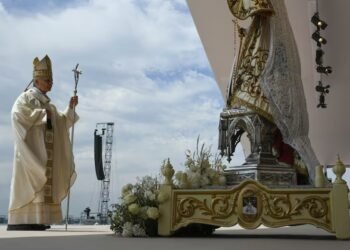
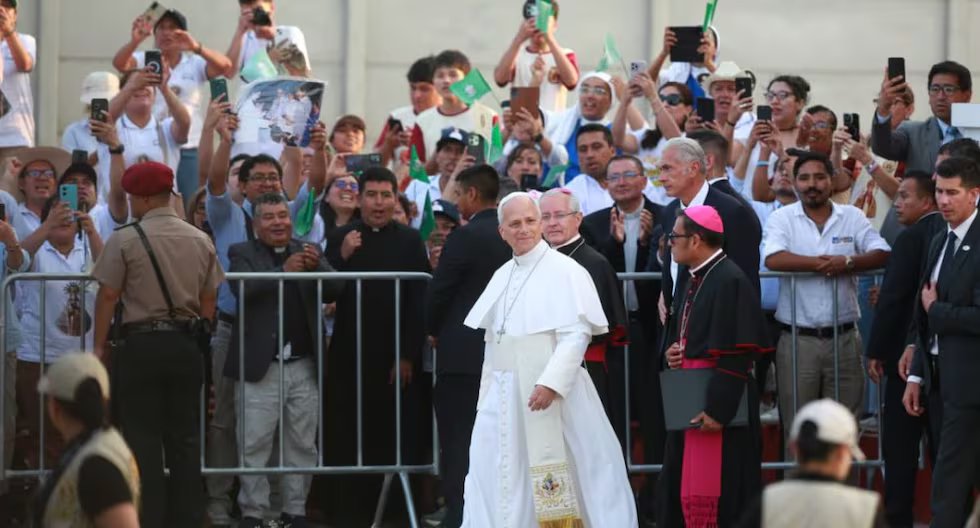
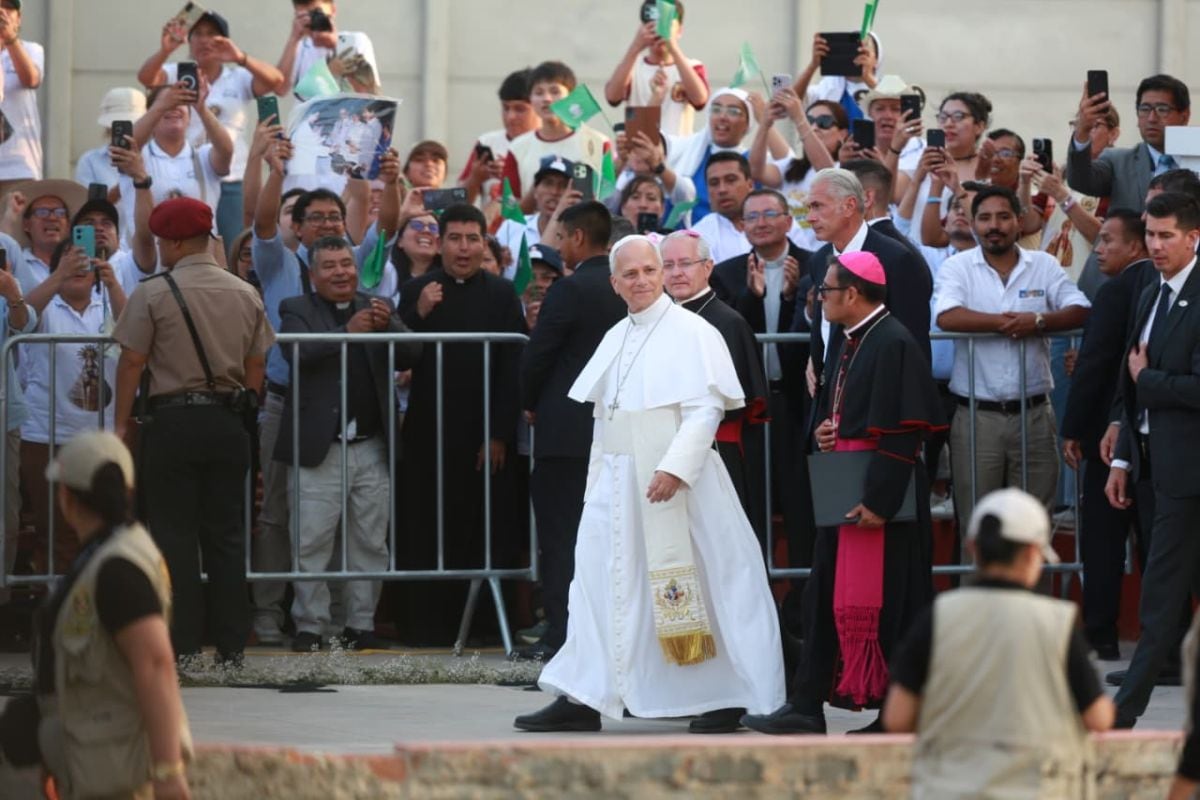
That is the message that Pope Leo XIV has brought on his tour of Latin America and, specifically, on his visit to Peru, a country to which he has a long history of pastoral service. It has come with a simple motto, but one that permeates the speech: “Let’s open our hearts.” This is an invitation that does not require baptism or knowledge of the catechism to be understood. Rather, it appeals to an experience common to every human being: that of having needed another, or that of having felt the call to help someone.
It is convenient to stop at what that delivery means. It is not a passing feeling or a good intention that is exhausted in words. It is a decision, often demanding, to put oneself at the service of those who need it, especially those who are not in a position to reciprocate. The Gospel illustrates this with a story known even to those who have never approached the Church. A teacher of the law asks Jesus who his neighbor is, and the answer comes in the form of a parable: an assaulted man lies wounded on the side of the road. A priest and a Levite pass by, and neither stops. The one who finally helps him, heals his wounds and pays for his lodging is a Samaritan, someone whom the Jews of the time viewed with suspicion because of his origin and his faith. The one who acts righteously in the story is not the most pious, but rather the one who assumes the fate of the wounded man as his own.
Therefore, the Pope’s message is not only addressed to Catholics. The Church understood it this way a long time ago. In 1963, John XXIII addressed his encyclical Pacem in terris not only to the faithful, but “to all men of good will,” a formula that has since become common. Leo XIV has taken it up again. Days before his arrival in Peru, he recalled that holiness is not a privilege reserved for a few and that it is carried out in daily acts of love and peace. Holiness, understood in this way, does not require the extraordinary. It is found in the mother who watches over her sick child, in the neighbor who shares the little he has, in the doctor who treats without charge those who cannot pay.
Now, it would be inappropriate to show that love as an ethic that can be separated from faith. For the Catholic, dedication to others is born from a God who gave himself first, an idea to which Benedict XVI dedicated his first encyclical. However, the fact that the message is rooted in faith does not prevent its fruits from being recognized by those who do not profess it. The non-believer may not accept that origin and still admit the value of what is proposed. There exists a meeting point of undoubted relevance.
The Pope’s own itinerary bears witness to this. Before arriving in Peru, he visited Uruguay, the least Catholic country in the region, where just over a third of the population recognizes themselves as such. He could have privileged the stages filled with faithful; He chose, instead, to address a society that largely no longer shares his faith. And he did not do it to reproach him, but to propose to him.
In Peru, this proposal comes at a particularly difficult time. The country is going through a wave of criminal violence, distrust in its institutions is deep and polarization has turned any difference into a reason for confrontation. In such a context, talking about selfless giving may seem naive. What usually prevails is the calculation: one’s own benefit, the outstanding debt, belonging to one side or another. The Pope’s message proposes the opposite path. Before reaching out, he does not inquire about creed or political affiliation. Rather, it invites each person to ask themselves what they are willing to give.
And this message is addressed to believers and non-believers, to those who doubt and to those who, even with doubts, believe. The Christian tradition has never considered doubt as the enemy of faith. Several of its most venerated saints went through long periods of spiritual aridity without abandoning service to the poorest. Perhaps that is why the invitation is so broad: it does not require certainties, but rather concrete actions. It is possible to doubt many things and still not pass by someone who lies wounded on the road.
When the Pope concludes his visit, the question about the existence of God will remain open, as it has always been, for each person to answer freely. What we have to ask ourselves is if their passage through the country left something more than images and crowds, and if each one, from their own shore, accepted the invitation to open their hearts. That answer will not be offered by theologians or philosophers. It will be given by the behavior of every Peruvian, believers and non-believers, in their daily lives.