On the northeastern edge of the Tibetan Plateau, where the wind has carried sand over the almost lifeless soil for decades, something happened that no one had planned for.
China built the largest one in that place solar power plant in the world. The project was conceived as an energy investment of gigantic proportions, with millions of panels spread across the desert landscape. However, a few years after the start of operation, it turned out that the power plant was producing much more than electricity.
She also produced grass.
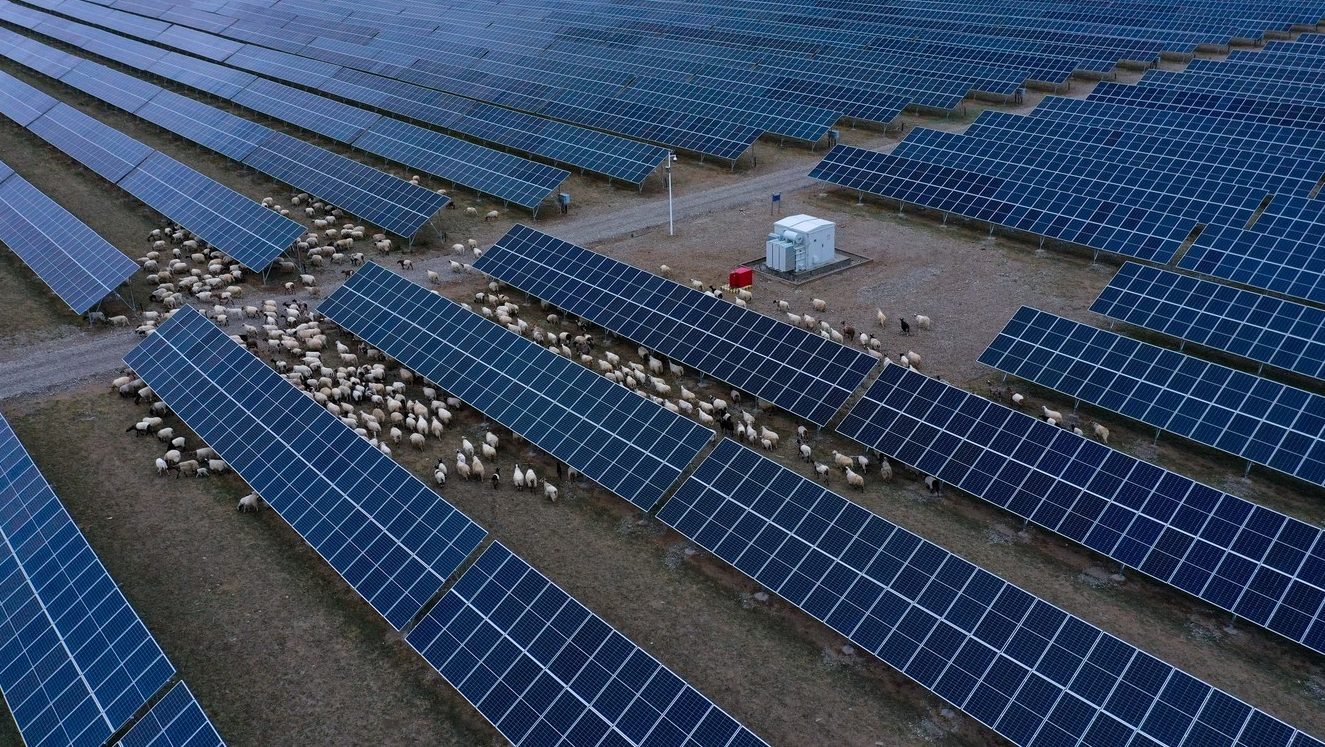
Today, tens of thousands of sheep graze in an area that was once almost completely covered with sand. Local ranchers have more pasture than before, herds are growing, and scientists are trying to explain how one of the largest energy projects on the planet inadvertently set off an ecological recovery for an entire area.
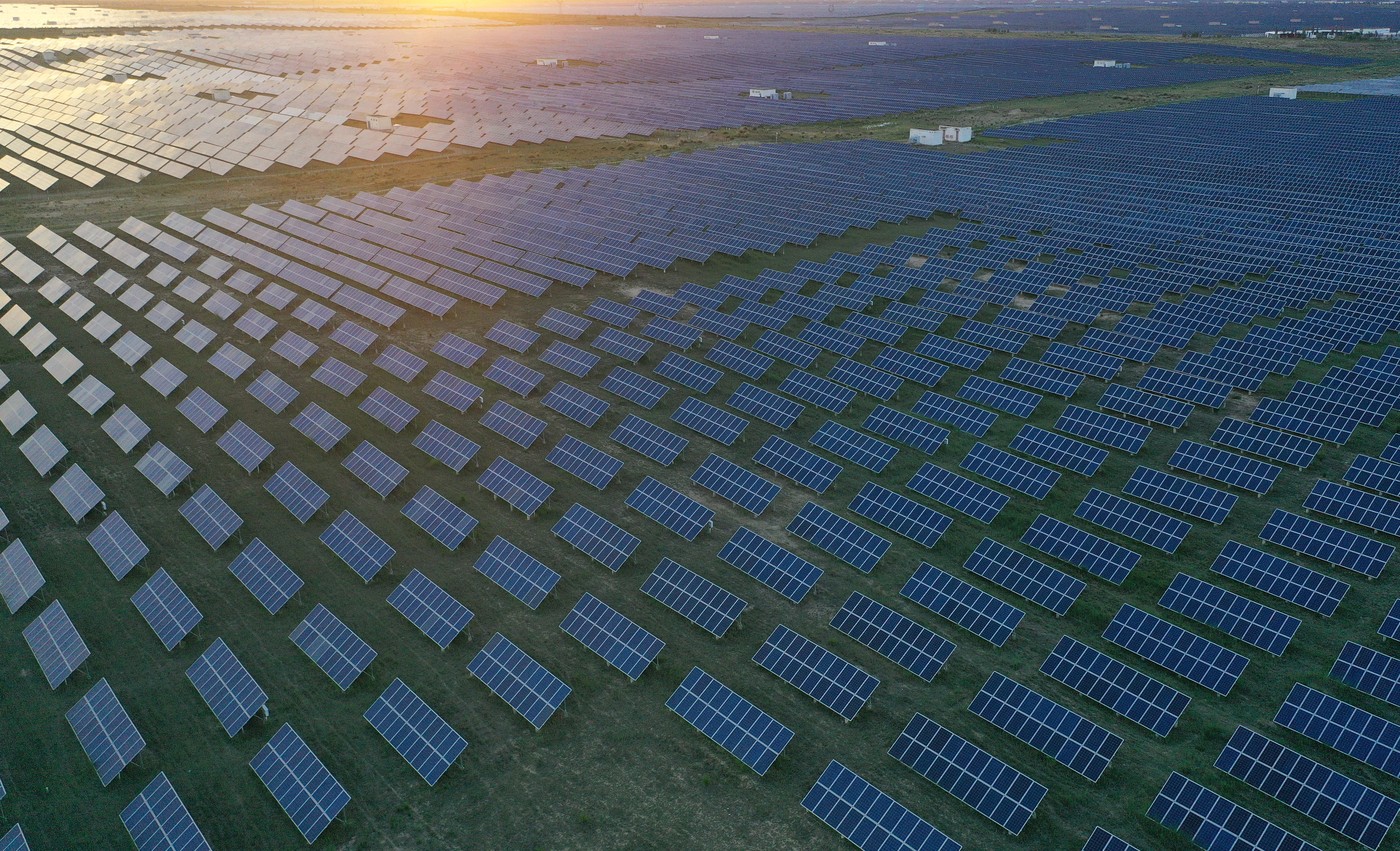
Talatan Solar Complex is located in Gonghe County, Hainan Tibet Autonomous Prefecture. Its dimensions are difficult to see even on satellite images. It is a huge system being developed by Huanghe Hydropower, part of the State Power Investment Corporation.
By 2026, the installed capacity has reached approximately 21 gigawatts, while the annual production exceeds 18,000 gigawatt hours of electricity. When fully completed, the complex will cover more than 600 square kilometers, with more than seven million solar panels.
However, it was not only the amount of energy produced that attracted the attention of researchers.
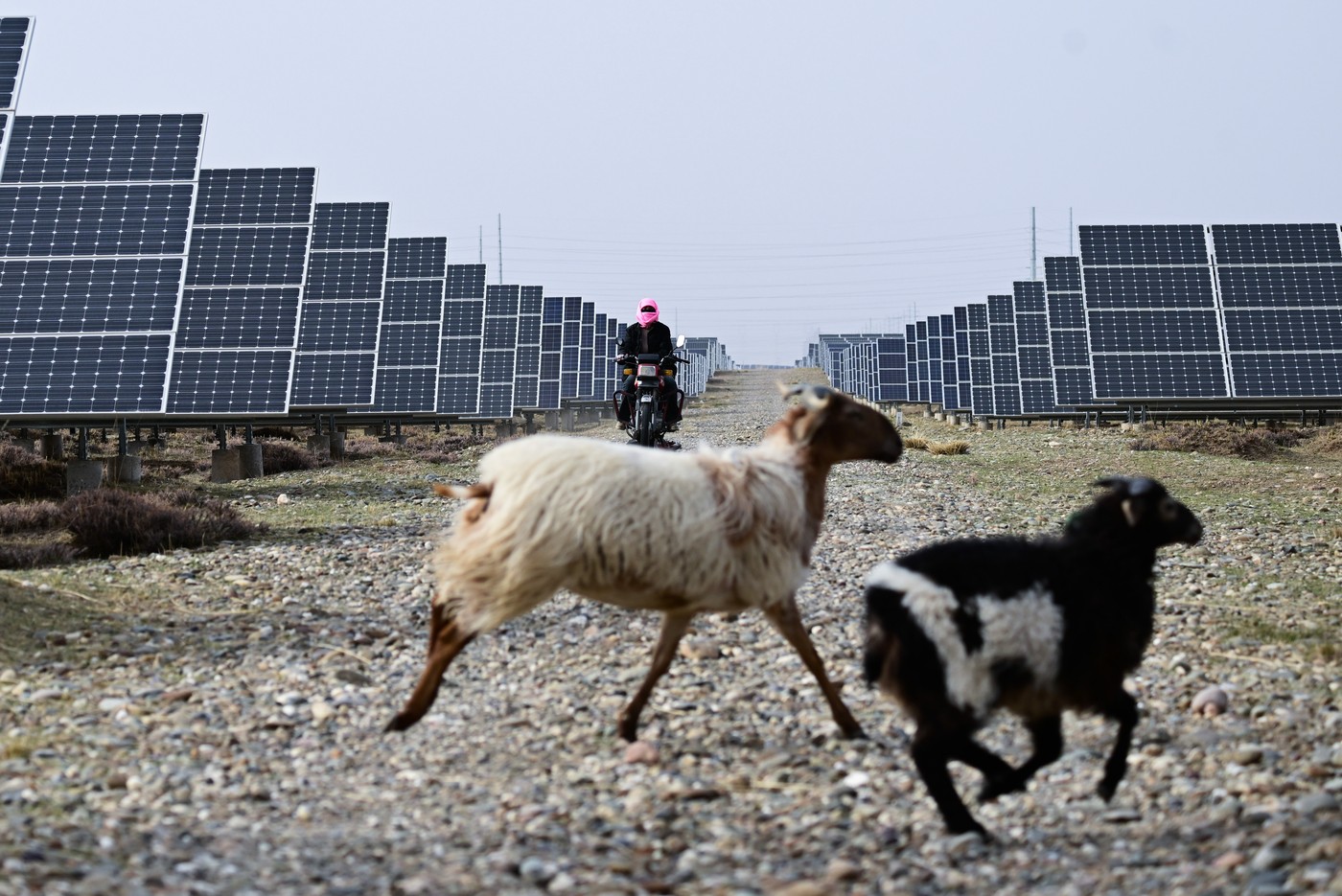
Much more interesting was what was happening under the panel.
Before the construction of the power plant, Talatan was one of the harshest areas for cattle breeding in the region. According to Chinese data, almost 99 percent of the surface was covered with sand. Grass was scarce, and local herders often had to travel long distances to find enough food for their herds.
With the arrival of millions of panels, the microclimate of the soil also changed.
The panels reduced the direct exposure of the soil to the sun, so water evaporation became significantly less. The water used for maintenance and washing of the panels partly ends up in the soil, while the rows of structures themselves represent a kind of wind protection.
The result was surprising.
According to the operator’s data, the wind speed was reduced by about 50 percent, soil evaporation by a third, while the vegetation cover reached about 80 percent in just a few years.
Independent research published in a journal Scientific Reports it confirmed that the conditions inside the complex are significantly better than in the surrounding desert areas. Scientists noted higher soil moisture, more developed vegetation and richer microbial life.
And then an unexpected problem arose.
The grass started to grow so fast that in some places it reached more than one meter in height, obscuring the solar modules and reducing their efficiency.
The solution was not found in machines or chemicals.
It was found in sheep.
Follow us on our Facebook and Instagram page, but also on X account. Subscribe to PDF edition of Danas newspaper.