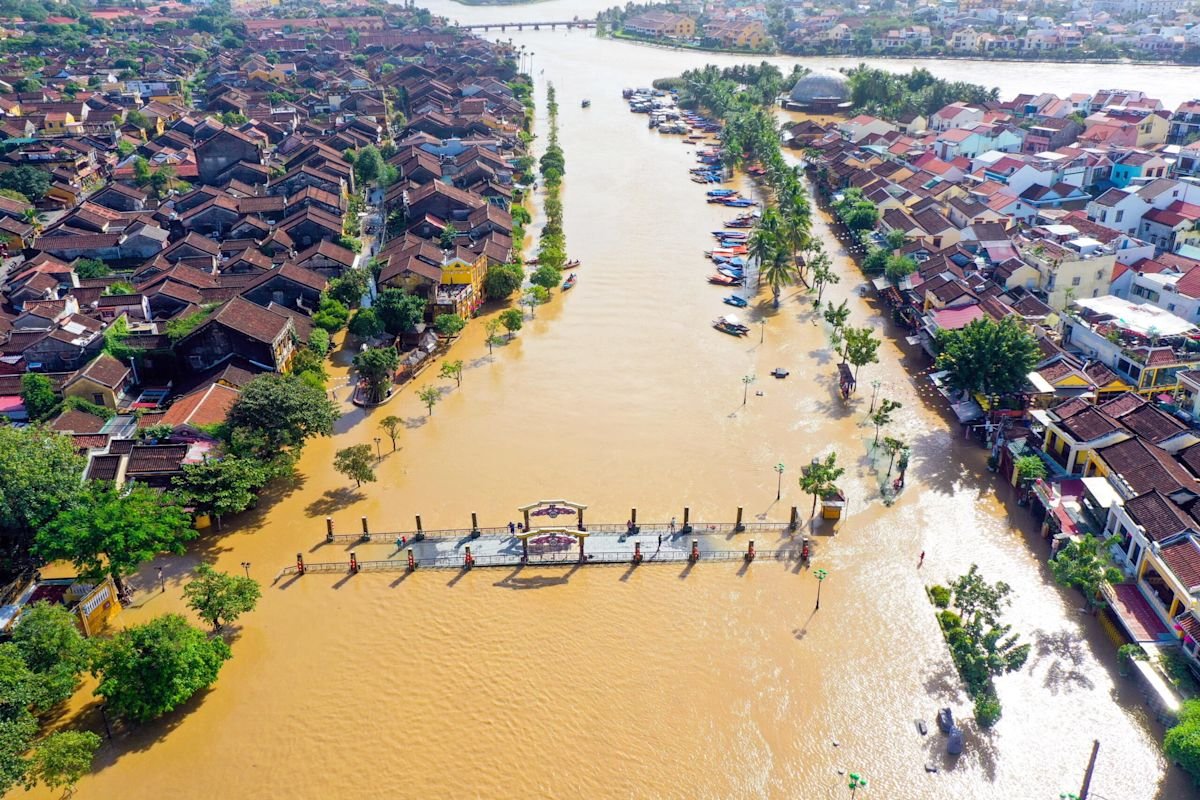
The world could have 216 million climate refugees by mid-century. These people will need to live with climate change. In most cases the trigger will be extreme heat, drought, or flooding. The World Bank’s recent analysis titled “Groundswell,” gives estimates by region. “They will migrate from areas with lower water availability and crop productivity and from areas affected by sea-level rise and storm surges.” A second problem is that they may have nowhere to go.
There are several nations that may have no residents at all by the end of the century. These are the Maldives, Tuvalu, the Marshall Islands, Nauru, and Kiribati. The challenge is simple. Most of these islands are only a few feet above sea level. The most striking of these is the Maldives, where the highest point is only seven and a half feet above sea level. Groundswell reports, “The Maldives have the lowest-lying territory of any country, with more than 80 percent of the islands less than 1 meter above sea level.”
The stunning part of The Maldives situation is that the nation currently has a population of 600,000 people. The closest large land mass is India, which is 470 miles away. It is mind boggling that this many people could be moved and where they might relocate.
Tuvalu has a population of 11,000. The closest large landmass is Australia. The two countries have already begun preparations. According to NBC, “More than one-third of Tuvalu’s 11,000 population applied for climate visas to migrate to Australia under a deal the countries struck two years ago.”
The Marshall Islands have a population of 53,000 spread across several islands. They are over 1,000 miles from any substantial land mass. The University of Hawaii reports. “Over the past decade, the residents of the Marshall Islands have been hit by a devastating one-two punch: droughts have drawn down drinking water supplies to emergency levels and “king tide” flooding events have completely over-washed and inundated the islands.”
Republic of Nauru covers only eight square miles. It has a population of 8,000 and is the third smallest nation in the world based on land mass. Australia is 3,000 miles away.
Kiribati has a population of 130,000. Anote Tong, the nation’s president until 2015, commented “For our people to survive, then they will have to migrate. Either we can wait for the time when we have to move people en masse or we can prepare them—beginning from now.”
Each of these has three problems. Their populations need to leave. Most are thousands of miles from any large landmass. And, there is no ready incentive for another nation to accept their residents.