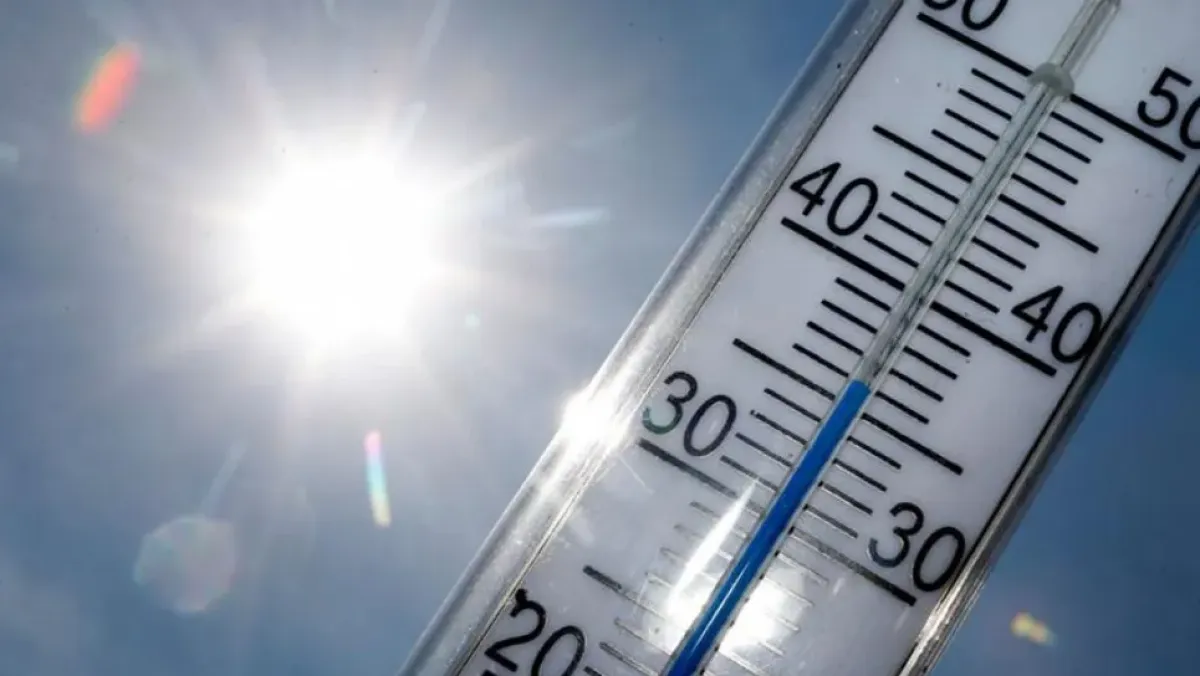
A new report issued by the United Nations World Meteorological Organization and the British Meteorological Office warned that the world is close to recording near-record or record temperature levels during the next five years, amid expectations of an accelerated pace of warming, especially in the Arctic regions compared to the rest of the world.
The annual report, issued yesterday, Thursday, stated that average global annual temperatures near the Earth’s surface may range between 1.3 and 1.9 degrees Celsius above pre-industrial revolution levels recorded between the years 1850 and 1900.
The report said it was 86 percent likely that one of the years between 2026 and 2030 would break the record currently recorded in the name of 2024, as it is the hottest year ever.
The same source added that the probability of average global temperatures near the surface exceeding the threshold of 1.5 degrees Celsius above 1850-1900 levels for at least one year between 2026 and 2030 reaches 91 percent.
The report indicated that this scenario had previously been achieved in 2024, when the average global temperature of the Earth’s surface reached about 1.55 degrees Celsius above the rates of the reference period prior to the industrial revolution.
The report confirmed that there is a 75 percent chance that average temperatures during the period between 2026 and 2030 will exceed the threshold of 1.5 degrees Celsius, compared to the average for the period 1850-1900.
On the other hand, the report pointed out that the possibility of global temperatures exceeding the threshold of two degrees Celsius in just one year out of the next five years remains weak, as it does not exceed one percent. Regarding climate phenomena, the report expected that the central tropical Pacific region, known as the El Niño 3.4 region, would move towards conditions associated with the El Niño phenomenon, especially during the years 2027 and 2028.