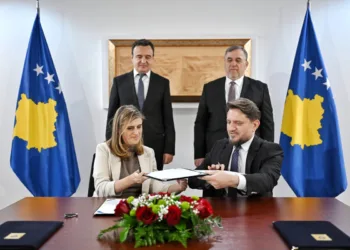
The Ministry of Agriculture, through a publication on Facebook, has published the amount of subsidies foreseen for each sector of agriculture.
According to the announcement of Minister Armend Muja, the direct payment program for 2026 combines the basic payment, those related to the production of priority crops, measures to stabilize the market, the redistributive payment for the first hectare and ecoschema to increase local production and strengthen food security.
The mayor of Rahovec, Smajl Latifi, after the publication on Thursday, said that with the new decision of the Ministry, the support for winegrowers will be 150 euros per hectare, from 1100 euros. Minister Muja reacted to this by denying it. And now, the Ministry has published the amount foreseen for subsidy in each sector.
Division into sectors
1. FOOD SECURITY AND STRATEGIC CULTURES
1.1 Cereals
1.1.1 Wheat – The standard support for wheat amounts to €304/ha, through the basic payment, market stabilization measures and support for agricultural inputs. Farmers can also benefit from an additional €100/ha for the first hectare, as a redistributive payment in favor of small and medium-sized farms. In addition, farmers benefit from an additional payment of €0.04/kg, based on the production and yield achieved. With an indicative yield of 3,225 kg/ha, this translates into around €129/ha of additional support, bringing the total potential support up to around €433/ha, excluding the first hectare additional payment. Within the program, specific support is also provided for the production of wheat seed, with the aim of strengthening food security, increasing the quality of planting material and developing the local supply chain of quality seed.
1.1.2 Corn – Support for corn amounts to €329/ha, through basic payment, support for strategic crops, market stabilization measures and support for agricultural inputs. Farmers can also benefit from an additional €100/ha for the first hectare, as a redistributive payment in favor of small and medium-sized farms. Maize is treated as a strategic crop of particular importance for food security, the supply of the food industry and the livestock sector, having a key role in the local production of food for humans and animals.
1.1.3 Barley, oats and rye – The standard support for these crops amounts to €304/ha, through the basic payment, market stabilization measures and support for agricultural inputs. Farmers can also benefit from an additional €100/ha for the first hectare, as a redistributive payment in favor of small and medium-sized farms. These crops are supported because of their important role in supplying the livestock sector, diversifying agricultural production and maintaining the economic stability of rural areas, contributing to the sustainability of local production and food security.
1.2 Protein, oil and industrial crops
1.2.1 Sunflower – Support for sunflower reaches up to €454/ha, including the basic payment, support for strategic culture, market stabilization measures and the possibility of support in the context of organic conversion. Farmers can also benefit from an additional €100/ha for the first hectare, as a redistributive payment in favor of small and medium-sized farms. Sunflower is supported because of its importance in local production of edible oils, diversification of agricultural crops and reduction of dependence on imports.
1.2.2 Beans – Support for beans amounts to €754/ha, combining the basic payment, production-related support, market stabilization measures and agricultural input support. Farmers can also benefit from an additional €100/ha for the first hectare, as a redistributive payment. The bean is treated as a strategic protein crop of particular importance for food security, import substitution and increased local production of products with high nutritional value.
1.2.3 Potato – Support for potato reaches up to €754/ha, through a combination of basic payment, production-related payment, market stabilization measures and support for agricultural inputs. Farmers can also benefit from an additional €100/ha for the first hectare, as a redistributive payment. Potato is considered a strategic crop for local food supply, market stability and support of market-oriented agricultural production.
2. VEGETABLES, ORCHARDS AND VINEYARDS
2.1 Vegetables and intensive production
2.1.1 Vegetables in the open field – The standard support for vegetables in the open field amounts to €704/ha, through the basic payment, the production-related payment and support for agricultural inputs. Farmers can also benefit from an additional €100/ha for the first hectare, as a redistributive payment in favor of small and medium-sized farms. The policy aims to increase domestic production, more stable market supply and decrease seasonal vegetable imports.
2.1.2 Vegetables in greenhouses – Support for vegetable production in greenhouses amounts to €1,054/ha, reflecting the highest level of investment, productivity, production intensity and employment in this sector. Also included is the possibility of an additional €100/ha for the first hectare. The greenhouse sector is considered a strategic priority for increasing local production throughout the year, modernizing agriculture and increasing the competitiveness of local products.
2.2 Arboriculture, viticulture and perennial crops
2.2.1 Fruit trees, nuts and small manor fruits –
Support for horticulture amounts to €654/ha, including the basic payment, support for inputs and the possibility of additional support within organic production and organic conversion. Farmers can also benefit from an additional €100/ha for the first hectare, as a redistributive payment. Horticulture is considered a sector with high export potential, added value and long-term rural development.
2.2.2 Raspberry – Raspberry growers benefit from a payment of €0.20/kg for the delivered production, as well as additional support for the area of €150/ha. Due to the high production intensity, export orientation and high commercial value, the total support for this crop can be significantly higher than for traditional agricultural crops. The sector aims to increase exports and strengthen value-added production.
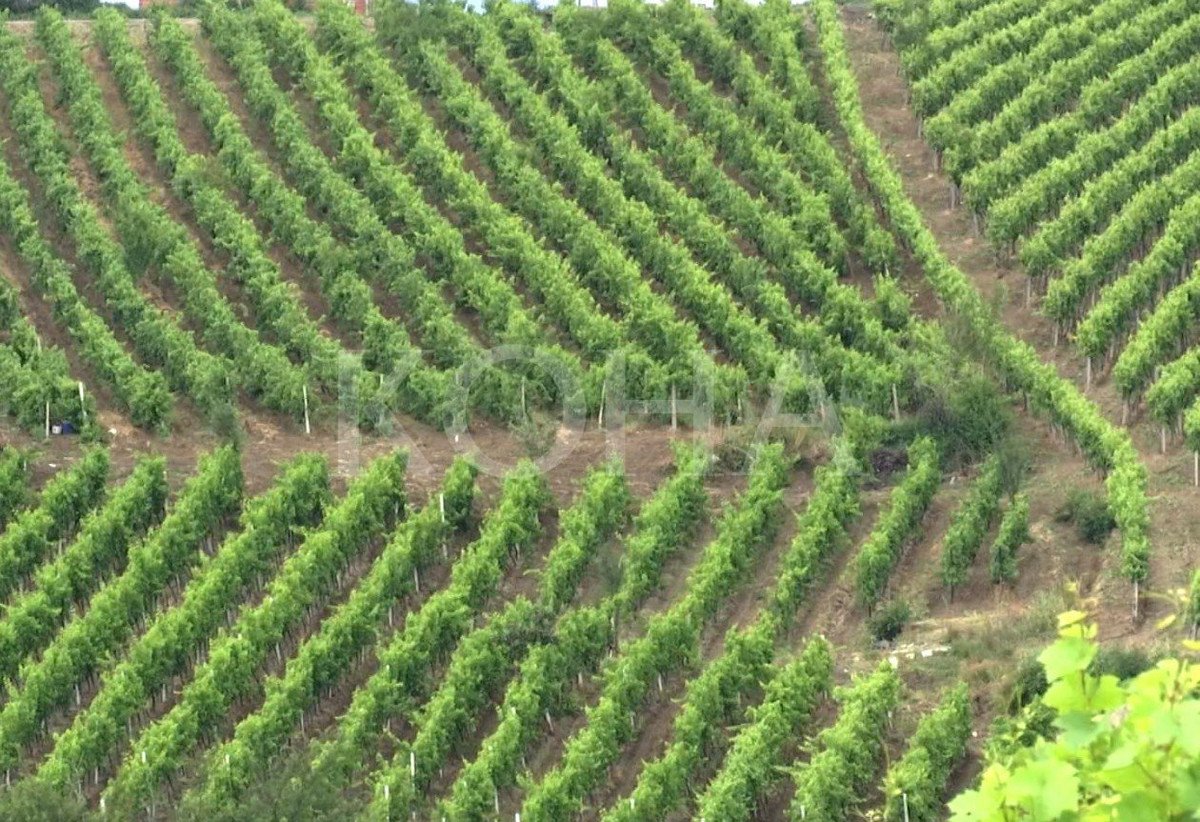
2.2.3 Viticulture – Vineyards are supported with €1,104/ha, through the basic payment, support related to production and agricultural inputs. Farmers can benefit from an additional €100/ha for the first hectare. In addition to the surface support, the produced wine is supported with 0.08 €/liter, while the vineyard seedlings with 0.15 €/unit, with the aim of developing the wine industry, modernizing viticulture and increasing exports of local products.
2.2.4 Medicinal and aromatic plants – Support for medicinal and aromatic plants amounts to €504/ha, including the basic payment, support for inputs and the possibility of additional support for organic production and organic conversion. Also included is the possibility of an additional €100/ha for the first hectare. This sector is considered with high export potential, economic diversification and rural development, especially in the hilly and mountainous areas of Kosovo.
3. LIVESTOCK
3.1 Basic livestock and reproduction
3.1.1 Dairy cows – Supported with €90/head to encourage local milk production and formalization of the sector.
3.1.2 Heifers for reproduction – Supported with €60/head to strengthen the reproductive capacities of farms.
3.1.3 Calves – Supported with €30/head for the development of the meat sector and renewal of the herd.
Buffaloes – Supported with €180/head for the preservation and development of this specific livestock sector.
3.1.4 Sheep and goats – Support for sheep and goats for breeding is €30/head, with a focus on rural and mountain areas.
3.2 Poultry
3.2.1 Chickens and broilers – Chickens are supported at €0.50/head and broilers at €0.20/head, to support local production of eggs and poultry meat. This sector is supported due to its important role in supplying the local market with animal proteins and the potential for increasing local production.
3.3 Pigs
3.3.1 Sows for reproduction are supported with €25/head for the stabilization of the pig sector, the increase of local production and the strengthening of reproductive capacities in livestock farms.
4. PRODUCTION QUALITY AND DIVERSIFICATION
4.1 Quality and formalization of milk production
Milk – Payment is made according to the quality class:
• €0.07/liter for Extra Class
• €0.04/liter for Class I
• €0.02/liter for Class II
This scheme aims to increase quality, formalization and food safety standards in the dairy sector.
4.2 Beekeeping
4.2.1 Beekeeping – Beehives are supported with €25/hive, while organic beekeeping with €30/hive, supporting local honey production and biodiversity.
4.3 Aquaculture
4.3.1 Aquaculture – Fish production is supported with €0.25/kg to promote the development of aquaculture and the diversification of the rural economy.
The expected units, indicative rates and individual allocations presented within these indicative orientations constitute the guiding basis for the working groups responsible for the drafting, consultation and finalization of the Annual Program for Direct Payments and the relevant by-laws. These orientations are based on sectoral analyses, agricultural policy priorities, needs for food security, rural development and local production growth, as well as on the budget capacities programmed for 2026. At this stage, rates and allocations are indicative and may be revised during the program finalization process, depending on the results of consultations, the number of expected applicants and the development priorities of the sectorrit agro-food.