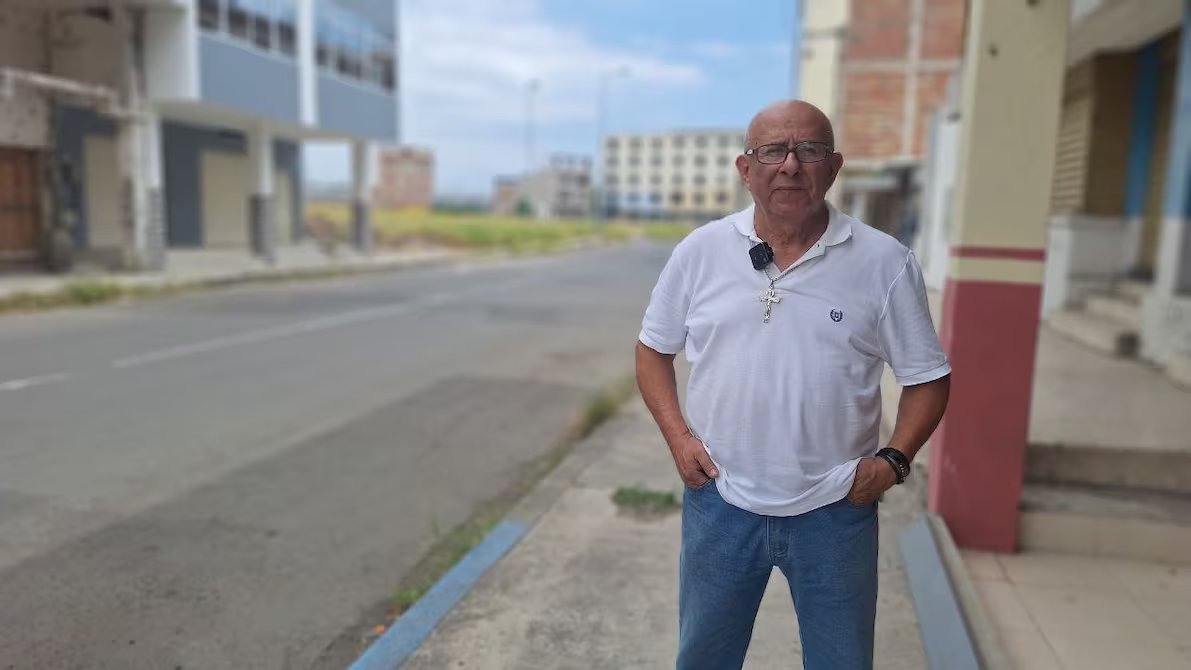
What of José Ramón Sornoza it’s pure nostalgia. Every day, from Monday to Friday, at eight in the morning, he lifts the metal door of his bazaar in Tarqui, Blanketbut there are no clients, nor sales. There is only him and his memories of what was once the largest commercial area in Manta.
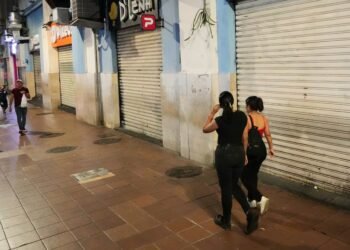
José opens the business, sits behind a display case and looks out at the street, while, counting by himself, around ten to fifteen people pass by a day.
And that makes him sad.
Because before, the 108th avenuewhere its bazaar is located, was once a commercial corridor packed with carts with merchandise, parasols and tarps that protected from the sun, large businesses and, above all, noise, a lot of noise, which only slowed down – it did not end – at 10 at night, to start again in the early morning.
Manabí will remember nine years of the 2016 earthquake with masses and events
Today, that street seems suspended in time, frozen in a date that Tarqui seems not to have overcome: April 16, 2016.
That day a 7.8 magnitude earthquake which had as its epicenter Flintsin the north of Manabi. However, the destruction spread to other cities in the province. Blanket was one of the most affected. This Thursday marks ten years since the tragedy.
José had then been in the same location for more than 30 years. He bought it when Tarqui It was the economic engine of the city. Then the earthquake happened, people fled, they closed their stores, but not him. He’s still there. Not to make money, he says, it’s more out of habit.
“It’s the nostalgia of being here, looking at the people passing by. It’s a great nostalgia, sometimes it sells, sometimes it doesn’t, but here we are,” he points out.


A shopping center that stopped beating
Before the earthquake, Tarqui I didn’t sleep. Commerce occupied every space, every sidewalk, every doorway on at least nine avenues and eleven streets. Everything was sold: clothes, appliances, food, used items, spare parts, whatever the mind could imagine.
Every morning, vans full of people from other cantons arrived, such as Portoviejo and Panamawho were going to try their luck as merchants. The buildings served on the ground floor as premises and warehouses, while on the upper floors they were rental rooms for the same sellers.
But the earthquake changed that dynamic in minutes. That Saturday, at 6:45 p.m., at least 23 blocks were destroyed and in that place alone at least 35 people died of the 219 who died in Blanket during the tragedy. Most of them were in a shopping center called Felipe Navarrete. In Tarqui, 19 hotels were left in rubble.

Ten years later, only six blocks show commercial activity. The rest remains empty and, in some areas, there are still traces of the earthquake: destroyed buildings, corroded by time, without windows, without doors.
The houses are dismantled little by little. Some serve as shelter for beggars. Others become risk points.
Five reconstruction works remain unfinished after nine years of the earthquake in Manabí
Return to a place that no longer exists
One block later, on the same avenue where José has his business, Leonel Moreira62 years old, has improvised a small store.

There are two tables, two drawers and a shelf where it shows tunarice, oil, eggs: the basics.
It doesn’t sell much either, he says. His friends and family arrive there, and he looks after them with great enthusiasm. Because his thing is to be there, in the same place where he worked and lived for more than 20 years.
Leonel remembers the day when everything changed. At that time I had an underwear business; He closed it minutes before the earthquake. He had reached the corner when the ground began to move.
“The building on the corner collapsed. I grabbed onto a column,” he says. “Then everything was fallen poles and destroyed houses. It was sad, very sad. It was desperation. We had never felt those deaths, desperate people,” he remembers.
That night he left Tarqui with his family. The next day he returned and found people looting the businesses.
“There were people taking the merchandise. They went into the ruined premises, into the fallen houses, and came out with sacks,” he says.

Ten years have passed since that day. Leonel does not see significant changes in Tarquihe doesn’t think it has improved.
“It’s been ten years and this cannot be recovered,” he repeats.
The economy that never returned
The collapse was not only physical. Also financial.
Most merchants worked with credit and closed their businesses. Many regrouped and formed, in another sector of Blanketa commercial area called New Tarqui.
Some were unable to reopen their businesses.
Galo Dávilaa merchant, returned three months after the earthquake. He invested in rebuilding his business and motivated others to do the same.
“It was illogical that it was not reactivated,” he maintains.
Gaul describes Tarqui as the “economic lung” of the province. A place where anyone could undertake.
“Here you brought a case with painted stones and you stood on a corner and sold them,” he points out.
Today he recognizes that there is specific progress, but still insufficient.
“There is a small sector that functions as a commercial anchor. But the rest remains abandoned,” he adds.
He says that there are streets without regeneration, deteriorated sidewalks and absence of public investment.
“The potential is there, it’s still here. Thousands of jobs could be generated,” he says.
Memory of a boom that no longer returns
Ramon Cevallos78 years old, remembers that he lived through the entire transformation of Tarqui.
He saw it emerge with the arrival of the train when, little by little, the people who got off—the merchants—were staying in the surrounding area until a market was formed.
By the 60s, the sector already concentrated thousands of inhabitants. A decade later, growth accelerated.
“Trade was permanent,” he remembers. “We worked 360 days a year. There were people everywhere; at Christmas you couldn’t even walk. Before, the hotels, the streets full of vendors, young people, families, tourists. All that disappeared in a matter of minutes with the earthquake,” he says.
Sometimes, Ramón walks home through the streets of Tarqui. He observes how he is, remembers what once was and it seems unreal that he no longer exists.
Images come to mind: the bustle of the merchants, the food in the market, the streets packed with people. But then the images of the earthquake are also mixed: fallen buildings, people crying, blocked streets.
And it gives him something, he says, a great sadness surrounds him and he quickens his pace to get home quickly and block out the memories.
Ramón’s thing could also be called nostalgia. (YO)