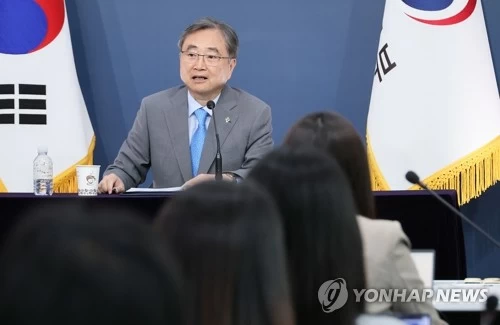
Today (Monday), a South Korean court issued a 25-year prison sentence against former Justice Minister Park Sung-jae, after convicting him of participating in carrying out measures related to the declaration of martial law that was temporarily imposed by deposed President Yeon Suk-yeol in December 2024.
The South Korean Yonhap Agency reported that the Seoul Central Court convicted Park on charges related to participating in the implementation of the martial law plan and abuse of power, considering that he played a pivotal role in supporting the measures taken by the executive authority during the political crisis that shook the country about two years ago.
According to the merits of the ruling, the court found that the former Minister of Justice participated in taking exceptional measures that included preparing for large-scale security and legal measures that targeted political figures and official institutions, within the framework of implementing the declaration of martial law, which at the time sparked a widespread wave of popular and political anger.
Park is the latest high-ranking official to receive judicial rulings against the backdrop of the crisis, which led to the removal of former President Yoon Suk-yeol and his trial in several cases related to the attempt to impose martial law and exceed constitutional powers.
Yoon had declared martial law on December 3, 2024, in a move described as the most serious political crisis South Korea has witnessed in decades, before Parliament was able to nullify the decision within a few hours and force the president to retract it. This was followed by extensive isolation and trial procedures that included a number of senior civilian and military officials involved in the case.
The new ruling comes within the framework of a series of judicial rulings issued against prominent officials in the previous administration, at a time when the South Korean authorities affirm their commitment to holding accountable all those involved in the crisis, which the courts considered an attack on the constitutional system and democratic institutions in the country.
The roots of the issue go back to December 3, 2024, when the then South Korean President, Yoon Suk-yeol, suddenly announced the imposition of martial law under the pretext of confronting what he described as threats to national security and the internal political situation.
Martial law lasted for only about 6 hours, before members of Parliament succeeded in holding an emergency session and voting to cancel it, forcing the president to retract his decision.
The crisis led to Yoon’s subsequent removal from office and trial on charges of rebellion and harming the constitutional order, as he was sentenced to life imprisonment in one of the main cases related to martial law.
Long prison sentences were also issued against a number of former senior officials, including the former prime minister, former defense minister, and security and military officials, in one of the largest waves of political and judicial accountability in South Korea’s modern history.
A court in South Korea issued a 25-year prison sentence today (Monday) against former Justice Minister Park Sung-jae after convicting him of participating in the implementation of measures related to the declaration of martial law temporarily imposed by the ousted President Yoon Seok-youl in December 2024.
The South Korean news agency “Yonhap” reported that the Central Court in Seoul convicted Park on charges related to participating in the execution of the martial law plan and abuse of power, considering that he played a pivotal role in supporting the actions taken by the executive during the political crisis that shook the country nearly two years ago.
According to the court’s reasoning, it was found that the former Justice Minister participated in taking exceptional measures that included preparing extensive security and legal procedures targeting political figures and official institutions, as part of the implementation of the martial law declaration that at the time sparked widespread public and political outrage.
Park is the latest high-ranking official to receive judicial sentences in connection with the crisis, which led to the impeachment of former President Yoon Seok-youl and his trial in several cases related to the attempted imposition of martial law and exceeding constitutional powers.
Yoon declared martial law on December 3, 2024, in a move described as the most serious political crisis South Korea has faced in decades, before parliament was able to overturn the decision within a few hours, forcing the president to retract it. This was followed by impeachment proceedings and extensive trials involving several senior civilian and military officials involved in the case.
The new ruling comes as part of a series of judicial sentences issued against prominent officials in the previous administration, as South Korean authorities reaffirm their commitment to hold all those involved in the crisis accountable, which the courts considered an assault on the constitutional order and democratic institutions in the country.
The roots of the case date back to December 3, 2024, when the then South Korean president, Yoon Seok-youl, unexpectedly declared martial law, claiming to confront what he described as threats to national security and internal political conditions.
The martial law lasted for only about 6 hours before members of parliament succeeded in convening an emergency session and voting to annul it, forcing the president to retract his decision.
The crisis later led to Yoon’s impeachment and trial on charges of rebellion and harming the constitutional order, resulting in a life sentence in one of the main cases related to martial law.
Long prison sentences were also issued against several former senior officials, including the former Prime Minister, the former Minister of Defense, and security and military officials, in one of the largest waves of political and judicial accountability in modern South Korean history.