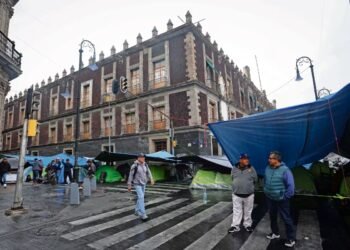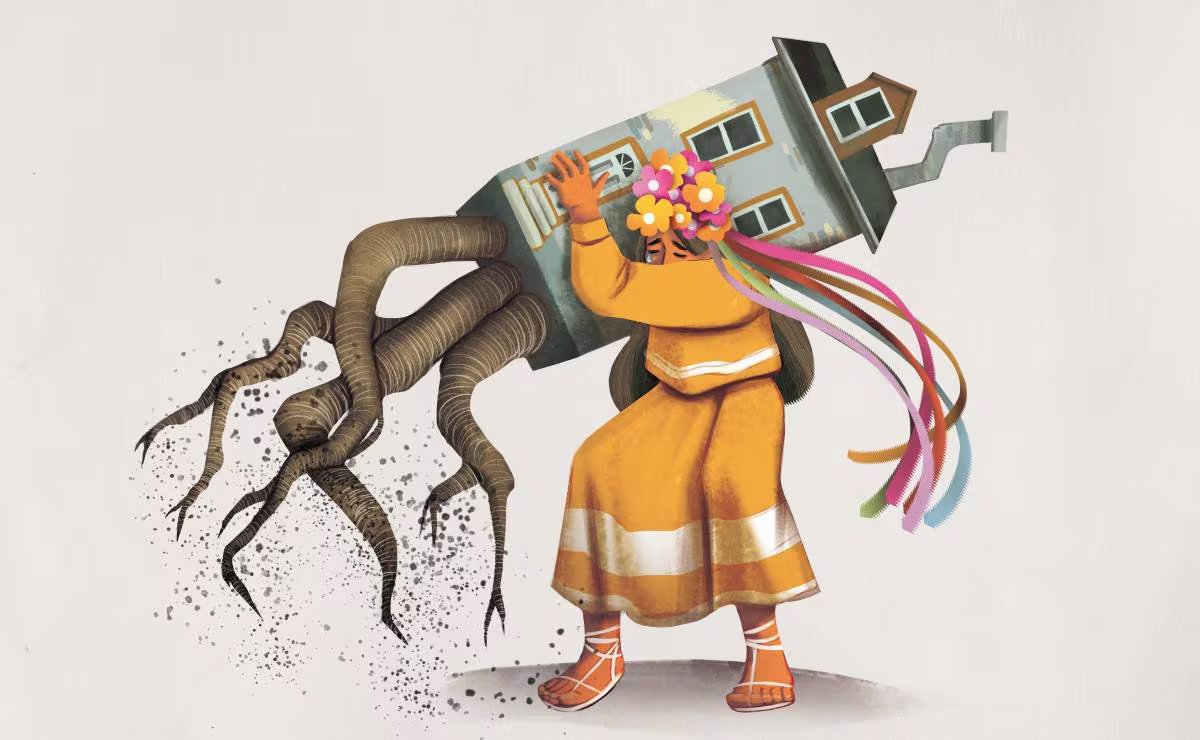
Chihuahua.— Despite the passing of the years, in regions that are located in the municipalities of the so-called Golden Triangle, in Chihuahua, the forced displacement It is an everyday reality.
Dozens of people leave their homes, their lands and their roots because of the racketeering.
Gabino Gómez Escárcega, activist and member of the Women’s Human Rights Center (Cedehm), explains to THE UNIVERSAL that the problem of forced displacement in Chihuahua persists, but now the biggest problem is that the state makes the victims of this situation and are not recognized as such.
Read also “The towns are left empty”
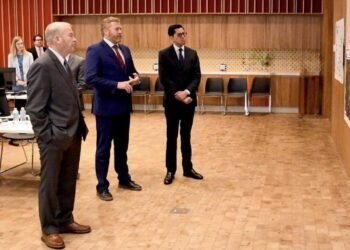
In recent days a group of social organizationsboth from the state and from other parts of the country, carried out the Civil Observation Mission on Internal Forced Displacement in Chihuahua, where they sought to know and share testimonialscontexts and concerns documented during a tour of different municipalities to learn more about this problem.
The Civil Observation Mission sought to make visible the serious situation faced by displaced families and contribute to the demand for truth, protection and justice for the affected communities.
In the official and public report, released by the Civil Mission, it indicates that, according to figures estimated by civil organizations and the media—since there is no official census—, in 2021 there were 500 displaced people, while by 2025 it is estimated that there will be more than 1,500 people in Forced Internal Displacement (DFI), that is, the number of victims tripled, and in 2026 the number continues to increase.
“Internal forced displacement in the state of Chihuahua began more than a decade ago. In 2008, the first forced displacements were recorded in the region of Baborigamethen the siege, threat and murder of defenders of the land, territory and environment, displacing their families from their communities.
“Year after year we have known these stories; however, since 2024 we began to record events of massive forced displacement, as is the case of Jams and in recent days of families from the municipality of Tamazula, state of Durango”says the document.
Gómez Escárcega observes that in Chihuahua there is currently a situation that seeks to make displacement invisible.
“Being displaced simply by the violencethey are not recognized as victims or they try to minimize the support that can be granted emergently,” the activist says in an interview.
According to him, in this state there are communities who have been displaced for 10 years and in other cases, where they had to leave their communities weeks ago.
In addition to internal displacement, there is also external displacement, where it has been documented that municipalities in Chihuahua, such as Hidalgo del Parralpopulation arrives from other entities, displaced by violence, which is welcomed by family members, acquaintances and even by the municipal authority itself.
“The problem has gone beyond the municipalities, the state government, and whoever would have the direct obligation to address the problem, does so in a limited way and not to mention the federal government which is totally absent from this topic,” says Gómez Escárcega.
According to the activist, the fight by criminal groups for the territorial spaces in the mountain region of Chihuahua is what causes displacement in the entity.
He affirms that organized crime is confronted in the communities and in the middle is the civilian populationwho suffers the effects.
“It’s a war that one of the girls who participated in one of the meetings we have even calls it. Violence, that’s the reason,” she says.
Read also Contents, hospital admissionsr fentanyl
This situation occurs in municipalities such as Guadalupe and Calvo, Guachochi and in recent times there has also been displacement in the municipalities of Balleza in El Vergel, Moris, Uruachi, as well as Madera, all in the mountain area from Chihuahua.
“These are municipalities that have suffered the impact of displacement; particularly a few months ago in the communities of Moris and Uruachi, which are adjacent, people had to leave and came to Cuauhtemoc. On the Madera side, it is the Norteña region where there were also effects that reached the Madera region as displaced people.”
According to Gabino Gómez, families displaced by violence, some are welcomed by civil organizations, as has already happened years ago, to return to their place of origin and recover their lands.
Other groups that have arrived in municipalities such as Parral They are still displaced and dispersed, suffering from economically complicated situations and without receiving any type of support.
There are also groups that, although they have been told that there are conditions to return to their territories, this is not the case.
Read also They identify members of a family shot inside their home in Culiacán; one of them is pregnant
“The fact that they have returned does not really solve their problem. In the group that returned there are currently two victims, one missing and the other murdered. They had been displaced by violence, they are convinced to return and with those conditions and again the people live in fear of the clashes. What is required here is an effective intervention by the Mexican state as a whole, of all levels of government to control the areas in those places,” says the activist.
To date, there is no figure or estimate of how many cases of displacement there are, since the organizations assure that the authority does not want to recognize displacement as a problem.
“The demand is that it be recognized in the state and in the country, because it is not only in Chihuahua, but in several regions of the country. In general, there is the need for there to be a law for displaced people, just as there is for missing persons, the victims’ law.”
According to public information from the Civil Mission that was carried out in Chihuahua in recent days, it was possible to speak with 200 people who were victims of DFI, mainly from the Sierra Tarahumara, of municipalities of SinaloaDurango and Chihuahua, specifically from the municipality of Guadalupe y Calvo.
Similarities were found in the systems and patterns of behavior that armed groups deploy as strategies to terrorize families and finally expel them from their homes, and then occupy their homes and strip them of their assets: crops, livestock, furniture, homes and territories.
“Families are not only taken away from their material goods: they are stripped of their tranquility, of a full community life, of the exercise of their cultural identityof the celebration of their ceremonies and traditions that are an essential part of their being, of their attachment to the land, the forest and the work of the peasantry.
“The planting of their food, the collection of medicinal herbs, the celebration of their traditional festivals also shaped their well-being and, together with their material possessions, gave them a quiet life free of violence, but, above all, they gave them autonomy and the possibility of directing their lives.
“In addition, children and adolescents have their childhood taken away from them, education and healthas well as the opportunity to grow up playing in their territories, and, on the other hand, it gives them worries and fears that they do not have to carry at their age, which means a severe developmental disruption“, reads the official report.
As a result of these findings, the organizations proposed that the Commission on Forced Internal Displacement of the Government of Chihuahua integrate the participation of civil organizations of local human rights in the process of collaboration and comprehensive attention, in addition to the installation of an Interinstitutional Roundtable for attention to Internal Forced Displacement with the participation of the three levels of government, with the participation of affected families and civil human rights organizations with experience in comprehensive attention to the issue, among other aspects.
Local, national and international organizations participated in the Observation Mission.
Join our channel EL UNIVERSAL is now on Whatsapp! From your mobile device, find out about the most relevant news of the day, opinion articles, entertainment, trends and more.