The MPs are clearly worried about this. For years, Borssele was the preferred location for the construction of two new nuclear power stations. Now it appears, including research by Tennet, that Borssele is not only losing weight, but also that the other Zeeland location Terneuzen is difficult to integrate into the power grid. The other remaining candidate, Eemshaven in Groningen, is not interested in nuclear power stations.
“Everyone gets what they don’t want, absurd,” said BBB leader Henk Vermeer on Thursday in a parliamentary debate with a crowded public gallery. “Quite bizarre to turn your back on Borssele after four years,” said Pieter Grinwis (Christian Union). “This has gone down particularly badly in Groningen,” said Sjoukje van Oosterhout (Pro).
At the request of the cabinet, grid operator Tennet looked at how such nuclear power stations would fit into the power grid. At Terneuzen it became clear: two power stations would provide much more energy than Zeeland needs. And so a significantly higher power demand from new industry, for example, would be required, as would the shutdown of offshore wind farms and even the phasing out of the existing nuclear power plant in Borssele.
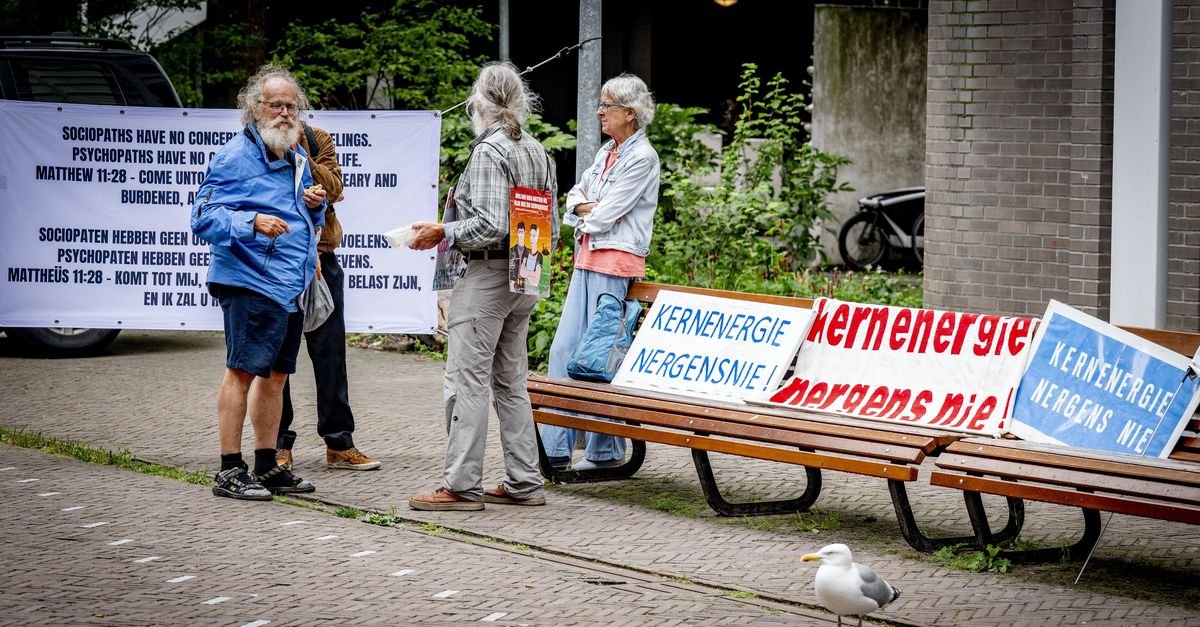
Frustration about the course of events was evident in the House of Representatives on Thursday. The Eemshaven, which was added to the list of potential locations by the previous cabinet only for legal reasons, is an option. A large part of the House of Representatives, which had previously spoken out against the construction of nuclear power stations there, now appears to not want to do so. The idea is that Groningen residents have already suffered enough from the earthquake problems caused by gas extraction. Left-wing parties asked State Secretary Jo-Annes de Bat (CDA) in vain whether he could exclude Eemshaven.
During the debate, MPs presented the cabinet with numerous alternatives. Was it not an idea to abandon the plan for two nuclear power plants? “Dogmatically adhering to the construction of two nuclear power stations may not be the right route,” said Grinwis (Christian Union). “Why not one power station in Borssele?”
The SGP asked whether it was not “wise” to investigate locations for one nuclear power plant instead of two. “In order to fit two power stations in Terneuzen, the electricity demand must increase fivefold, that shocked me,” said MP André Flach (SGP). “The industry will then have to expand significantly and, so to speak, the whole of Zeeland will be filled with data centers.”
‘No blank sheet of paper’
Some coalition parties are also carefully opening the door to alternatives. For example, Member of Parliament Henk Jumelet (CDA) wondered out loud whether there are “more routes conceivable to work towards 7 Gigawatts of nuclear energy?” According to Jumelet, for the CDA “the focus was not on the number of power stations, but on the goal.” D66 member Felix Klos said: “Incorporating large nuclear power stations is not easy, the Netherlands is not a blank sheet of paper.”
Coalition parties VVD, CDA and D66 jointly agreed to build not two, but even four nuclear power stations – just as the previous cabinet wanted. The notable addition in the coalition agreement was that they could be both conventional nuclear power plants and so-called SMRs (small modular reactors). A party like the CDA emphatically keeps that option open.
Also read
‘Small’ nuclear power stations are the future, many politicians think. But is that really the case?
:format(webp)/s3/static.nrc.nl/wp-content/uploads/2026/05/26163626/280526DEN_2033841832_SMR.jpg)
MP Jumelet emphasized on Thursday the importance of “an open mind”, whereby the cabinet must take into account the case that developments surrounding small modular reactors go faster than expected.
When the VVD noted that the large nuclear power stations are important, but “the revolution” comes from the SMR, JA21 MP Daniël van den Berg asked whether the VVD made a U-turn and preferred the SMR to the regular nuclear power stations. According to Alisha Müller (VVD), that was not the case. “For us it is both and.”
Dilemma
For the time being, the government is postponing the decision on (the location of) two large nuclear power stations. By the end of the year it should be clear which location the cabinet is aiming for. State Secretary Jo-Annes de Bat (Climate and Green Growth, CDA) defended his approach in Parliament: he is not yet making a choice, but is putting the “dilemma on the table”.
According to De Bat, the cabinet is “sticking to” the position of the previous government: preference is given to Zeeland. Several MPs have doubts about this: hasn’t the choice already been made now that Eemshaven seems to be the best from a “technical” point of view?
De Bat: “I sincerely try to make it clear that support is important. It is not a step we take lightly.” In the coming months, the State Secretary wants to further investigate how nuclear power stations in Zeeland could work.