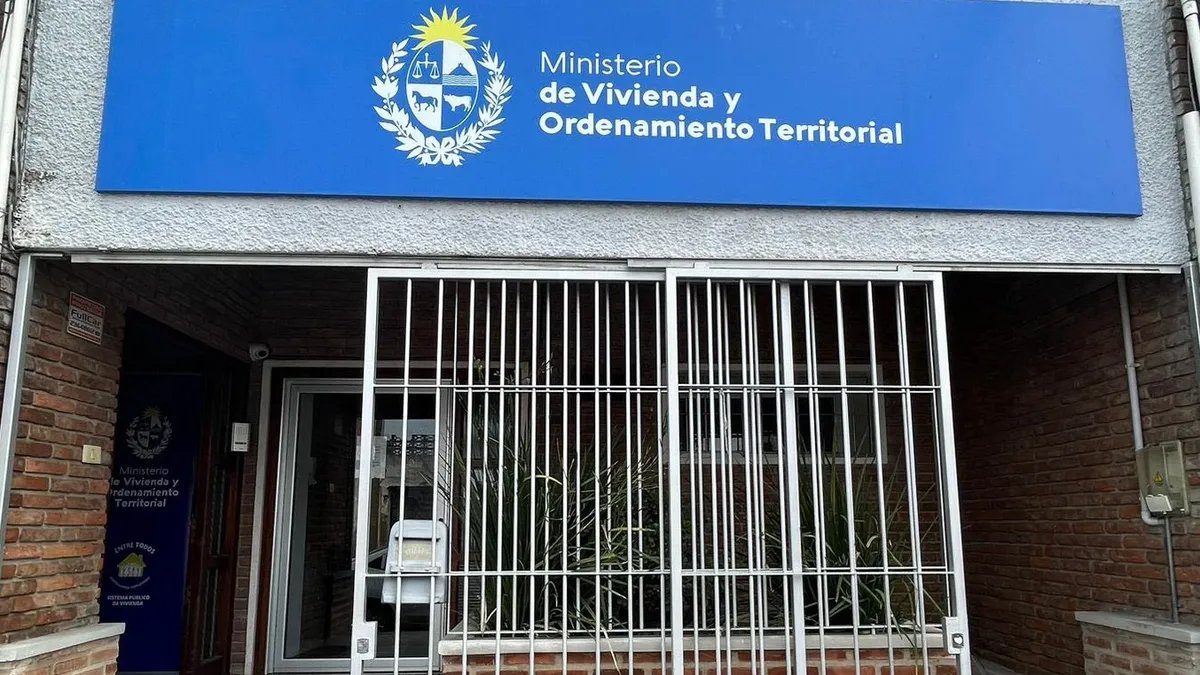
“When you build housing, you are building a city.” The phrase often repeated by the Undersecretary of Housing, Christian Di Candia, summarizes the concept behind the last adjustment that the government decided to make to the Entre Todos plan. Through a decree, the Ministry of Housing decided to limit to a maximum of 100 homes per project those that can be built in areas that “do not have adequate connection to the basic infrastructure (sanitation network), necessary urban equipment and services.”
The thing is that the government seeks to be as efficient as possible when building homes with existing resources and that the people who go to these new constructions are close to services (school, polyclinic, transportation) that can respond to the new demand.
Building in areas further away from city centers creates several problems. On the one hand, it requires basic services (sanitation, electricity, water, etc.) to be brought there and that means that public investment has to be greater than if it were done in places where these services are already available. On the other hand, people can be isolated from the rest of the city.
“You solve people’s housing but you complicate their lives because you distance them from the school, the polyclinic and the bus,” a source from the Ministry of Housing explained for this note. This is a problem that often arises when relocating settlements because they are generally located on the outskirts of cities where services do not always reach them.
And why is there a limit of 100 homes? The Ministry of Housing pointed out two reasons: many times in the areas there are services (school, CAIF, polyclinic) but if they suddenly have to receive 500 or 600 families they cannot respond to that demand. And on the other hand, extending a public service such as water to a few people does not necessarily affect the water pressure in the area as it can if there are hundreds or thousands of families.
In dialogue with The ObserverDi Candia mentioned the “drama” that they are experiencing with a case in Paysandú as an example of the situations that led to making this decision. In 2024, the government of Luis Lacalle Pou began interventions in eight settlements in that department in which more than 500 families were going to be relocated in different areas.
One of those relocations was that of the Parkway Sacra neighborhood, which was initially planned in two batches but later a third was added. The first two have already been completed and the nearly 120 homes are inhabited, but the third part of the plan is delayed.
The fact is that the 61 families who had planned to move into these homes – which are already ready – have not been able to do so because the water connection does not work as it should. There are access and water pressure problems. Companies like OSE usually work on pumping and infrastructure based on demand and the projections they make about how the population can move.
The Sanducero deputy of the Frente Amplio, Juan Gorosterrazu, assured The Observer that when the Ministry of Housing planned this intervention last period, OSE already told it that in the southern area of the department they had problems with water pressure.
In any case, the relocation was carried out and some intermediate solutions were found – such as making water wells to complement the water that comes from OSE – and with that it was possible to provide access to the first two stages of the project. However, for In the last stage there is still no solution because neither in the initial projection of Housing nor in OSE nor in the Municipality of Paysandú, according to the deputy, was an alternative budgeted that would allow access to water.
Given the lack of solutions, Gorosterrazu said that the Minister of Housing, Tamara Paseyro, committed a sum of US$ 450 thousand to be able to install a tank that can supply that area. However, formal steps are still missing (tenders, works, etc.) and there is no date for people to move.
From the Municipality of Paysandú, however, they have a different vision. The leader of the departmental government Nicolás Olivera assured in dialogue with The Observer that the Ministry of Housing took “one year and three months” to resolve something that should have been defined as soon as it was assumed. And he assured that That tank was always planned because OSE demanded it.
“People are starting to get warm because they see that their houses are ready but they can’t occupy them,” Olivera said.
Valeria Alegre, one of the neighbors waiting to be rehoused, regretted the delay in solving the water issue and assured that public organizations “pass the responsibilities”. “They sent us to knock on doors at OSE. We went, we talked and they told us that they had already provided a solution, but that the Municipality needed to pay,” he said in dialogue with Paysandú radio. Finally, Housing will be the one to take charge of the issue but there is no date for a move.
Liquify costs
The mayor of Paysandú also has doubts about the housing limit for projects that are far from basic services and He assured that it is necessary to analyze case by case. Many times, Olivera said, a large piece of land that allows many homes to be built together It helps reduce the costs of bringing services there.
When there is no land in connected areas, it is often easier and cheaper to build many joints than to build a few houses at a time, Olivera said. “We are putting obstacles to something that is already slow,” The mayor noted, adding that during the last period, 700 homes were intervened or built and that this government is much slower.
Anyway, The decree of the Ministry of Housing provides exceptions to the limit of 100 homes and says that they will be “considered and approved” by the Ministry of Housing when they are “duly founded” as long as they are “projects declared of interest” by the portfolio.
Other changes
The decree also establishes other changes linked to the Entre Todos program. One of them is that the role of the Technical Evaluation and Advisory Commission (CETA) changes since it becomes an advisor to the Ministry of Housing. Before, that commission was the one that approved the projects and the maximum prices. Now it will be the ministry.
Furthermore, until this change, the SIGA State guarantee could be used in unlimited housing projects. Now it is changed so that it only applies to projects with a maximum of 30 houses to prioritize small businesses.