The National Customs Directorate spread a video in which he explains the operation of the new control regime for international postal shipments and the steps that must be followed by those who carry out online shopping abroad.
According to the agency, the objective of the new measures is to reinforce the security of operations and prevent cases of identity theft detected in purchases made through web platforms.
In the video released by Customs, the institution maintains that “Now web purchases have more controls, to make their use safer“and clarifies that”The control is limited to verifying the ownership of the means of payment used in the operation.“.
Why was the new system implemented?
According to the official explanation, Customs decided to strengthen its control mechanisms after detecting situations in which third-party identities were used to make purchases abroad.
For this reason, users must previously register in a system designed to protect the identity of those who use the international postal shipping regime.
How to register
The procedure must be carried out through the portal customs.gub.uy.
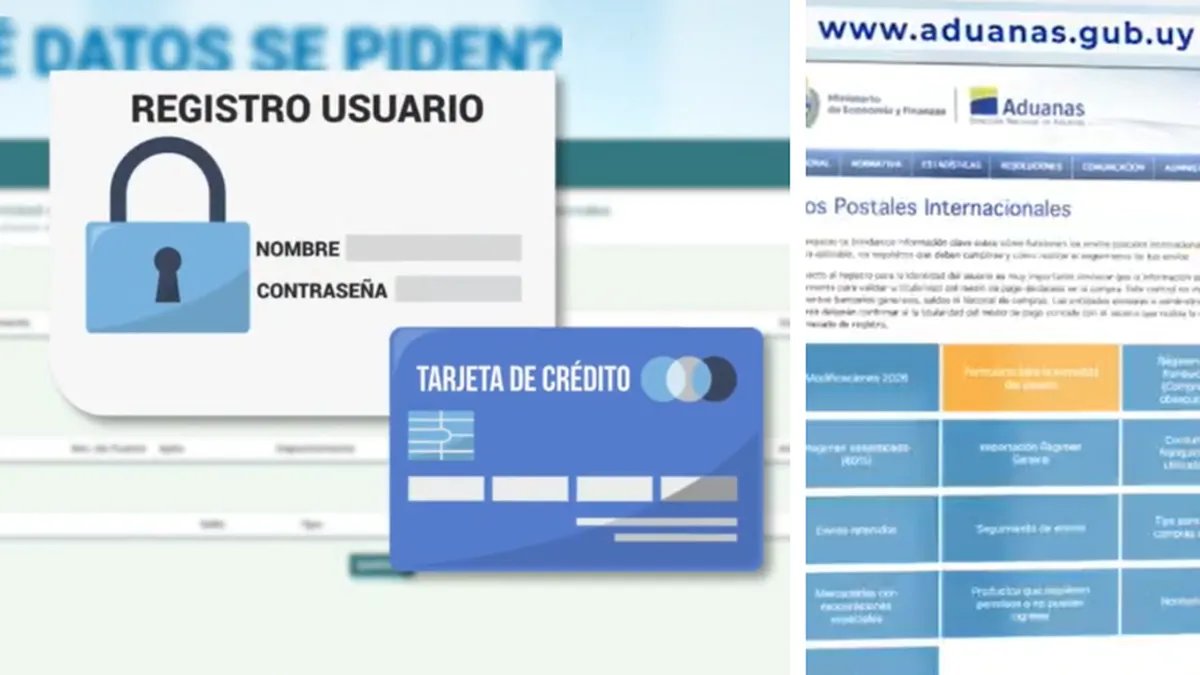
Once inside the site, users must enter the section International Postal Shipments and select the option corresponding to the Digital Identity Form.
Customs recalled that to complete the procedure it is necessary to have previously enabled the Digital ID.
What data does Customs request?
According to the organization, the following information will be requested during registration:
The objective is to validate that the person making the purchase is actually the owner of the payment method used.
“With the user’s authorization, Customs can compare your identity with that of the bank, to verify that the one who buys is the one who pays“explained the organization.
What information Customs will not be able to see
Given the doubts generated by the new system, the National Customs Directorate clarified that the procedure does not imply access to sensitive financial information of users.
As he indicated, “never access“to the history of purchases made, nor to the complete card data, nor to the bank transactions of the registered people.
According to the agency, the exchange of information is limited exclusively to the verification of the identity of the buyer and the ownership of the means of payment used in the operation.