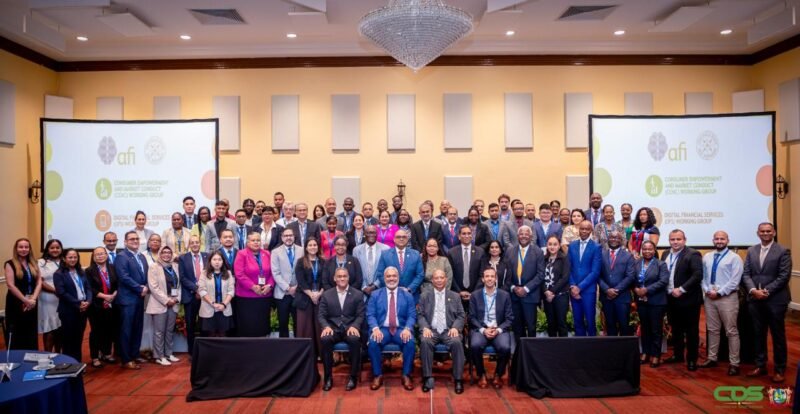
PARABARIBO — Against this background, in order to bring financial policymakers from different developing countries together to exchange knowledge and experiences on consumer protection, financial inclusion and gender equality within the financial sector, the Central Bank of Suriname (CBvS), in collaboration with the Alliance for Financial Inclusion (AFI), organized a three-day international meeting.
On Monday, the official opening of the 31st Consumer Empowerment & Market Conduct Physical Working Group Meetings took place in the Ballroom of Hotel Torarica, which this year focuses on the theme “Advancing Gender Equity and Empowerment”.
“Ultimately, financial inclusion is about people, about ordinary citizens. It is about the entrepreneur who is looking for opportunities to grow a business”
In addition, the conference offers space for sharing best practices and strengthening international cooperation. The latter is very important, according to Vanessa D’Costa-Chehin, section head of Financial Inclusion & Education at the CBvS. She explains that while access to a bank account has greatly improved, the real challenge now lies in strengthening consumer skills and ensuring security, especially in view of the coming economic activity in the oil and gas sector.
“We cannot just innovate and not think about consumers. It must be safe for them and they must also have confidence in these developments. Consumer protection is very important, especially with all developments in the field of digital financial services,” said the bank official.
The importance of awareness is supported by her IT colleague Dion Mokkum. He indicates that financial education from an early age lays the foundation for the economy of tomorrow. According to Mokkum, youth must be informed about financial options at an early stage through initiatives such as Global Money Week, so that they can later successfully enter the business world as adult entrepreneurs or professionals.
Minister Andrew Baasaron of Economic Affairs, Entrepreneurship and Technological Innovation (EZOTI) also agrees with this. He emphasizes that by building a safe and reliable digital ecosystem, money can quickly find its way into society. The minister states that a smooth payment system without issues, such as glitches or obstacles, is important for small and medium-sized enterprises (SMEs). Minister Baasaron also indicates that the larger economic flows must trickle down to the grassroots, so that payment systems also effectively support simple citizens and small entrepreneurs.
All these efforts come together in the national policy of the CBvS. Through strategic collaborations, such as the renewed (National Financial Inclusion and Education Strategy) NFIES action plan and the Payments Strategy 2026-2030, work is currently underway on faster payments and digital identity solutions to also reach citizens domestically.
CBvS Governor Maurice Roemer expressed the belief that technology, innovation and regulations must always serve the human aspect and social progress. “Ultimately, financial inclusion is about people, about ordinary citizens. It is about the entrepreneur looking for opportunities to grow a business, the farmer in a remote community gaining access to financial services, women and young people participating more fully in economic life, and families building resilience and improving their quality of life,” said the CBvS CEO.