The European Commission (EC) has excluded European buyers from re-exporting Russian liquefied natural gas (LNG) to third countries. After the introduction of a complete ban on the import of Russian LNG into the EU from 2027, some clients of NOVATEK’s Yamal LNG, for example the French TotalEnergies, were counting on such an option. Now NOVATEK will have to independently rebuild Yamal LNG trading, which in the absence of an additional tanker fleet could become a problem.
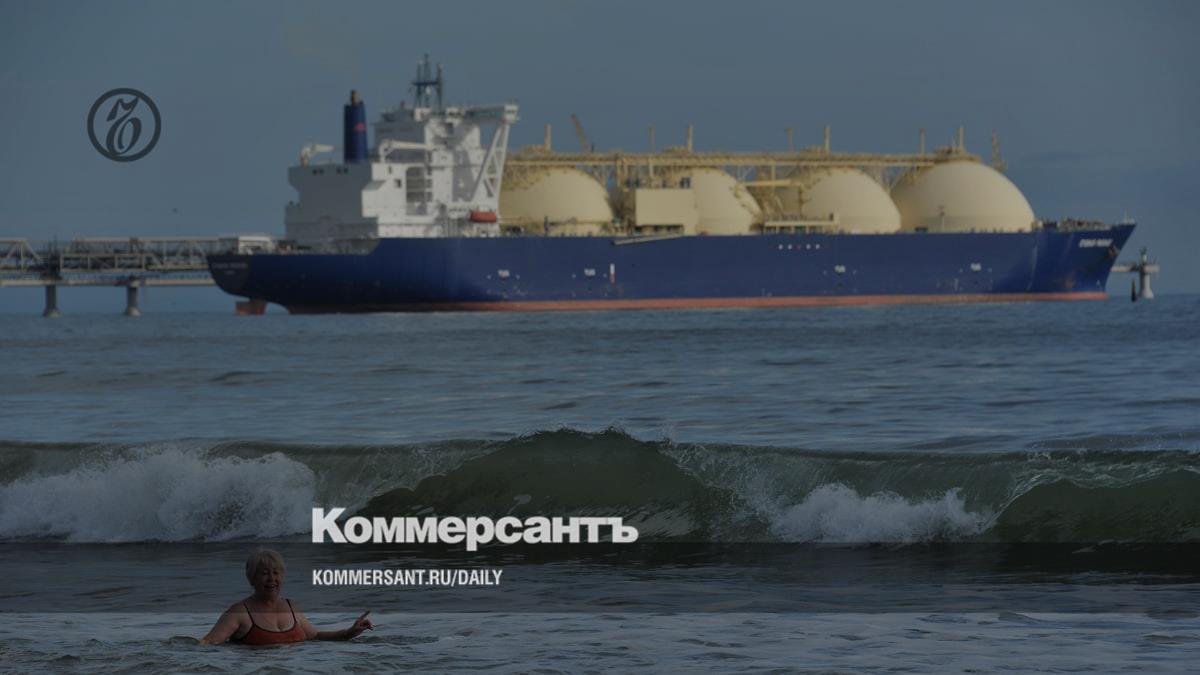
European companies with long-term contracts for the purchase of Russian LNG will not be allowed to sell these volumes outside the EU after the ban on imports from the Russian Federation comes into force in 2027, writes the consulting company Poten & Partners, citing clarifications received from the EC. LNG is currently supplied to the European market only by the Yamal LNG plant, controlled by NOVATEK.
European buyers of Yamal LNG were awaiting clarification from the EC on this issue, since it was assumed that the ban would only apply to direct imports of Russian LNG into the EU, and not to re-exports to third countries. Such supply flexibility is provided by contracts concluded on a FOB basis (see table). The head of TotalEnergies (owns 20% in Yamal LNG), Patrick Pouyanne, has repeatedly spoken about the “ambiguity” associated with the application of the European ban on Russian LNG supplies from 2027. According to him, after the ban is introduced, the company expects to redirect supplies under this contract to other markets, including Asia, but the text of the directive contains a “legal question” – does the ban only apply to supplies to Europe, or is it about a ban on a European company marketing Russian gas around the world. “Restrictions will certainly apply to supplies to Europe. But will they also apply to any European company doing business in Russia in any way?” – noted Mr. Pouyanne. Sales from the TotalEnergies portfolio also included supplies to the Taiwanese company CPC, writes Poten & Partners.
Other large buyers of Yamal LNG are also under pressure from restrictions. In particular, the contract with the German SEFE (a former asset of Gazprom, nationalized by the German authorities) was initially focused on re-export to the Indian GAIL. The German Ministry of Economics and Energy called on SEFE to terminate the contract with Yamal LNG, Bloomberg reported at the end of 2025. According to the agency, termination of the contract could cost SEFE $11.6 billion.
The Spanish Naturgy reported in February that it was preparing for negotiations on the possibility of declaring force majeure on a long-term supply contract with Yamal LNG. Naturgy’s chief lawyer, Manuel García Cobaleda, noted that the EU’s requirement amounts to force majeure – an unforeseen event that can release companies from contractual obligations. Naturgy has obligations to purchase LNG from Yamal LNG on a take-or-pay basis after 2027 in the amount of €45.1 billion, its annual report said.
According to Poten & Partners, the EC’s legal position is that its sanctions policy against the Russian Federation, begun back in 2014 and supplemented by subsequent packages, now prohibits the transfer of all Russian LNG to non-EU countries. In early June, the EC, citing sanctions regulation No. 833/2014, told Poten & Partner that European companies are prohibited from trading or selling Russian LNG to third countries, since “it does not matter whether Russian LNG is destined for the EU or not.” According to Poten & Partners, some European companies are discussing the possibility of obtaining special permits to retain at least part of their volumes from Yamal LNG.
Russia now accounts for about 18% of the total volume of LNG supplies to the EU; in Yamal LNG sales, the European market has accounted for almost the entire volume in recent months.
EU countries increased purchases of LNG from Russia amid the blockage of the Strait of Hormuz, and the region is also actively filling underground gas storage facilities in preparation for winter. Kommersant sent a request to NOVATEK.
Independent expert Alexander Sobko notes that it is still difficult to predict how this unique situation will be resolved, but in any case, the export of LNG from Yamal LNG in January 2027 is likely to face logistical difficulties. He recalled that transshipment of Russian LNG in European ports is already prohibited, and imports will be prohibited from January 1. Accordingly, a possible increase in the transport shoulder when redirecting cargo will lead to a shortage of ice-class gas carriers. “The alternative is either side-to-side transshipment, but it cannot be guaranteed that this method will be able to effectively transship all volumes, or the use of the Saam FSU floating complex, but then for now the non-sanctioned goods from Yamal LNG will cease to be such due to the presence of the Saam FSU in the SDN list,” explains Mr. Sobko.
At the same time, a ban on re-export may force buyers to declare force majeure. The head of TotalEnergies, in particular, did not rule out this possibility. In this case, NOVATEK will have to independently redirect the lost volumes to alternative markets, which may be much more difficult than if this were done by global majors with an extensive trading network around the world.
According to Doctor of Economics (Ph. D.), professor, advisor to the rector of the Russian State University of Civil Engineering, Konstantin Pozdnyakov, having given explanations, the EC has actually closed any transactions with Russian LNG outside the EU for European companies.
Long-term LNG supply contracts typically have force majeure clauses that include “regulatory restrictions,” he notes. However, given that the ban will not come into force until six months later and the terms of force majeure in themselves do not cancel the contract, European companies will find themselves in a very difficult situation where they will have to prove that they have taken all measures to fulfill the terms of the contract, as well as re-exports. Being between EU sanctions and contractual obligations to the Russian supplier, as well as to the final recipient, creates the ground for complex arbitration proceedings, he explains.
Head of international practice at ANP Zenit, Alexander Matveev, says that although the EC’s clarification strengthens the legal position of buyers when declaring force majeure or referring to the impossibility of fulfilling obligations due to sanctions, it does not guarantee automatic release from liability, fines or take-or-pay obligations. According to him, in international contract practice, a sanction prohibition can indeed be the basis for force majeure or impossibility of performance, but only if this is provided for in the contract and a direct causal relationship is proven: performance has become illegal, and not just economically inconvenient. “The counterparty may also argue whether alternative methods of execution were available, for example, delivery to the EU before the complete ban on long-term contracts,” added Alexander Matveev.