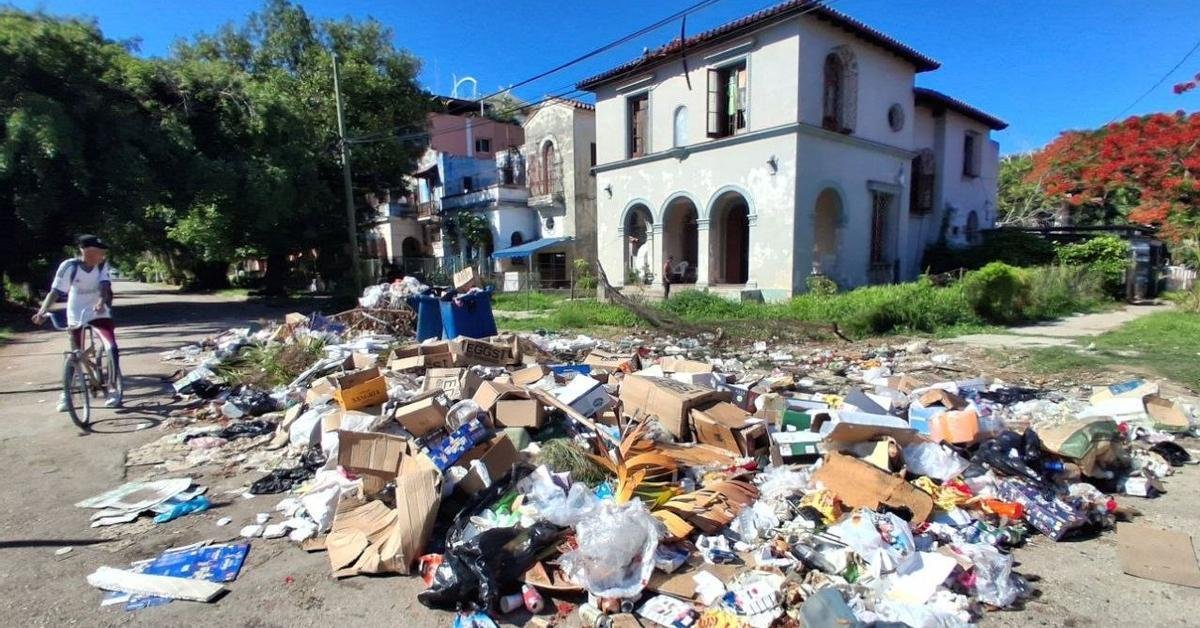
Havana/I fall exhausted into bed. A tour of the Miramar neighborhood can now be worse than running at full speed along the rough sidewalks of Reina Street in Central Havana. The once glamorous western neighborhood of the Cuban capital is as full of garbage as any corner of Cerro or La Lisa. Large houses with gardens on one side and mountains of waste on the other. Embassies with their national flags hoisted inside the fence and the stench of filth seeping through the bars.
I have walked to 3rd and 70th from my house in Nuevo Vedado. There are fewer electric tricycles because the long hours of blackout prevent charging the batteries of what has become the most used vehicle to move from one place to another in Havana. The journey immersed me fully in an area that I was dazzled by when I met it in my childhood. From that time I remember the gardens with impeccably cut hedges, the tranquility of its streets and the cleanliness of the central promenade of Fifth Avenue, little to do with my neighborhood in Key West. But none of that remains anymore.
What I did this Tuesday was a walk through an area of closed and peeling mansions, unlit traffic lights, old unsupplied markets and small businesses with cold refrigerators due to the energy crisis. Life, what life is, I only saw outside some consulates that receive dozens of visitors every day, desperate to leave this Island. Upon returning to my building I had the impression that a memory had been taken from me, that memory of my first time walking along 3rd Street, visiting the National Aquarium and passing the tunnel under the Almendares River.

/ 14ymedio
I go to bed early. It’s four in the morning this Wednesday and I wake up to a strong burning smell. I check the house but the plague comes from outside. A cloud of smoke appears against the sky in front of our balcony, it seems to come from somewhere in the Cerro neighborhood. They’ve probably set fire to some garbage can. My eyes are burning and I look for a mask and put it on. There’s no electricity, so I use the rechargeable lamp to get to the kitchen.
I make some instant coffee. The night has been long and the mosquitoes don’t let up. I am more afraid of dengue than anything else. My self-esteem, like that of my neighbors, friends and acquaintances, is at rock bottom. In the midst of a speech extolling national dignity, every person I encounter seems to have lost all of their individual dignity or to have only a few shreds of self-respect left. The body without bathing, the nights without sleeping well and the smell of food on the plate, which seems to scream that it is in bad condition, are corrosive acid poured into self-love.
The decalogue of survival involves not going out at night, not forgetting to apply repellent before going outside, and having all the bars and padlocks you can to protect our homes.
Pride is also at odds with fear. Threats come from everywhere. “Be careful of mosquitoes,” a friend tells me who still can’t walk due to the effects of chikungunya. “Without this I won’t go out on the street,” a neighbor tells me while showing the machete he carries on his motorcycle to defend himself against the multiplying assaults. “Don’t even think about going into that neighborhood alone,” recommends a neighbor when I tell her that in a few days I must move to the south of the city.
The scare has settled into our lives. The decalogue of survival involves not going out at night, not forgetting to apply repellent before going outside, having all the bars and padlocks you can to protect our homes, trying to calm the heartbeat when you call and call someone on the phone and they don’t answer, while you imagine any tragedy, which is then explained by the poor service of the telecommunications monopoly. We live in a pure tremor, with news of fights, stabbings, murders and robberies that come from everywhere and are rarely published in the official press.
But the biggest fear is that nothing will change. The main fear is that this will extend for weeks, months and years, taking away the little dignity and tranquility that we still have left.