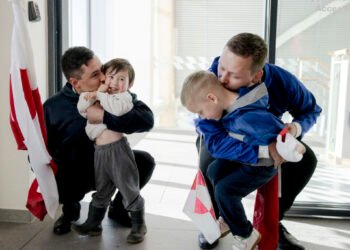
It starts with a handshake. But not an ordinary one.
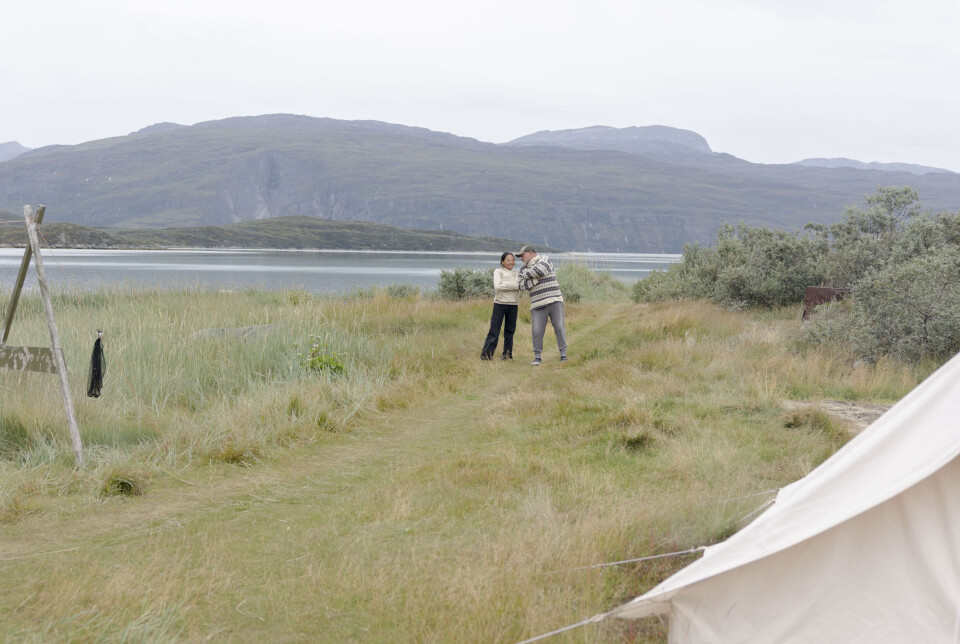
The young girl extends her hand, and Martin accepts. The hands meet, change places, clap against each other. A small step to the side. A laugh. Then another handshake that only the two of them know.
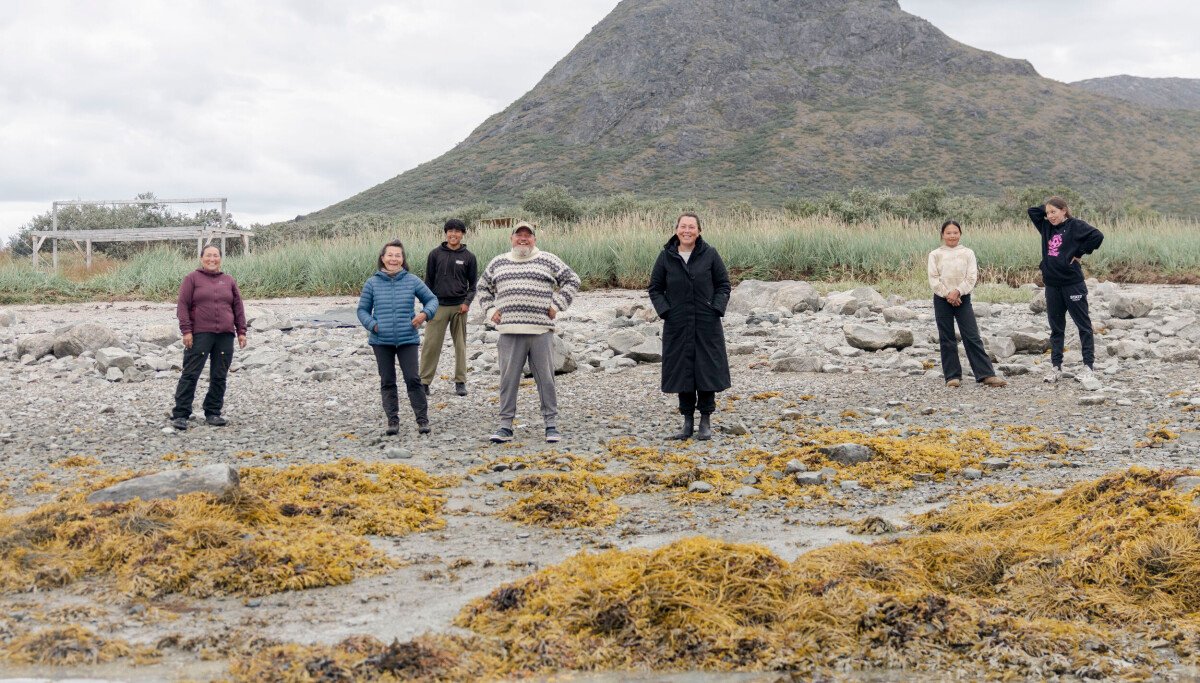
We are at the bottom of Ameralik in Kilaarsarfik, where the Tupaarnaq orphanage has held camp every summer for more than 20 years.
The fact that the camp can still take place is due, among other things, to Kommuneqarfik Sermersooq’s support, for which the superintendent is very grateful.
Because that’s how relationships are also created here. Through time, shared experiences and small moments. Like a handshake that only makes sense to those who have helped create it.
In the middle of the mountains and reindeer tracks, something grows that goes beyond the days in the camp.
– In Kilaarsarfik, we create some trust and some close relationships, which you cannot do at home in Nuuk, says Martin Ømark Andersen.
A little further away is Martin’s wife and daughter with the other children.
The three adults move around the camp in their own way. Martin quickly gets used to playing with the children. His wife makes sure that the practicalities are under control. The daughter is close to the young people.
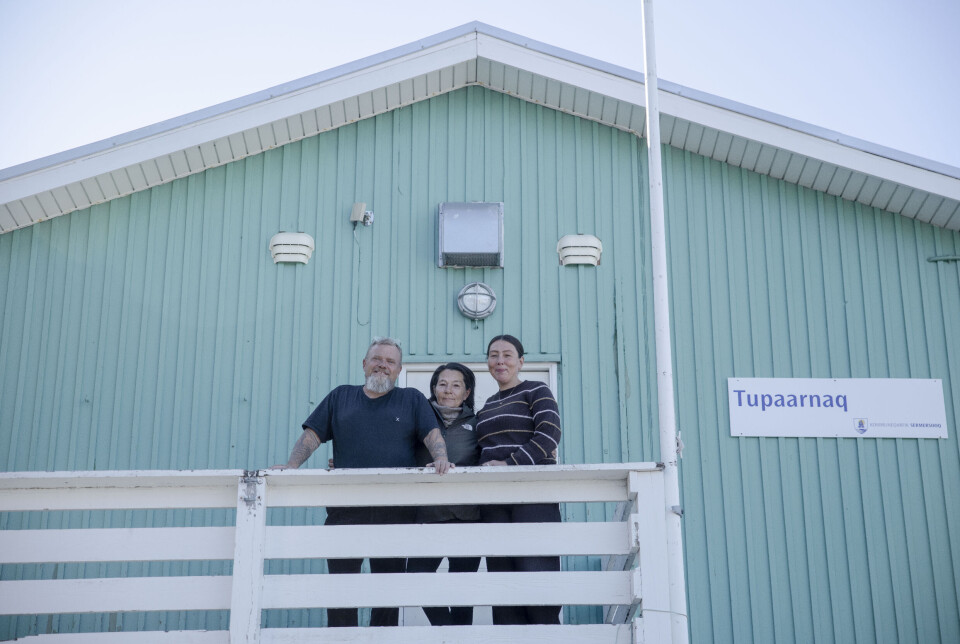
Martin Ømark Andersen is department manager. His wife, Birgit Løvgreen Andersen, is head of the orphanage, and their daughter, Simigaq L. Bjerregaard, is acting head of department. Together they are among those who have been with Kilaarsarfik the longest.
A different pace
Something changes when the children come to Kilaarsarfik.
The pace.
In Nuuk there is always something to be achieved. An everyday life that has to be connected with appointments, school, work and practical things. In Kilaarsarfik, the days are different.
Birgit feels the difference herself.
– There is more peace here. You don’t have to rush all the time. You have the time to be with the children, and that is exactly what is very healthy for the children, she says.
It is not necessarily the big activities that take up the most space. Sometimes it’s just sitting together, waiting for the weather, cooking or being out in nature. For the time together means something. Simigaq L. Bjerregaard feels that too.
In Kilaarsarfik, there are no duty schedules that change from day to day. No adults coming and going when a shift ends. The same children are with the same adults day after day.
– That way, as an adult, you can more easily get close to the child and find out what needs to be worked on, says Simigaq.
For them, Kilaarsarfik is therefore not only about teaching the children to walk in the mountains, fish or go hunting. It is also about giving them an everyday life where the adults stay by their side.
Everything has a meaning
It is half past six in the morning.
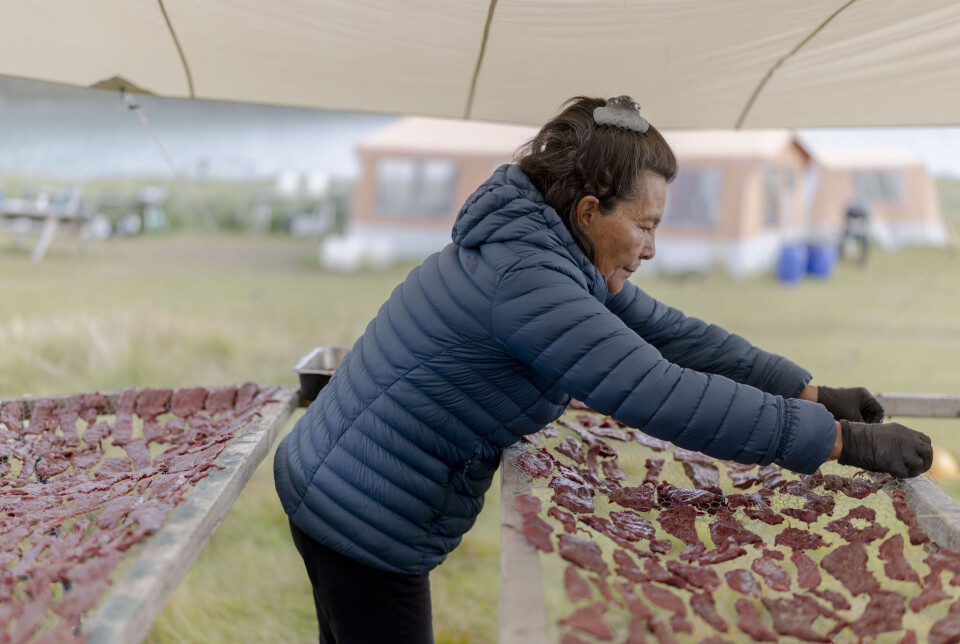
Birgit is already at work. The coffee must be made, breakfast must be prepared, and soon the children must be woken up. In a little while, the reindeer hunt awaits.
There is still calm around the camp. But Birgit is busy with the first tasks of the day, and she will continue until they are finished.
For her, it is important that the children see it.
If they have to fetch water, the work must be completed. Completely finished. You don’t just rush on because something else is waiting.
This is part of what Birgit would like to show the children in Kilaarsarfik.
– I think it is important that the children see that this is also how life is. Everything we do has a meaning and a purpose, and the work must be completed, she says.
It is therefore not only about teaching the children to cook, fix equipment or help around the camp. It’s about showing them the connection between what you do and what comes out of it. That what you start must also be finished, and that your own efforts matter.
– It is very healthy for the children. It is also an investment in their future, says Birgit Løvgreen Andersen.
Acquire new knowledge
But the time in Kilaarsarfik is also about discovering something you might not have known about yourself.
That you can learn.
For Martin, it is one of the things he sees again and again. Children who may have difficulty learning at school discover in Kilaarsarfik that they can actually acquire new knowledge.
They learn the names of the plants. They get to know the animals. They learn to fish, clean fish, fetch water and solve the many practical tasks that come with life in the camp.
It all takes place without a schedule, a book or a teacher who says that now is the time to learn.
– I can see that our children sometimes have difficulty learning at school. It can be different things that block them. But then they find out that they can actually learn. There is enormous learning in all those things, without us constantly thinking that they have to learn, he says.
At the same time, the children and young people use their energy in a different way than they do in the city.
– They play football, they swim in the rivers and play at the beach. I have noticed that they get tired in a different way than they do in Nuuk, for example, says Birgit.
In Nuuk, screens and TV take up more of the children’s everyday life, Birgit experiences. In Kilaarsarfik, she sees children who are more active, happier and tired in a different way.
– I am sure that it not only strengthens the body, but also the mental health.
Everything is not rosy
Close to the camp with the white tents is a beach.
On the beach there is gray mud. It is said to be good for the skin.
Maybe it’s not entirely coincidental. Kilak means rash. Kilaarsarfik – a place where rashes are removed.
But the beach is not only good for the skin.
There have also been many difficult conversations here, surrounded by the sound of the sea and the view of the mountains.
Because it’s not always rosy.
It is challenging to have children and young people living in tents for two months. And the weather is not always on their side either.
– It requires time and patience, says Birgit.
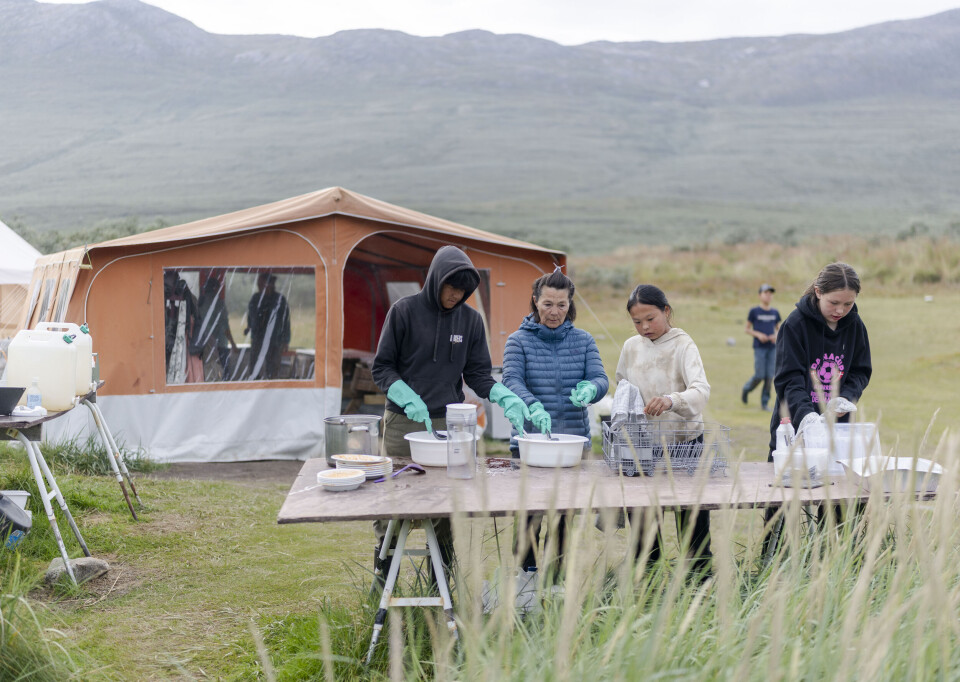
In the camp there are fixed duties. There is a food team, a water team and a dish-washing team. Everyone must contribute to the community. But not all children enter it immediately.
– We must have space for the children who find it difficult to understand the community. They must sit on the sidelines and investigate. And then they can sign up, says Martin.
This does not mean that the child can choose everything.
But when the going gets tough, there’s another option.
If a child gets very upset, cries or causes trouble at the table, an adult can take the child down to the beach with the gray mud. Away from the others.
– Then you can go somewhere else with an adult, be allowed to cry and have a good conversation. And it rarely takes long before they find out: ‘No, I want to go back,’ says Martin.
For them, it is not about forcing the children into the community, but about giving them a way into it.
Nature is healing
Nature is not the only setting for Kilaarsarfik. It is part of what happens to the children.
For them, nature can be both beautiful and violent.
– Nature is healing, after all. Kilaarsarfik is fantastic when the sun is shining. But conversely, for both children and adults, nature can also be very violent and scary, says Martin.
When the weather changes and the wind picks up, nature can also make you feel uneasy.
But precisely there something else arises.
– When you feel like this, you also look towards the others and want to be part of the community, because the community looks after us. The adult looks after me. When it storms and we have all kinds of weather, nature simply helps us as people to search together and create security, says Martin.
Nature thus becomes both a challenge and a support.
– Nature is to that extent a support and a strength for us as humans. It’s not something we can do here in town. It is something that nature creates for us, says Martin.
Simigaq himself has felt on his body how healing nature can be. Therefore, it does not surprise her how much the children develop during their stay in Kilaarsarfik.
She describes it as a form of emptying the soul.
And perhaps that is exactly what Kilaarsarfik gives the children: a place where it is far from the city, but closer to nature, the other people and themselves.
At the same time, life in the camp is a continuation of something that goes back further than the two months in the summer. Reindeer hunting, life in nature and the knowledge the children gain are also part of Greenlandic culture.
Kilaarsarfik is therefore not just a place the children go.
It is a place that follows them on in life.