– It is not by chance, that we have shrimp quota left.
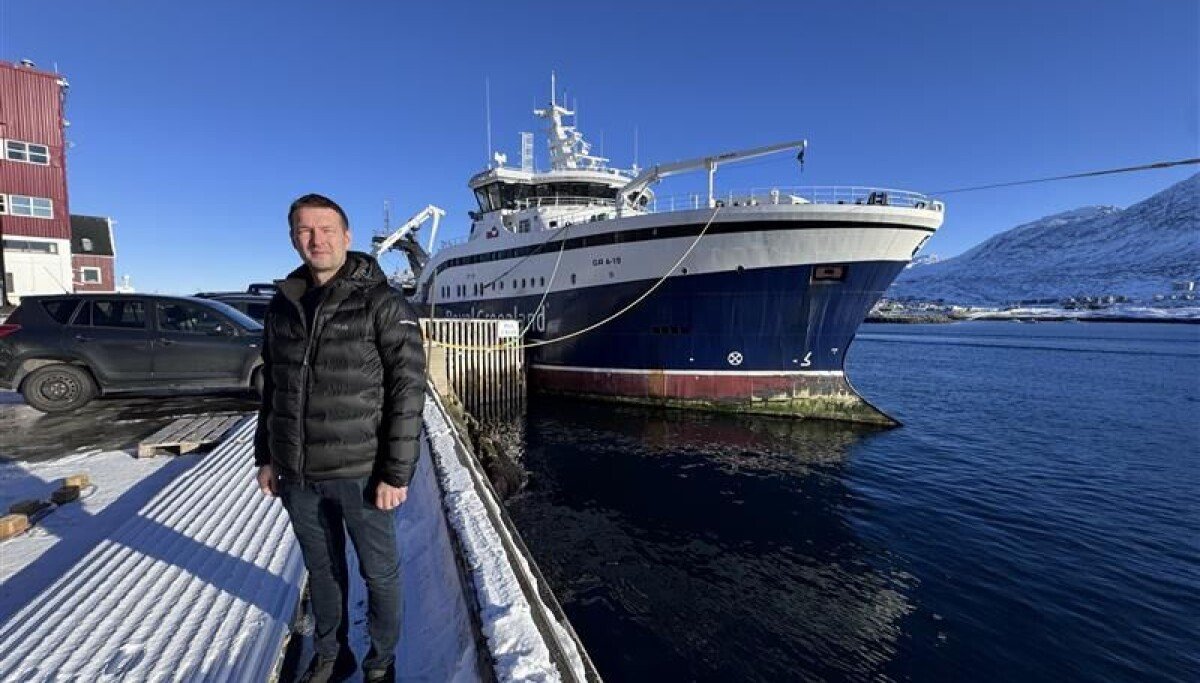
That’s what Andrias Olsen, trawler director at Royal Greenland, tells Sermitsiaq.
Among other things, he delivers the comment in his written answer to why the shrimp giant Royal Greenland in mid-October failed to fish a significant part of the year’s quota, also called the TAC, off West Greenland.
For many years, the shrimp fishery has received a lot of political attention from members of Naalakkersuisut and Inatsisartut. The reason is, among other things, that the quotas are still concentrated on large fishing companies such as Royal Greenland and Polar Seafood and the medium-sized companies Niisa Trawl and Sikuaq Trawl.
Royal Greenland A/S, Greenland’s number one shrimp quota giant, had fished just over 11,000 tonnes of its quota of just over 18,000 tonnes off West Greenland in mid-October. Thus, the country’s leading fishing company, which had a turnover of DKK 5.7 billion last year, had only fished just under 63 percent of its individually marketable shrimp quota.
Quota exchange with 22 license holders
The figures appear from Greenland’s Fisheries and Hunting Control, GFJK, quota exchange, where you can see license quantities, quota withdrawals, remaining quota for 22 license holders. The statement is as of 14 October 2026.
We have asked Royal Greenland what the explanation is for the company failing to fish up to 40 percent of the shrimp quota in mid-October.
To that, trawler director Andrias Olsen says:
– One of our noblest tasks is to plan the fishing of our quota so that it creates the most value possible. It is therefore no coincidence that there is still a shrimp quota left. Two of our trawlers spent a total of four months fishing for shrimp at Svalbard this year. They have done this in order to save shrimp quotas in West Greenland for later in the year, when the West Ice between Greenland and Canada does not limit fishing in the same way as in the spring.
And he continues:
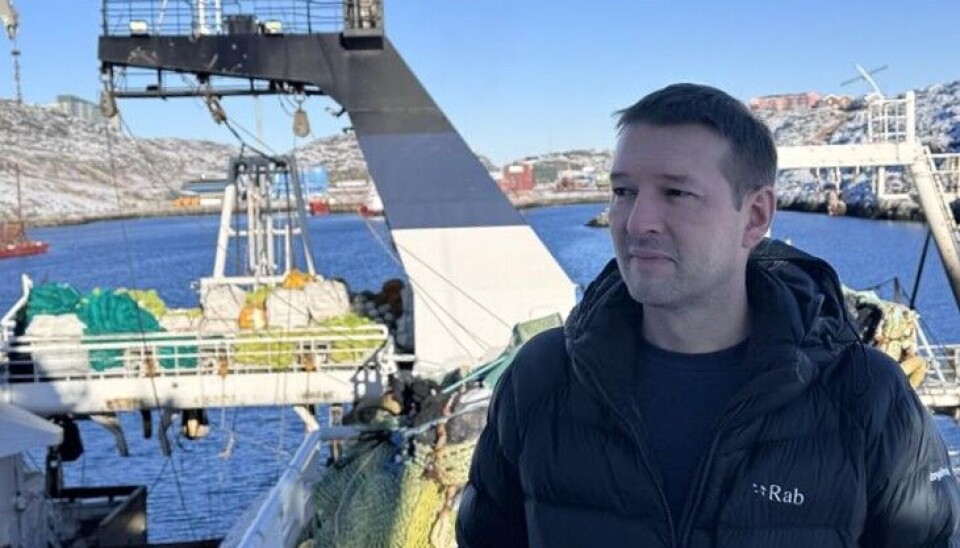
– In general, our fishing plans are based on which quotas we are allocated. But they also take into account where it pays best to fish and when the shrimp have the highest value, as larger shrimp fetch a better price. If we fish all the small shrimps, they never get to grow big. We must always keep an eye on that.
Can transfer quota to next year
Andrias Olsen adds that the Fisheries Act also allows for some flexibility, so that up to 25 percent of a quota that is not fished this year can be transferred to the coming years.
– This gives the shipping companies the opportunity to plan better, both in relation to the fishing itself and to ensure stable jobs at our shore facilities. It is really good that there is that flexibility in the legislation, states the trawler director.
But Royal Greenland prioritizes halibut fishing more than shrimp, because halibut gives you a much higher income?
– No, is the short answer.
How will you explain that you have cut down a lot on the number of employees at the shrimp factory in Sisimiut, when you could fish much more and thus procure more?
– When the shrimp quota falls, as it has done in recent years, it unfortunately also affects employment. Therefore, it is even more important that we work to achieve as high value creation in what we do as possible. There is a requirement to procure 25 percent of the catch from the ocean-going trawlers for processing on land, but Royal Greenland has procured 35 percent this year, says Andrias Olsen.
Factories will not be closed
The trawler director adds:
– Despite falling quotas, we have never considered closing factories, on the contrary. Shrimp production in Sisimiut is important to Royal Greenland, and therefore this year we have rebuilt and modernized the factory to the benefit of both the quality of the products we make and the employees who work at the factory.
– Rather than having large fluctuations in the number of workplaces, where there are sometimes many and other times few employees, we now prioritize having stable workplaces throughout the year. Since a large part of the raw materials in Sisimiut are frozen raw materials, we can organize the production to a certain extent so that it is distributed over the year. We believe this is a good solution for both production and employees.
Ice Trawl
Several of the partly Royal Greenland-owned companies also need to fish a significant part of their shrimp quotas. For example had Ice Trawl on 14 October fished 4,700 tonnes out of a quota of just over 6,900 tonnes?
– Ice Trawl will not lose quota this year. At the start of 2026, the company fished its entire shrimp quota in East Greenland, as it made the most sense in relation to optimal utilization of the quota. Therefore, the shrimp fishery in West Greenland has had to wait.
– Fishing is not only about catching up the quota, but about taking advantage of the seasons and catching fish with the highest possible value. This applies to Royal Greenland and all the other companies that Royal Greenland administers, says
Andreas Olsen.
Salling: Polar: – We have the tonnage to fish up quotas
The other shrimp giant and private fishing group, Polar Seafood Greenland A/S, which last year had a turnover of 1.7 billion kroner, had on 16 October this year fished 13,000 tonnes of its quota of 14,000 tonnes.

The third largest shrimp fisherman, Niisa Trawl ApS, had fished just over 6,000 tonnes out of a quota of just under 7,000 tonnes. Sister company Sikuaq Trawl had fished 5,500 tonnes. By mid-October, Polar, Niisa and Sikuaq had thus fished almost 95, 94 and 92 percent of their quotas respectively.
– We have the ship tonnage to be able to fish our quotas, and of course we have also organized our fishing accordingly. We have invested in our fleet and have both the ships and the skilled crews to utilize the quotas we are allocated. In fact, one of our outermost trawlers already had to stop fishing at the beginning of September because the quota was fished up. We otherwise had the option of chartering both ship and crew out to another Greenlandic shipping company, but this was rejected by the department with reference to the Fisheries Act and the associated executive order. We believe this is an example of the rules being too inflexible, says CEO of Polar Seafood Greenland, Bent Salling.
He continues:
– We already lack raw materials for our factories and have even had to bring shrimp all the way from the Pacific Ocean to keep production at the factory in Nuuk going. It says something about how important it is for us to take advantage of the fishing opportunities we have. For us, it’s about keeping our fleet running, securing employment both on board and in our factories and creating the most possible value in Greenland. Therefore, we also hope that in future there will be better opportunities for cooperation between the Greenlandic shipping companies. We must be able to develop and adapt our business within the framework of the Fisheries Act and the quota ceilings to which we private, non-state-owned companies are subject, says Bent Salling.
Nalakkersuisut has set a maximum allowable catch amount, TAC, for shrimp in West Greenland in 2026 of 75,000 tonnes. This is just over 8,000 tonnes lower than in 2025.