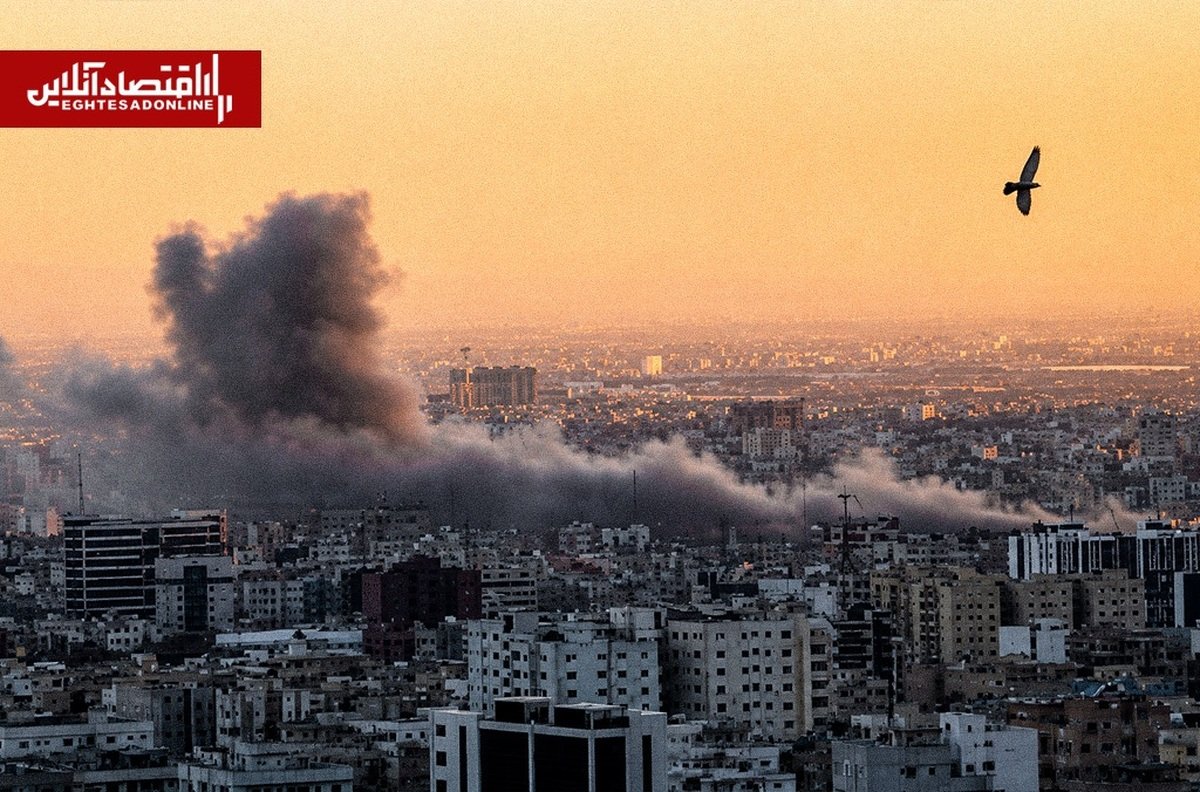
Economy Online, Amir Mohammad Hosseini: Exactly one year ago in these days, the Middle East entered an era from which it seemed impossible to return. On June 23, 1404, decades of indirect confrontation between Tehran and Tel Aviv turned into a 12-day direct confrontation when Israeli fighters crossed Iran’s red lines of defense. Today, on the anniversary of that fateful battle, while the shadow of the war still hangs over the region, the Iranian-American mediator Pakistan announces the finalization of the initial understanding of the end of the war.
Negotiation before the war
Last year’s 12-day war began with a series of surprise attacks by Israel. But before the war, five rounds of negotiations between Iran and America were held with the mediation of Oman. From April to June of the same year, Abbas Araghchi, the Foreign Minister of the Islamic Republic of Iran, and Steve Wittkoff, the special representative of the US President, headed the delegations. Despite some initial optimistic comments about writing the proposed text, the main deadlock remained; Washington’s insistence on completely stopping enrichment in Iranian soil and delivering 460 kg of uranium with 60% enrichment, in contrast to Tehran’s insistence on enrichment and uranium as an insurmountable red line.
Foreign Minister Abbas Araghchi said on the anniversary of this war that what caused the war was Iran’s resistance to its demands, not negotiations.
The beginning of the war on terror
The war began with the assassination of senior military officials, more than 10 prominent nuclear scientists, and the targeting of defense infrastructure and strategic sites. The Commander of the General Staff of the Armed Forces, the Commander of the Revolutionary Guards, the Commander of the Aerospace Force of the Revolutionary Guards and many other commanders were assassinated in the initial attacks.
The armed forces of the Islamic Republic of Iran also responded to these attacks about 16 hours later by firing missiles and drones at Israel.
After 9 days, America entered the war. American bombers bombed three Iranian nuclear sites in Natanz, Isfahan and Ferdo. Americans claimed that Iran’s nuclear infrastructure was destroyed in these attacks.
It seems that the most important achievement of the 12-day war for the Islamic Republic of Iran was the preparation and elimination of offensive and defensive gaps for subsequent conflicts. In the way that these preparations appeared in the war between America and Israel with Iran.
The end of the war and the beginning of political pressure
Finally, on the 3rd of July, the war ended with a ceasefire. US President Donald Trump presented himself as a mediator and ender of the war on the side of Qatar.
But immediately after the war, the political and diplomatic pressure on the Islamic Republic of Iran increased.
A day before the war, the International Atomic Energy Agency had published a report on the lack of monitoring access to Iran’s sites, which practically provided legal legitimacy for preventive strikes for the West. In this way, the relations between Iran and the agency became strained once again.
The mechanism of the trigger and the last stop of the JCPOA
The fall of 1404 was the peak of the Western consensus against Iran’s nuclear program and the complete end of the JCPOA. The European troika, along with Washington, intensified the pressure on Tehran.
However, diplomatic efforts continued and Egypt became a mediator between Iran and the Agency after nearly half a century of breaking ties with Tehran. On September 18, a fragile agreement was signed in Egypt for inspections. Iran made the implementation of this agreement conditional on not activating the trigger mechanism, but the United States and three European countries considered this condition a tactic to buy time and did not accept it.
Finally, on the 6th of October 1404, the trigger mechanism (snapback) was activated and 6 sanctions resolutions of the UN Security Council returned after a decade of suspension. The JCPOA officially died and Washington’s policy of maximum pressure reached its peak.
Internal reports show that in the same days, Ali Larijani, the then secretary of the Supreme National Security Council, admitted in private meetings that the American side “doesn’t want an agreement” and that the second wave of military attacks is coming.
January and war makeup
In January 1404, the situation became more complicated with the occurrence of widespread internal protests in Iran. After these protests, Trump announced himself as the supporter of the Iranian people and the unprecedented sending of American military equipment from all over the world to the Persian Gulf began.
Under the shadow of numerous threats and a war that was getting closer every moment, the Iranian and American delegations returned to Muscat on 18 Bahman.
This time, America demanded to stop enrichment and withdraw 460 kg of 60% enriched uranium from Iran. Deep disagreements between the two sides in their strategic positions also brought these negotiations to a dead end. However, these negotiations also ended in three rounds, and the third round of these talks on the 7th of March in Oman was the last struggle for peace that ended in failure.
Two wars in one year
Only two days after the third round of Muscat talks, which Abbas Araghchi evaluated as positive, on March 9, 1404, the American-Israeli coalition launched a massive military offensive against Iran.
In this way, the year 1404 became unique in the contemporary history of Iran in that it contained two great wars. Many considered this war as a continuation of the Twelve Days War that lasted until April 19, 1405. This war also started and continued with the assassination of senior officials of the Islamic Republic of Iran from the attack of Ayatollah Khamenei, the former leader of the Islamic Revolution.
Understanding after the war?
The series of events before and after the 12-day war has led to negotiations between Iran and the United States to reach a comprehensive agreement. As if one year after the beginning of the twelve-day war, the period of confrontation and confrontation is coming.
Iran and the United States, with the mediation of Pakistan and Qatar, have reached a preliminary understanding to end the conflict. As far as the Prime Minister of Pakistan has said, this understanding has been finalized and it will probably be signed in absentia soon. After that, a 60-day period for negotiations and a comprehensive agreement will begin.
However, it seems that the situation is still fragile and unstable like the previous two negotiations, and if an initial understanding is reached, it will be very difficult to form a comprehensive and stable agreement between Iran and the United States.