Nowadays, most companies, government bodies and websites collect data about us to make money or to make their services more efficient – sometimes it happens that they do both at the same time. Many people are afraid of this digital surveillance, and partly rightfully so, since ever since data collection has existed, there have been people who have misused the collected information.
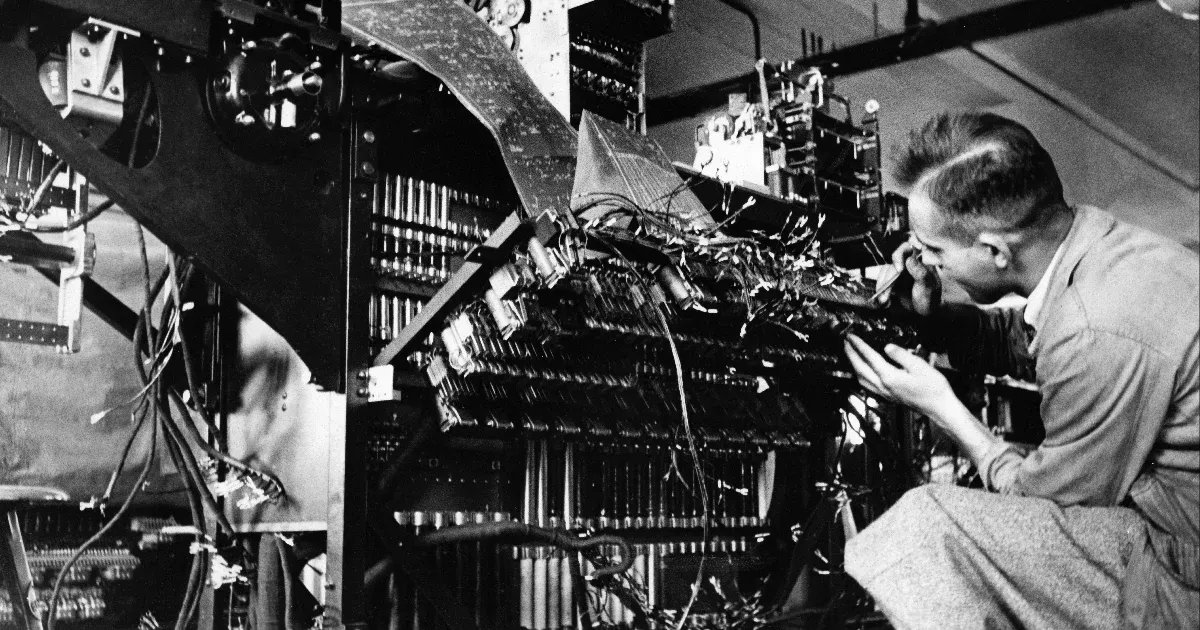
In the United States, for example, in the 1890 census was planted for the first time Herman Hollerith’s punched card processing machine, which greatly speeded up data processing, but the later system used to identify Japanese living in America during World War II was also based on this system they are locked up in concentration camps.
IBM grew out of Hollerith’s punched card system, whose German subsidiary won a tender in the early 1930s, so the company sent hundreds of punched card data processing machines to Germany, which helped the Nazis track down Jews, Roma and other minorities.
They had similar plans in France, but not everyone there was as willing as the American giant. There was, for example, René Carmille, who was involved in state data processing both in the republic and during the independent but collaborative Vichy government established in the south of the country occupied by Germany in World War II: he was a pioneer in the introduction of national registers and was considered a key public servant in the field of data collection. He was born in 1886 and served in World War I as an artillery commander and later as an intelligence officer. In this position, he oversaw the implementation of Hollerith’s system, which was intended to streamline the army’s logistics. After the war, he moved into the public sector and introduced the social security number, which is still used in France today.
The National Bureau of Demographics and Statistics he created, for example, worked on a census that recorded the place and time of citizens’ births, the names of their parents and children, marriages and divorces, addresses, deaths, everything – except religion. In addition, during the Vichy government, as a member of the French resistance, he also worked on a secret project, a list of demobilized soldiers, in case an independent French army was ever needed. He prepared a batch of punched cards, with the help of which the call-up could have been printed and sent to the 220,000 identified soldiers within a few hours.
It was a huge task, but the Germans weren’t really interested in the results. They would have been much happier if Carmille’s office had processed the results of two other data collections: one in 1941, which listed Jewish workers, and a similar police collection. Carmille used all bureaucratic means to make it difficult for the collaborating government to list the Jews: his large census project took away a significant part of the punched card system’s resources, which the authorities could not use to track down the Jews. The police and the Gestapo were forced to rely on the old and significantly slower paper-based system.
However, this only worked until the Germans occupied the southern part of France in 1942. The statistical office was ordered to identify French Jews, and Carmille could no longer refuse this as easily as under the Vichy government. For this reason, he once again hindered data collection with bureaucratic methods: he gave verbal instructions instead of written ones to make the reaction slower and more opaque, he called on the workers to handle the punched cards incorrectly, and he even hacked IBM machinesso that the 11th column denoting religion and race is not punched out. He was so successful in obstructing the project that it was not even completed in February 1944. But then he fell down and was arrested by the Germans. He was tortured for two days in Lyon and then sent to Dachau. He died of typhus nearly a year later, on January 25, 1945, just a few months before the concentration camp was liberated.
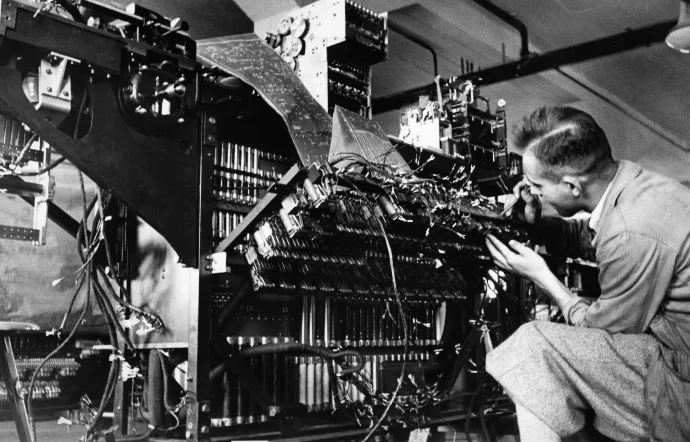
Photo: Ullstein Bild/Getty Images
Although it is not known exactly how many lives he saved with his sabotage, the situation can be compared with that of other countries: the Nazis killed nearly 75 percent of the Jews in the Netherlands, while the same proportion was 25 percent in France. Of course, there could be many reasons for this, but it is certain that it did not help the occupiers’ work that they had to work from data written on paper instead of the modern system.