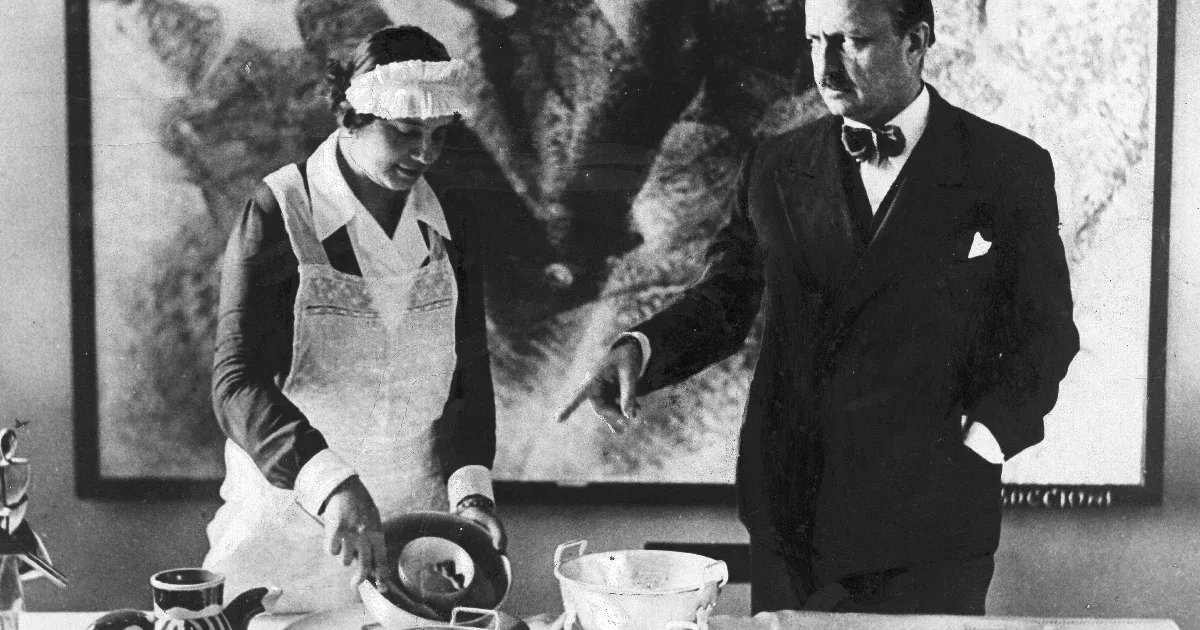
When in the 1930s a complete artistic ideology was carved out for Italian fascism, the transformation of gastronomy was also an important part of this. Written by Filippo Tommaso Marinetti Futuristic kitchen opposed everything that had defined Italian gastronomy until then. He said no to feminine, traditional cooking, the main element of which (proclaimed propagandistically at the time of Italian unification) was pasta. Controlled by a technology, it would have replaced eating spaghetti with a musical, perfumed, unusual experience affecting all the senses.
Although the dough denial of futurism remained in the minds of most people – so do we we also wrote about it and that strange pasta dishwhich was then named after the author himself – the essence of futurist cuisine was much more than that. Despite the fact that the entire manifesto was considered a joke by many even in its time, Marinetti prematurely described the tasting menus of the world of fine dining restaurants, so even if he did not reform nutrition as a whole, his ideas, which seemed completely surreal at the time, later became reality in a certain form.
The most important basic tenet of Futurist cuisine was that man is what he eats, and nutrition determines his thoughts, dreams and, ultimately, his actions. Marinetti believed that, in light of this, eating pasta leads to depression and pessimism, makes you asexual and therefore unmanly. Of course, anti-pasta was also closely linked to the fascism of futurism and to economic problems that made wheat imports problematic in Italy. A funny addition is that even this less well-documented age preserves a photo of the great pasta-hater Marinetti he eats spaghetti.
Furthermore, according to the principles of futurist nutrition, it is not right to eat like any other animal, the human way of nutrition must be created. You have to eat foods that make you a warrior, an orator, an artist, a strong and cunning person, they claimed. Futurist cuisine was not only realized in the form of a cookbook, events were also organized around it. The most famous of these is It was the 1931 Bologna Air Banquet, during which the entire table was shaped like an airplane, the plates were made of metal, and the food was given names related to aviation, and the event was punctuated by performance movements.
Eating statues with your hands, smelling perfumes
They also wanted to change the circumstances of the meal, they said that there was no need for cutlery, the food should be touched with the hands, but at the same time the harmony of the serving was important, the food was placed on elegant tablecloths, porcelain and crystal.
Great emphasis was placed on the visual, works of art and sculptures had to be on the table. The combinations had to be unique, but originality meant that salami cooked in coffee and fish with bananas were also imagined on the plate, but the point was to present a special sight. It was an important concept that a lot of different flavors appeared in the dishes at the same time, which, moreover, could be taken in quickly, in a few bites.
According to the futurist cuisine, the meal itself would have been a complex ceremony, providing experiences and stimuli not only through the mouth, but also through the nose, ears, spirit, and imagination. They devoted an important part to technology, machines imaginable at the time, such as ozone generators or ultraviolet light, but they also predicted that blenders, pulverizing, shredding, and emulsifying devices would be needed to prepare this kind of food. Precisely for things that Ferran Adrià and the molecular gastronomy he represented did in the 2000s, when technology-driven cooking was the focus. The dishes of the El Bulli restaurant were all based on the principle of the complete deconstruction of the original raw material or dish, everything was broken down into its components, passed through machines, and then new dishes were built from them.
The futurists blew all kinds of perfumes into the air between each course, paired the scents with the ingredients, with combinations such as mashed potatoes and the scent of roses. They hypothesized that smell and taste are much more closely related than previously known, and that certain scents can enhance certain taste experiences. Although perfumes may not be blown under one’s nose at today’s fine dining dinners, methods are often used in haute gastronomy that enhance the serving with the olfactory experience. The food is often brought out covered so that the condensing steam gets in the guest’s face and prepares the taste experience.
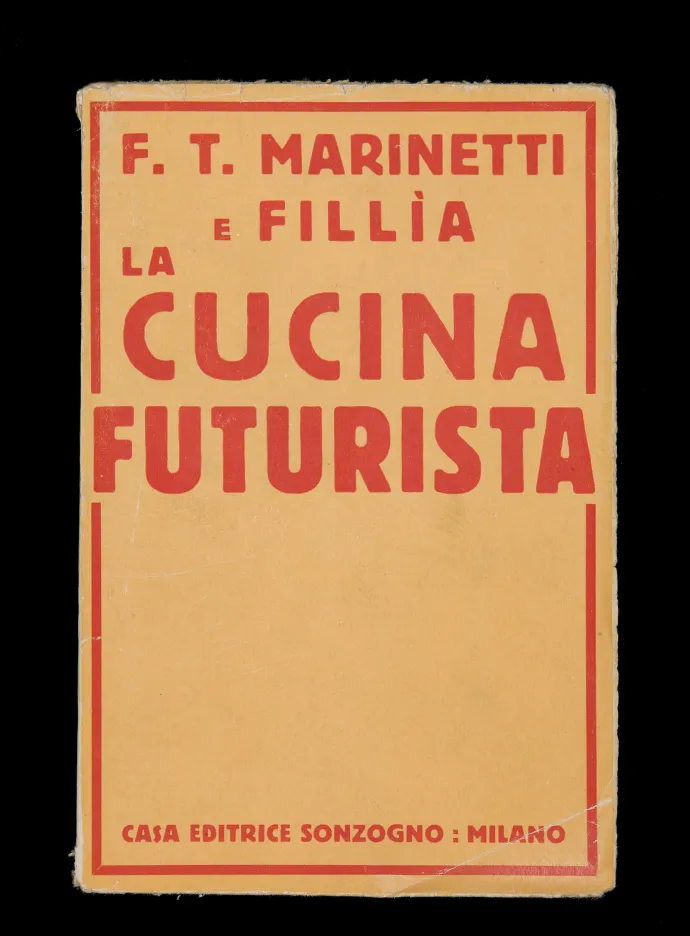
Photo: Mauro Ranzani / Leemage / AFP
Although politics and speeches were forbidden at the table, the imagination had to be stirred between the bites. That is why they briefly presented the dishes, but also those that the guests will not eat, but only imagine, because they believed that this would enhance the enjoyment of the meal. Sometimes poems were also recited so that poetry could also participate in the overall artistic experience, but music was more important, although strictly not while eating, but only between courses. On the other hand, it would be difficult to explain why Beethoven was appropriate after a caramel mortadella. The presentation of individual dishes is also very important for today’s tasting menus, it is even cooler when the people who prepared them tell about the dishes, but often the servers tell about the preparation process or the ingredients.
In order for all of this to become a complex experience, according to the futurists, food had to abandon its nutritional functions and rely on powders and pills to keep the body alive.
Apple fish and coffee salami
Fortunately, fine dining has not reached this point yet, and in many cases the compositions of the dishes are put together according to some idea, not in a gut-punching manner, as in the recipes of Marinetti’s futuristic cuisine.
THE Vice journalists also cooked from the cookbook’s recipes: in the dish called “Hassciklandozó” pineapple meets sardines and walnuts, and the “Excited Pig” is salami cooked in the famous coffee, which should even use perfume. They even prepared a snack called “Black Shirt”, which is a slice of fish with apple treated with enzymes, sprinkled with rum, and then set on fire. Finally, they also prepared an elaborate celery stick filled with meat, served on a rice dome, which wouldn’t have been so terrible on its own, but then it had to be garnished with bananas and beets. They found that many foods were less absurd than previously thought.
It seems that the futurists had little to do with tastes and technologies, despite the fact that they foresaw something that later really became a big fashion. Ceremonial meals, spectacular dishes and dishes carefully constructed from many elements have inspired many fine dining restaurants in the last century. In recent decades, however, the basic principles lead more in the direction of moving away from technology, reconnecting with nature, and loosening formality.