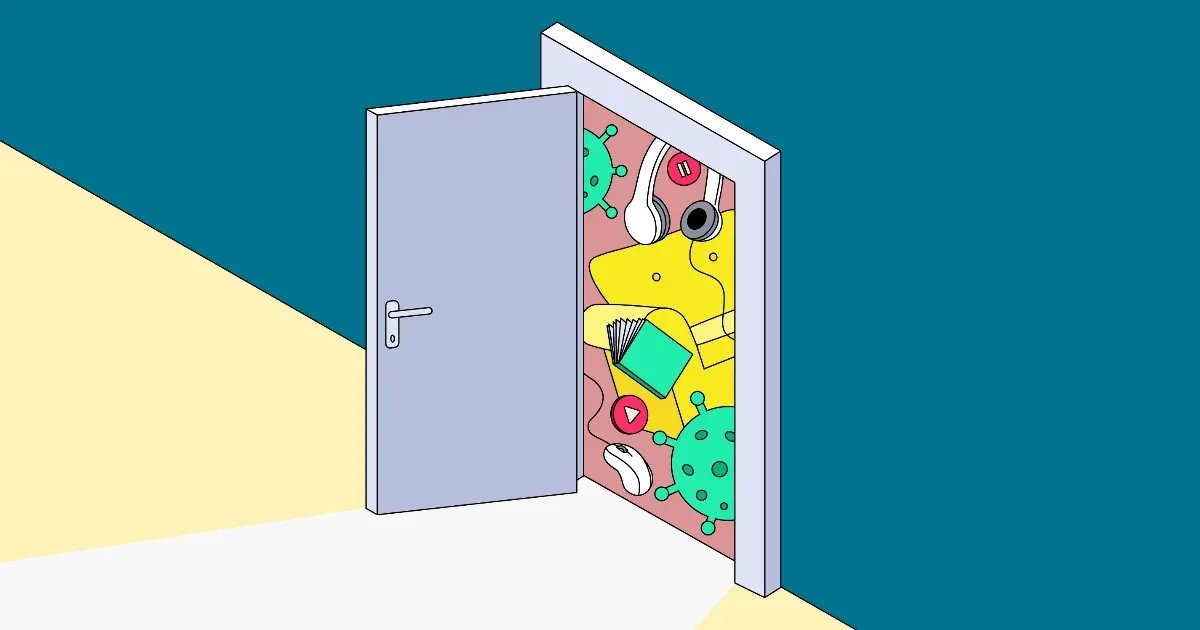
In 2020, the Covid epidemic literally overwhelmed the world, and had a tragic impact on both people’s lives and the global economy. Despite this, memes have been circulating on social media for years, in which they are mostly nostalgic about how happy it was when everything basically stopped because of the virus and you could play, read and watch movies at home with impunity.
Covid-nostalgia is a relatively new psychological phenomenon that has come to the fore in recent years and spreads primarily on social media platforms that are mostly used by young people. Many may rightly find it infuriating or distasteful that some look back with nostalgia to a time that was filled with uncertainty, fear and hardship. Because there were plenty of them.
The most serious consequence of the epidemic is the millions of deaths caused directly or indirectly by the virus. The World Health Organization (WHO) according to your data the number of victims has now approached 7.1 million, the same number in Hungary almost reaches the 50 thousand. To this day, there are those who since their illness with serious complications are struggling, but it is also worth mentioning that the health workers fighting the epidemic on the front line also have a serious psychological and physical strain were exposed to. The economic consequences of the epidemic were also serious, the restrictions introduced in many parts of the world pushed the economy into a deep recession, sectors such as tourism, hospitality, the entertainment industry and retail trade particularly suffered from the great shutdown.
The epidemic also accelerated digitization, which would be a good thing in principle, but at this pace the only benefit was that the differences between the more technologically prepared and the less adaptable workforce continued to grow. The advantages of working at home were more likely to be enjoyed by those with a higher education, the lower-educated employee was permanently excluded from the labor market. Based on these, Covid seems more like a hellish time than a happy time, despite this, many still look back on this period nostalgically.
The confinement was also a protective shell
The underlying content of the sometimes already emotional posts is more than simple reminiscence, this phenomenon has deeper social and psychological roots and highlights the changes that the epidemic has caused in people’s daily lives.
“No matter how surprising, Covid-nostalgia can also be linked to the desire for security. Although the outside world was full of uncertainty during the pandemic, people were forced into a closed, familiar space where they were forced to focus on the present, which paradoxically gave them a sense of security. Due to the closures and distancing, people fell into a kind of protective shell, from which the noise of the dangerous world was less audible,” Viktória Faludi tells Telex specialist psychologist and crisis therapist about the phenomenon. According to him, it is also interesting from a social point of view to observe how Covid-nostalgia appears.
According to the psychologist, the period of the epidemic did not affect everyone in the same way, it brought very different experiences to several generations. For many, this period evokes a kind of romantic nostalgia, as traditional expectations and obligations were abolished or at least transformed during confinement. Life slowed down and brought a freedom where some control remained with the individual.
During the Covid pandemic, most people were cut off from normal social interactions and the world suddenly slowed down. Homework, quarantine and homeschooling are widespread, and social and cultural programs have ceased to exist in the lives of many due to confinement. Being “stuck” within the four walls was frustrating for many, but for some it gave space to explore experiences and activities that they didn’t have time or opportunity for before. This strange, but in many ways understandable feeling comes to life in the Covid-nostalgic social media posts.
During the pandemic, many people re-evaluated their lives. The positive perception of closures mostly comes from the fact that many people started to focus more on themselves, their own internal development and personal relationships. Of course, this was not true for everyone, more precisely, not everyone benefited from being left alone with their thoughts, but we will return to this later. Overall, it can be said that this period gave people the opportunity to get closer to their family members, long-forgotten acquaintances and friends. In addition, it has also become clear to many that it is possible to enjoy the simple things in life, such as a short walk in nature or a newly discovered hobby.
Since life returned to normal and restrictions began to ease and then disappear, many people miss the so-called “simpler times”, but Covid-nostalgia has a deeper dimension: this feeling is most similar to when someone is forced to return to work after a long break.
For example, many people recall with pleasure that during the pandemic there were fewer traffic jams, the air became cleaner, and the pressure at work eased due to the home office. For others, it may have been a positive experience that it turned heads, or at least that community solidarity was strengthened, which was easily formed because essentially everyone was struggling with the same problem.
It could have been a trifle
According to Viktória Faludi, instead of the pressure of school and everyday tasks, a free, online social space has opened up for the younger age group. For many, confinement gave them the opportunity to be present exclusively online, where they could connect with friends and acquaintances without having to adapt to the limitations of physical presence.
“For those who like to be outside and meet people, it was all very bad for them. The introverts really benefited from this new situation, as well as those working in positions that had experience in how to exist in the online space. The nostalgic in social media posts it can be seen that
for many it was good that they had to stay at home, because essentially they could play, relax and have fun with minimal control, without the so-called frustration tolerance”
– says Viktória Faludi, who adds that “if you were to ask those who feel nostalgic for the closures now, whether they would really want similar closures again, then they would also say not to do it again”.
According to the expert, however, it should not be forgotten that this new situation had a very different effect on the older generations and those who are less comfortable in the online world. The novelty of digital communication and the sudden transition to remote work caused them a particularly great difficulty. During the shutdowns, it also became clear that not everyone is equally suited to maintain their performance from home, and this greatly increased the sense of alienation.
“The psychological effects of confinement are still with us today, especially for those who were already more mentally vulnerable.
In many ways, the pandemic strengthened their sense of insecurity, which may have led to persistent anxiety or depression for some.
These difficulties are particularly common among current university students, as the personal experiences and community experiences missed during the epidemic are missing from the lives of many,” adds the specialist psychologist.
In his opinion, Covid-nostalgia is ultimately not about the fact that some people miss the pandemic, but rather about the fact that they enjoyed freedom free from obligations: “That’s when we got a common label that you can be lazy, relax a little in the expected pace of performance.”
According to Viktória Faludi, the very important realization that social experiences and structured, regular daily activities are important in maintaining our mental health lies in the experiences of the epidemic. Based on our experience, we are perhaps better prepared to deal with a similar situation, but a great lesson is also that the importance of the systems of everyday life and the maintenance of human relationships is inestimable.