Exactly 130 years ago, on April 6, 1896, the first modern summer Olympics began in Athens – even then, this day fell on Easter Monday. 80,000 people gathered for the opening in the Panathenaic stadium, there were the Greek king and his family, the leaders of the International Olympic Committee and of course the athletes themselves, and everyone could feel that they were witnessing a very special event.
Fourteen nations sent their competitors to the Greek capital, who fought for 43 gold medals in nine sports. Hungary was represented by seven, the United States by fourteen, and the majority of competitors were domestic. We know from the reminiscences that it was not summer at all, our first Olympic champion, Alfréd Hajós, protected himself against the cold in the waters of the Zea Bay with tallow grease.
The Olympics already had an anthem, but not yet a flag, the Olympic flame was lit for the first time only in 1928, and the athletes could live in the Olympic village in Los Angeles in 1932. Since then, the Olympics have grown into the world’s largest sporting event, and the number of participants had to be maximized, with no more than ten thousand athletes allowed to participate.
The leaders of the International Olympic Committee knew that there was a great need for Olympic symbols to ensure lasting popularity. They already had the idea by 1908, but despite working on it, the plans were only realized later. At first, they wanted to somehow include olive branches in the symbols, but the spreading leaves only made the drawings cumbersome. The father of the games, Pierre de Coubertin, asked a special committee to create the symbols, but he was not satisfied with their work, so he relied on his own ideas.
He dreamed up the rings that symbolized the five continents. Today it seems obvious that the Olympics is also a competition of continents, but at the time it was not, to put it mildly. An Iranian fencer was the only Asian entrant in Paris, at the Olympics linked to the world exhibition, but he also entered only because he lived in the city in the first place and had already become familiar with the sport. Japan appeared in 1912 with two runners. South Africa already started in 1908, Egypt entered for the first time in 1912, a fencer represented the country.
Coubertin entwined the hoops and then chose his colors, he thought of white as the sixth color, which is why they were placed on a white background. He was looking for basic colors that are also included in the flags of the nations. This is what he said about the symbol:
“The six colors combined reproduce the colors of all nations without exception”
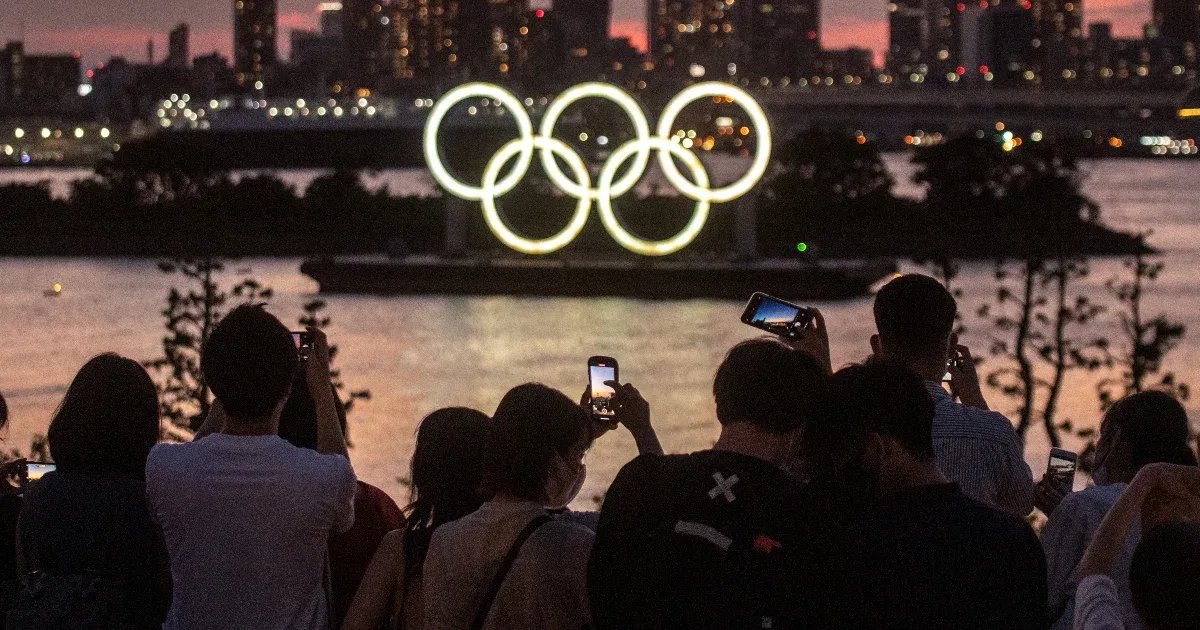
In 1914, these five rings became the official symbol of the Olympics. It was supposed to be presented to the public at the 1916 Berlin Olympics, which was canceled due to the First World War. We had to wait for the debut, the flag was raised for the first time in 1920, at the Antwerp Olympics. Since then, it has been one of the most well-known symbols in the world, nowadays there is no broadcast where it does not come across us on the playing field, in the auditorium, on sports equipment, jerseys, souvenirs, and of course it is also on the medals awarded to the best.
That’s why it’s interesting that even though we see it a lot, it’s not at all certain that we can place the colors flawlessly. The rector of the University of Physical Education, Tamás Sterbenz, recently said at a press conference that a common rescue question for students is: list the order of the colored circles. We don’t know if the students are happy about it, but it is certain that they will remember it for life after this, because it is not as simple a question as it seems at first hearing.
Now you can test your knowledge to see how much it isn’t. We show five versions out of the many combinations, and if you can mark the correct one without an internet search – you can also tackle the task on an exclusionary basis – then you are probably not only a big fan of the games, but also of the eidetic memory is also exceptional: