Al-Saket: Umrah City is a long-term development project that enhances economic growth
Makhamra: Every dinar spent on the project will generate economic activity in multiple sectors
Ayesh: The stadium is the cornerstone of a new city and a promising sports industry
Mansour: Starting the project on time enhances confidence in the government’s ability to implement its promises
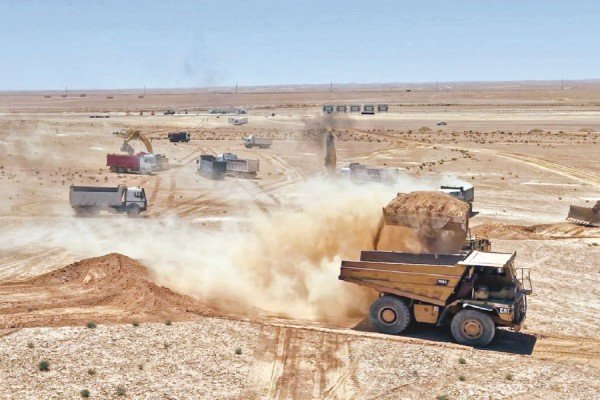
In a step that translates the vision of economic modernization into projects on the ground, the Jordanian City and Utilities Development Company announced yesterday, Sunday, the start of preliminary work and excavation for the Hussein bin Abdullah II International Stadium project, within the projects of the first phase of the Umrah City project, in preparation for the start of construction work in early 2027, in a project that represents the actual beginning of one of the largest sports and development edifices in the Kingdom.
The project comes as the first major project in the city of Amra, which is considered one of the most prominent future development initiatives in Jordan, where the stadium will be built on an area of approximately 1,000 dunums, according to the highest international specifications and standards approved in the design and construction of modern stadiums, to be qualified to host international tournaments and major sporting events.
The stadium will include an integrated infrastructure that includes advanced facilities and support services, in addition to parking spaces that can accommodate about 6,000 vehicles, and will be connected to public transportation stations and a rapid-frequency bus route, ensuring easy access and enhancing traffic efficiency during hosting major sporting events. The project also adopts the latest technologies used in international stadiums, which enhances Jordan’s sporting standing and increases its ability to attract regional and international sporting competitions and events.
Economic experts believe that the project does not represent just a new sports facility, but rather constitutes a starting point for a wide-ranging development and economic phase, because of its direct and indirect repercussions on investment, employment, infrastructure, and the various productive and service sectors.
Member of the Amman Chamber of Industry, Engineer Musa Al-Saket, confirmed that the Umrah City project, with its various projects including infrastructure, exhibitions, conferences, and the Hussein bin Abdullah II International Stadium, represents one of the major development projects with an expected economic impact in the medium and long term.
Al-Saket explained that the project is not limited to its sports dimension only, but rather constitutes a major driver for investment in multiple sectors including infrastructure, services, tourism and sports, noting that it will contribute to providing direct and indirect job opportunities during the construction and operation phases.
He added that the presence of a modern international stadium with world-class specifications enhances Jordan’s ability to host regional and international sporting tournaments and events, which reflects positively on the tourism, transportation, trade and investment sectors. He also expected that the project would contribute to raising the investment value of the surrounding areas and stimulating the establishment of accompanying projects that support economic growth and increase the Kingdom’s attractiveness for quality investments.
For his part, economic expert Wajdi Makhamra said that the start of construction of the Hussein bin Abdullah II International Stadium carries important economic implications, as it is a major strategic investment within the broader Amra City project, and one of the projects linked to the vision of economic modernization.
He pointed out that the estimated cost of the stadium alone amounts to about 200 million dinars, which represents a major financial injection into the construction and contracting sector, pointing out that the start of preliminary work and excavation will open direct opportunities for local contracting companies, suppliers of construction materials, and technical and non-technical labor.
Makhamra stated that the project will achieve a double economic impact, as every dinar spent in the construction sector generates additional activity in related sectors such as transportation, logistics services, and support industries, which is reflected in the levels of economic growth and employment.
He added that the project will provide hundreds of direct job opportunities during the construction phase until the end of 2029, in addition to thousands of indirect jobs, while additional long-term opportunities will be created related to the operation of the stadium and its accompanying facilities, with a focus on employing Jordanian youth and contributing to reducing unemployment rates.
He stressed that the project will enhance the attraction of local and foreign investments through partnerships with the private sector, and will contribute to transforming the region into a new economic center that supports balanced development and stimulates the establishment of real estate, commercial and tourism projects around the stadium.
He pointed out that the stadium, whose capacity will range between 46,000 and 50,000 spectators, will enable Jordan to host major international tournaments, which will reflect on tourism and sports revenues, broadcast revenues, sponsorship and public spending, and enhance the position of sports and entertainment as a growing economic engine, as well as improving the international image of Jordan as a modern and sustainable investment destination.
In turn, economic expert Hossam Ayesh confirmed that the project is directly consistent with the vision of economic modernization and constitutes a new base for urban and economic expansion in the Kingdom, explaining that the city of Umrah is nominated to be an advanced model for smart, digital, industrial and service cities.
He pointed out that the new city will achieve wide economic, social and developmental repercussions, and will contribute to transferring the concepts of modernization and development to other cities in the Kingdom, raising the level of services and urban structure and enhancing the efficiency of economic performance.
Ayesh explained that the volume of expected investments in the city of Umrah is estimated at about 8 billion dinars over the course of 25 years, making it one of the largest development projects in the Kingdom, pointing out that these investments will be distributed among infrastructure and economic, tourism, service and industrial projects.
He added that the international stadium will be the main cornerstone of the city and the beginning of major projects there, which reflects the state’s interest in the sports sector as one of the tools for economic diversification, especially in light of the development witnessed by Jordanian sports and its increasing ability to compete regionally and internationally.
He stated that the new stadium will have world-class specifications capable of hosting major regional and international matches and tournaments, which will contribute to developing the sports industry in Jordan and enhancing investments related to it, whether in sports services, equipment, or entertainment activities related to sporting events.
He pointed out that Umrah City will not be just a residential project, but rather an integrated investment city capable of industrial and digital expansion, and may attract technical universities, advanced scientific centers and various entertainment projects, in addition to its ability to attract additional investments in multiple sectors, which adds real value to the national economy and enhances sustainable development and urban balance.
For his part, economic expert Dr. Youssef Mansour considered that the start of the project implementation on the date announced by the government reflects the seriousness and credibility of implementing major national projects, noting that the government had previously pledged to start the project before the middle of the year, which was actually achieved by issuing bids and starting preliminary work.
Mansour stressed that the project represents an important operational opportunity that extends for many years, pointing out that the construction sector is one of the sectors most capable of stimulating economic activity due to its connection to approximately 36 other economic sectors, including the iron, aluminum, cement, and stone industries and many supporting industries and services.
He added that the large size of the project will have a rapid and direct impact on the national economy by increasing demand for materials and services, creating job opportunities, and stimulating investments related to it.
He pointed out that the project is not only limited to developing the infrastructure, but also contributes to strengthening the superstructure by providing modern facilities that allow citizens to practice sports, social and recreational activities within a developed and modern environment.
He explained that the project’s location near Queen Alia International Airport gives it an additional strategic advantage, and contributes to stimulating economic and investment development in the southern areas of the capital, creating new opportunities for developers, operators and investors in the future.
With the start of the preliminary work for the first Umrah City projects, the Kingdom appears to be facing a new phase of major development projects that combine sports, economics, investment and urban development. While the Hussein bin Abdullah II International Stadium constitutes the starting point, experts believe that the project holds broad opportunities to reshape the economic and urban landscape in Jordan, and enhance its position as an attractive destination for investment and major sporting events, in line with the goals of the economic modernization vision and establishing a new phase of growth and sustainable development during the coming decades.