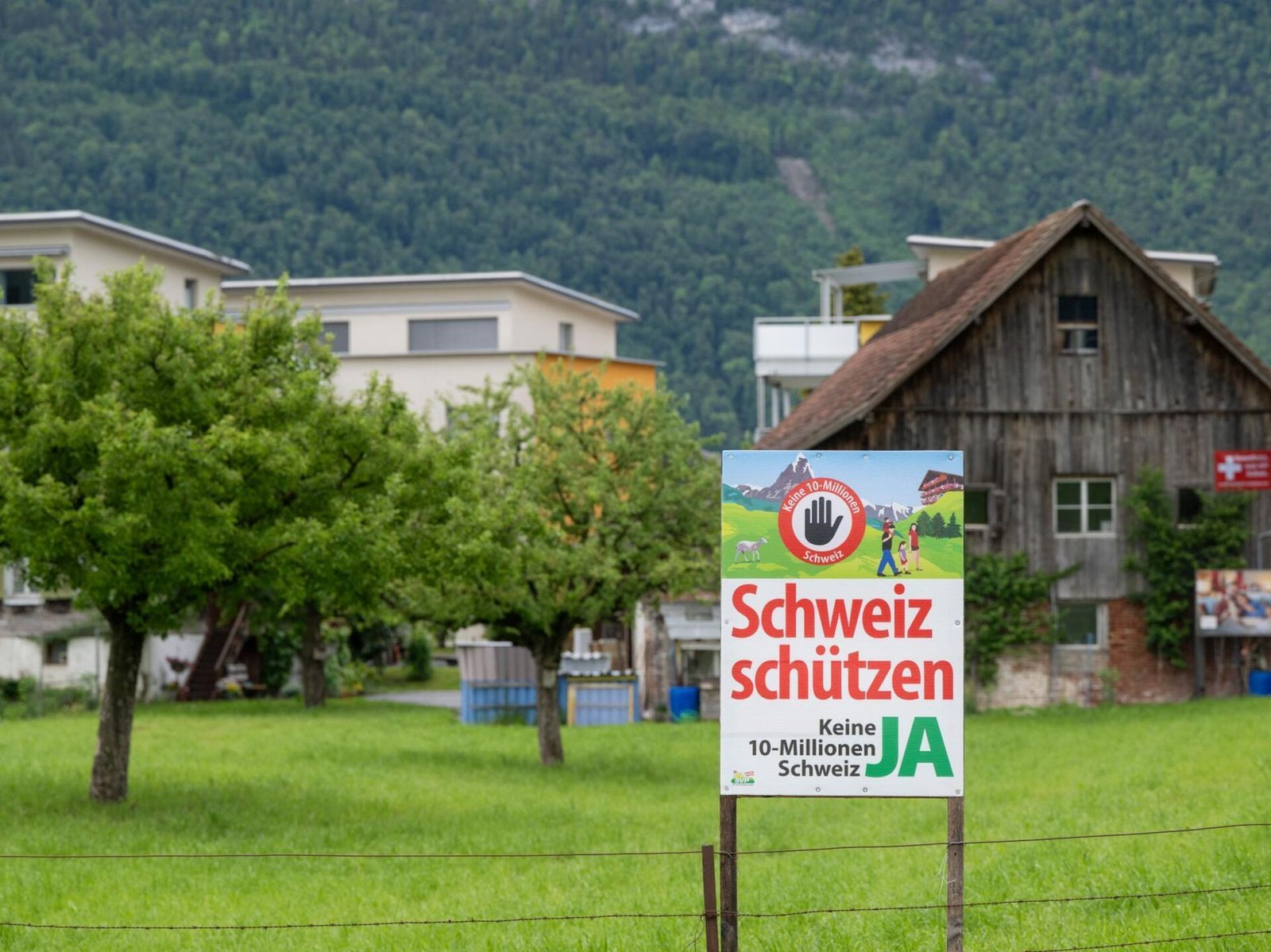
Switzerland is facing a landmark vote. The “No Ten Million Switzerland” initiative demands that the country’s permanent resident population should not grow to more than ten million people before 2050. In the first quarter of 2026, around 9.14 million people lived in Switzerland. If the initiative is accepted, the Federal Council, i.e. the Swiss government, and Parliament will have to take initial measures when the population exceeds 9.5 million, especially in asylum policy and family reunification. If the threshold of ten million inhabitants were to be reached and, despite these measures, not fallen below again after two years, Switzerland would be forced to terminate the agreement on the free movement of people with the EU.
Not surprisingly, the popular initiative comes from the right-wing populist Swiss People’s Party (SVP), the country’s strongest party. The arguments put forward by the SVP hardly differ from those we know in Luxembourg from the right-wing populist ADR. The strong immigration leads to traffic chaos, causes rents to rise further and puts a strain on the environment. The SVP even called its initiative a “sustainability initiative” in the hope of winning votes from the left and green camps. However, there is a broad front against the initiative from almost all other parties and numerous business associations. The counterarguments have also been known for a long time. Limiting immigration would exacerbate the shortage of skilled workers. In addition, the entire bilateral relationship with the EU, Switzerland’s most important trading partner, as well as prosperity, economic growth and the financing of pensions would be put at risk.

So these are essentially the same arguments that would be used in Luxembourg in the context of a growth debate. This shows once again that the question of growth underlies many of the major challenges of our time. If there were a consensus here, it would probably be easier for politicians and social partners to discuss housing, pensions, a shortage of skilled workers, mobility or environmental protection.
Since, unlike Switzerland, we are not a direct democracy, it remains to be seen whether it would have to be a referendum here. It would be enough if the parties took a clear position on the question of growth in the next election campaign.
If the Swiss popular initiative taught us anything even before the vote, it was that this issue should not be left to the right-wing populists. After initial polls predicted a narrow yes to the initiative, the tide now seems to have changed somewhat. According to recent polls, 52 percent of the population votes against the initiative. The decisive factor will probably be which camp can ultimately mobilize more voters. In any case, Switzerland is facing a landmark referendum. In Luxembourg, on the other hand, the debate continues to be mainly about the consequences of growth, about mobility problems, housing, skills shortages, but hardly about population growth itself.