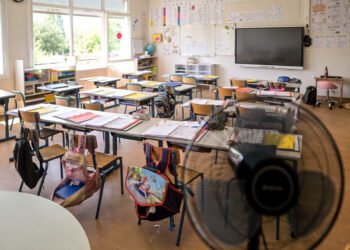
First of all, the good news: Luxembourg’s students seem to be fit. How else can you explain that they survived entire school days in containers or classrooms at a room temperature of around 35 degrees without collapsing one after the other?
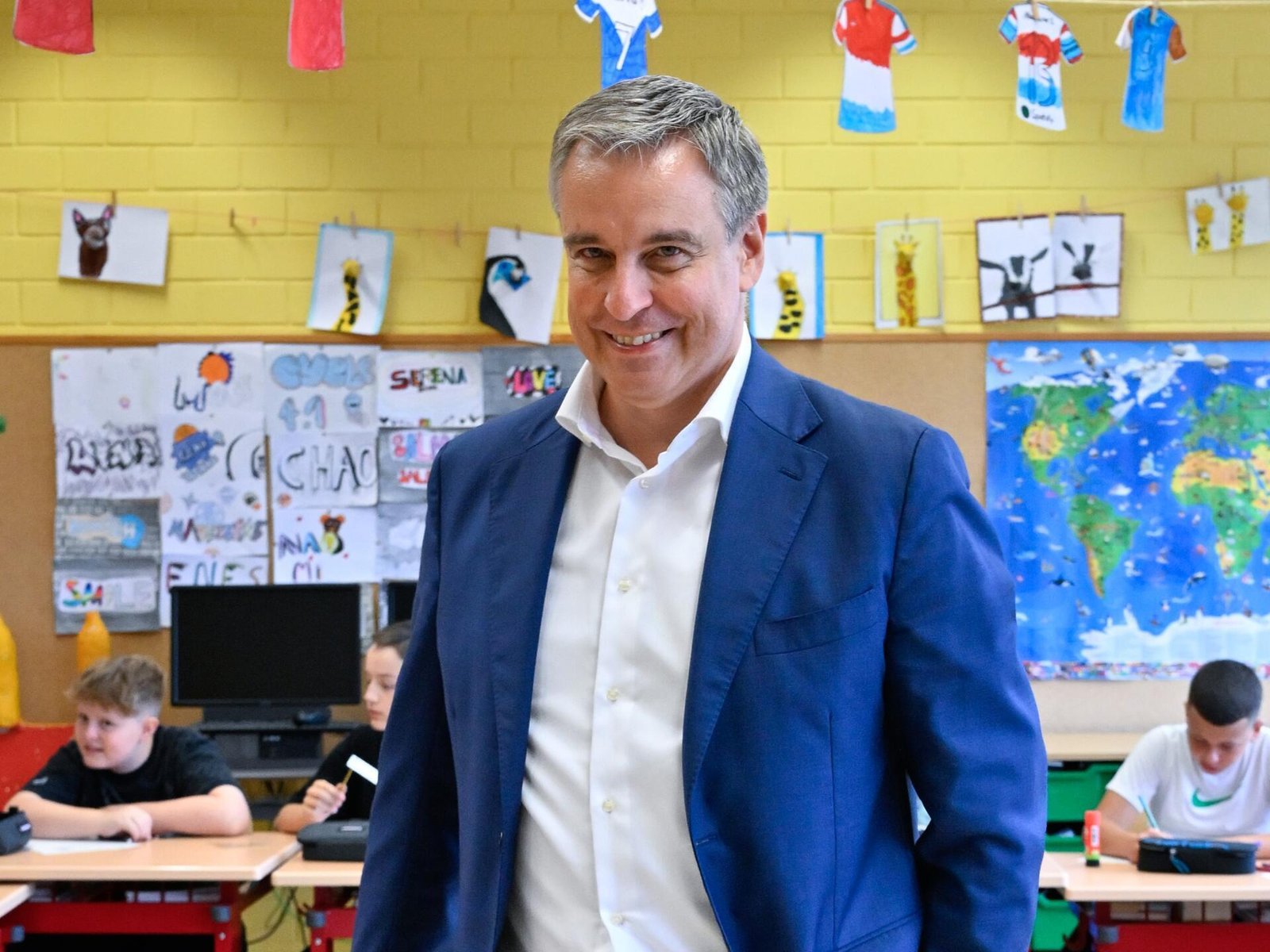
In other words, and without hiding the good news behind cynicism: Has the state taken its duty to protect students seriously enough? In this case, this question primarily concerns the Ministry of Education and Education Minister Claude Meisch (DP). After all, the state has warned of an extreme danger. He didn’t act himself. Foreign countries have shown how it can be done. Numerous countries announced their school closures last week. In Luxembourg it will be announced in the evening what will happen the next day.
The government reactions to the recent heat wave, which continues to affect Luxembourg, should therefore give us pause.
This heat wave was not a surprise event. The high temperatures were announced early on, the expected exceptionally long duration of the extreme weather situation was predicted, and all those responsible for politics should have been aware of the consequences for the country and its people. Nevertheless, Luxembourg allowed itself to be overrun as if it were unable to act.
This is exactly where the real problem lies. It wasn’t the heat that came as a surprise. What was surprising was how unprepared a country seemed that should have known long ago that such weather conditions are no longer an exception. They did come together in Senningen to declare a red warning. However, a red warning level must not just be a message on a weather website. Even the LU Alert message is hardly sufficient if the “Alerte Rouge” does not trigger any specific processes, for example for schools, companies, communities and social services. The state warned of a “danger extrême” for the entire country, but forgot what that meant for it: to take special care of those who need its protection because they themselves have no lobby. This also includes the country’s students.
Education Minister Meisch said on RTL radio on Wednesday morning that a general lack of heat would have “paralyzed” the country. The minister failed to provide an explanation for such a catastrophe scenario. Nobody demands that the entire country automatically comes to a standstill every time there is a heat warning. But there is scope between normal operation at 35 to 40 degrees and complete standstill: shortened school days, clear temperature thresholds, exceptions for exams. This is exactly why rules are needed that are established in advance and do not only have to be looked for when the classrooms are already overheated.
Added to this is the complete chaos that Meisch has unleashed. The minister said the lyceum managements should decide for themselves. Some of them said that they would have to wait for a response from the ministry. Simply passing responsibility down the line is not pragmatism. The result at least looked a lot like amateurism.
One cannot help but suspect that a heat-free event would have caused too much fuss in the eyes of those responsible. Perhaps the timing so close to the “Groussherzogsgebuertsdag” also played a role, when no one needed a debate about canceled events, heat protection and state precautions. So the students just had to go through it. Or, as the minister also said on RTL: “Et ass waarm fir jiddereen.”
That is exactly the mistake in thinking. Heat affects everyone. But it doesn’t affect everyone equally. It was particularly hot for those without their own advocacy group that could loudly draw attention to grievances. Anyone who sits in an overheated classroom, who works on a construction site or who has no cool place to retreat to needs more than just a hint that it is warm.
The next heat wave is definitely coming. Things can only get better. Now we had a state that warned. And people who should see for themselves how they get along. This is (climate) politics that is annoying.