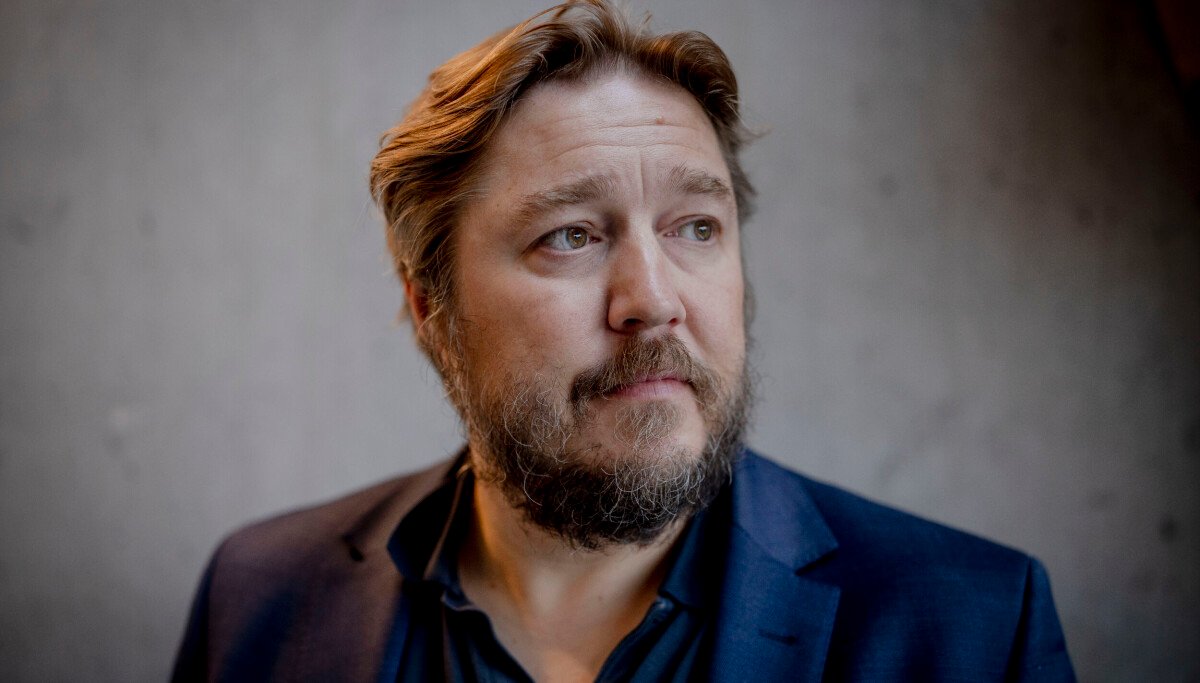
Steven Arnfjord is recently moved to Qaqortoq, which is why he was in town when Kujalleq Municipality shut down alcohol sales on Friday 2 October.
– I heard it from my mother-in-law, who came and said that they were now closing. You simply ran around town. Someone just had to do a bit of shopping, so things went very quickly, he says.
Steven Arnfjord is recently moved to Qaqortoq, which is why he was in town when Kujalleq Municipality shut down alcohol sales on Friday 2 October.
– I heard it from my mother-in-law, who came and said that they were now closing. You simply ran around town. Someone just had to do a bit of shopping, so things went very quickly, he says.
Although he now lives in Qaqortoq, Steven Arnfjord has continued his work at Ilisimatusarfik in Nuuk, where he is professor and head of the department for Arctic Welfare.
For many years, he has researched virtually everything within social policy, and when you deal with that subject, you can’t avoid that alcohol and drugs will also play a part, he says on the way up the stairs to his office.
– When there is a lack of meaningful activities for people and a lack of help, there is very typically an increase in various forms of abuse, he says.
Here at home it is often seen in places with high unemployment – where the local factory or procurement point is closed. Therefore, a large part of the prevention of such waves of abuse rests on activating the local community, he points out.
In this article, we turn our gaze away from South Greenland for a moment in order to find out where in the world and in history different types of measures have been tried to prevent alcohol problems.
We also talk to Steven Arnfjord about what has been shown to work when overcoming alcohol problems.

From ‘Systembolaget’ to the Icelandic model
If you search outside the country’s borders and look at other countries where alcohol sales have been tampered with, there are many.
In the Nordic region, Sweden has a long history of alcohol policy, which began in 1850, when the Swedish state introduced rations for how much alcohol you could buy.
At the time, the country had challenges with employees who drank too much brandywhen there had been a payday. It also meant that the world’s very first alcohol monopoly arose in the mining town of Falun.
Just over 100 years later, the system in Sweden changed to the alcohol monopoly, which today goes by the name ‘Systembolaget’. If you want to buy spirits, wine and beer, you must buy them in Systembolaget’s stores.
In Iceland, there has been great success with what is popularly called ‘the Icelandic model’. After alcohol-free high school parties were introduced in the 90s, a curfew for young people under the age of 16 and an age limit of 20 for buying alcoholthe high alcohol consumption among young people plummeted.
When it comes to combating alcohol abuse and the like, it is rare that bans from a determining authority or major political emergency actions have any long-term effect.
In 1998, the proportion of 15-16-year-old Icelanders who had been drunk within the past month was 42 percent. In 2023, the figure was five percent.
According to professor and head of department Steven Arnfjord, a large part of the success in Iceland was due to the fact that it was largely the local community itself that was motivated to see a change.
– An effort in the local community, where everyone is involved, and where everyone has a common understanding that this is what we are doing, he says.
And then there is Latvia, which last year tightened the rules for the sale of alcohol, so that shops and supermarkets could only sell alcohol for a limited period of time. An initiative that had both a quick and noticeable effect on health, including the number of alcohol-related deaths, shows a new report from the World Health Organization, WHO.
Something that we also know here at home, where it is not possible to buy alcohol on Sundays or public holidays, for example, and where in Brugseni and Pisiffik since May it has also not been possible to buy alcohol on Saturdays before 12 o’clock.
An initiative which they have chosen to make permanent, since alcohol sales have been closed since May decreased by 12-14 percent.
Limitation works, but it is not enough
Restrictions on the purchase and sale of alcohol – such as the measures in Latvia, Sweden or here at home – are therefore something that apparently works.
However, it is important to include the population when introducing regulations for alcohol, emphasizes Steven Arnfjord. As with the example in Iceland, where the parents were a solid part of the backbone of the alcohol revolution.
– When it comes to combating alcohol abuse and the like, it is rare that bans from a determining authority or major political emergency actions have any long-term effect, says Steven Arnfjord and adds:
– Long-term effects come with good old-fashioned local community support.
He highlights the health campaign ‘Gør May Sund’, which began in 2007 in Nuuk, but which is now nationwide.
– Such initiatives are just difficult for the politicians to operationalize, and it requires good partnerships in the local communities, which can start the idea or carry it forward, says Steven Arnfjord.
According to Professor Steven Arnfjord, the current ban on alcohol in the Municipality of Kujalleq will most likely have a here-and-now effect on the number of domestic violence cases. In addition, the children will be able to feel it, and you will be able to see it until payday, he points out.

We have also seen this before during the corona pandemic, where in 2022 alcohol sales were completely shut down in Kommuneqarfik Sermersooq, Municipality Qeqertalik and in Municipality Kujalleq.
– But strict bans are not prevention, they are firefighting. Because we don’t take care of the underlying cause of why some of these problems arise, says Steven Arnfjord.
In addition, experience shows that a new wave of alcohol abuse can arise when the decision-makers open up sales again, he points out.
According to Steven Arnfjord, it would therefore be politically smart to determine a time frame for the ban and in the same breath initiate various information campaigns and initiatives.
– Where you can talk about what needs to be done going forward to solve the problem. Because this looks a bit like a collective punishment – and I don’t think that has a very good effect, he says.