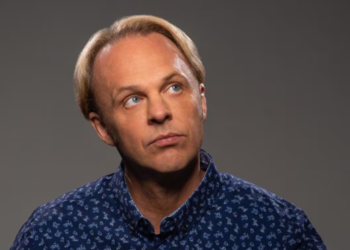
Christian Gomez Plug He is one of the best-known Costa Rican singers in Costa Rica, turning his neighborhood life into a score and his experiences into choruses that lived on in the memory of several generations.
The “now yes!” artist He grew up in the El Poro neighborhood, in Concepción de Alajuelita, where his grandfather gave him the nickname Tapón, a name that years later would become his artistic identity.
In 1998 he released the song Created my way and, since then, its name began to take over national radio stations, as the song insistently found its way into all possible playlists and refused to leave the list. repeat. Since that powerful debut it has remained current; His secret, he says, is self-confidence and absolute fidelity to his own voice, without filters.
Tapón is aware that not everyone likes him, but also that many love him precisely for that reason. “I prefer that they hate me for being who I am than that they love me for being a hypocrite,” he said in the video podcast. In confidenceof The Nation.
A start against the current
Despite having a career spanning 28 years, Tapón still hasn’t gotten used to fame and is still surprised when people ask him for photos or recognize him on the street. “I never imagined it,” he said.
The beginning of his career was complicated. Costa Rica came, as he himself remembers, from what was considered the best era of national rock, and it was quite a shock present to the public a young man who wanted to rap, sing reggae and propose a style very different from other Costa Rican artists of the time. From the first day he stood on stage like a sudden change of pace in a song: unexpected, risky, but impossible to ignore.
“From the beginning I had the goal of making songs that transcended, that said something to people regardless of the year in which they heard it,” he mentioned.
According to what he said, he did very risky things for his career, like bringing a rhythm that was not so well known in the country and molding it. in your waydifferent from how it sounded in other places where that genre was already popular.
“In ’98, I never imagined that in 2026 they would still invite me to important events, for example to the Picnic Festival,” he added. For him, to continue being considered to sing on stages of that magnitude is to verify that his musical commitment is still on time and he has not lost his beat.
Tolerance for failure, its strongest note
If something characterizes Plug is your ability to reflectand that was evident during the interview. One of the topics he delves into the most is his failures, which, he assures, he has learned to be tolerant of and see as an indispensable part of his personal score.
“I have had more failures than successes. I think I have recorded more than 500 songs, how many have hit? How many do people remember? 15 How many failed? It is a very high percentage,” he stated. For him, most of his songs are notes that may not have made it to the charts, but that helped him refine himself as an artist and as a person.
Asked if he considers that In Costa Rica it is difficult to achieve success in musicthe singer responded that everything is complicated, but that everything depends on the desire and effort put into achieving a goal. However, he also highlighted that Costa Rican artists are measured with a different yardstick than that used with international artists, as if the public were a more demanding jury when it comes to local talent.
“I would be ungrateful if I said that the Costa Rican public is difficult, but I think they accept those from outside more than those from here. I am sure that if I had released any of the songs that Anuel releases, singing the way Anuel sings, I would not have hit here in Costa Rica… I’m not saying it’s bad, I’m saying that if I had released songs like other artists sing, it wouldn’t have hit,” he explained.
Furthermore, Tapón asserted that his career would be forgotten if he had released the cell phone of a fan who wanted a photo, as Bad Bunny did. “I can’t say that people don’t support (Ticos artists), they just measure us with a different measure… but people like and support the songs from here,” he emphasized.
In his case, the relationship with the public is like a choir that is sustained in the mutual respect.

A purpose: to be light
A few years ago, Tapón gave a fundamental place in his life to God and, since then, he has been convinced that his purpose, like that of others, is to be light.
“We are body, soul and spirit, and to be well we must have a balance. So, there are people who take great care of their body, exercising, eating well… There are people who take great care of their soul, giving it emotions, but we forget about our spirit,” he said.
In 2009, when he felt “saturated”, He came home one night smelling like cigarette smoke.after a presentation. Then he asked his wife, Marianné Vargas – who manages his schedule – to cancel all the presentations he had.
It was as if he had decided to turn the volume down completely so he could hear, for the first time in a long time, his inner silence.
He began to study theology and his music took another direction, one more focused on Christianity. Again, just as he took a risk in the late 90s with a new style for Costa Rican music, he took a risk again, but this time from his reinforced faith and beliefs. His repertoire became a kind of sung spiritual diary.
This new stage made him lose agreements, such as those he had with some youth radio stations, which refused to continue programming his songs because, when talking about God, they no longer sounded so “youthful.” According to him, that was exactly what he was told. Plug He chose to follow that path, convinced that his mission was bigger than staying on a hit list.

Between controversies and applause
Throughout his experience, Tapón has been involved in several controversies and, to deal with them, he repeats a mantra: “Nothing lasts forever, this too shall pass”. He understands controversy as a background noise that, although it sometimes gets louder, should not overshadow the main melody of his career.
“I remember one of the controversies that involved me a few years ago, because I got involved myself: I said the wrong word, I wanted to say one word and I said another. And everyone worked for me; they kept telling me that I was going to die. The controversy was a very strong couple of days, because it really feels ugly, it is very ugly to see all the social networks against you. But I understood that: social networks live on the cell phone, just turn off your phone and that’s it,” he mentioned.
In the middle of that controversyhe and his wife had to go out to run some errands. She was afraid to go out because of everything that was said on the networks, but he wasn’t. “Five people asked me for photos,” he said, recognizing that controversies are temporary and do not alienate true followers.
Tapón said that when other content creators involve him in controversies, as has happened, he does not waste time answering them. “I have clarified things that they say about me with bad intentions and that are not correct. But if someone throws me just to throw me or because what they want is for me to answer them, what I do is I call them,” he mentioned.
However, he recognizes that controversies are not a new issue in his public life. He even remembers that, in the beginning, they created a website called antitapon.com, in which they published all kinds of mockery against him.
“You don’t remember that, but you do remember Created my way…What prevails is the music and the good,” he highlighted.

A diagnosis that changed his life
Throughout his life, Plug has been very sensitive to excessive noiseto bright lights and crowds, and a few years ago he discovered why: is neurodivergent.
Being neurodivergent means that a person’s brain functions differently than what is considered typical; processes information, learns, concentrates, feels and relates in other ways, which can bring both challenges (for example, with attention, communication or learning) and particular strengths, including creativity, hyperfocus or thinking outside the box.
This trait, combined with a musical career, might sound contradictory; however, He has learned to handle it with the support of his family, whom he considers his most important team.. They know that there is a limit when it comes to crowds and being surrounded by people, as if their energy were a volume that they must be careful not to always take to the maximum.
“It gives me anxiety. To control myself I have to have a lot of focus. Before a concert I need to be concentrated and focused. Sometimes people say: ‘Oh, what a hateful mother, who didn’t want to take a photo’… But before I start it causes me a lot of anxiety; when I finish, I do take a lot of photos,” he said.
Behind the scenes, his preparation is more like an emotional tune-up than a simple voice warm-up.
Thus, this Christian, who has permeated many homes and generations, wants to be remembered for his art and his authentic music. “In my albums I leave everything said, sometimes very explicitly and sometimes with key messages. I want them to remember me as I was when I retire, with my strengths and weaknesses,” he mentioned.
His intention has never been to show himself as invincible or the weakest, but rather as the bearer of a message for those who need it. “I want to be remembered as a neighborhood teacher who wanted to improve and I am very happy because we have achieved it. Thanks to the people who continue to support me,” he concluded.
On the great stage of Costa Rican music, Tapón aspires to remain not only in the memory of a generation, but as that sincere song that always finds a way to sound on a new speaker.