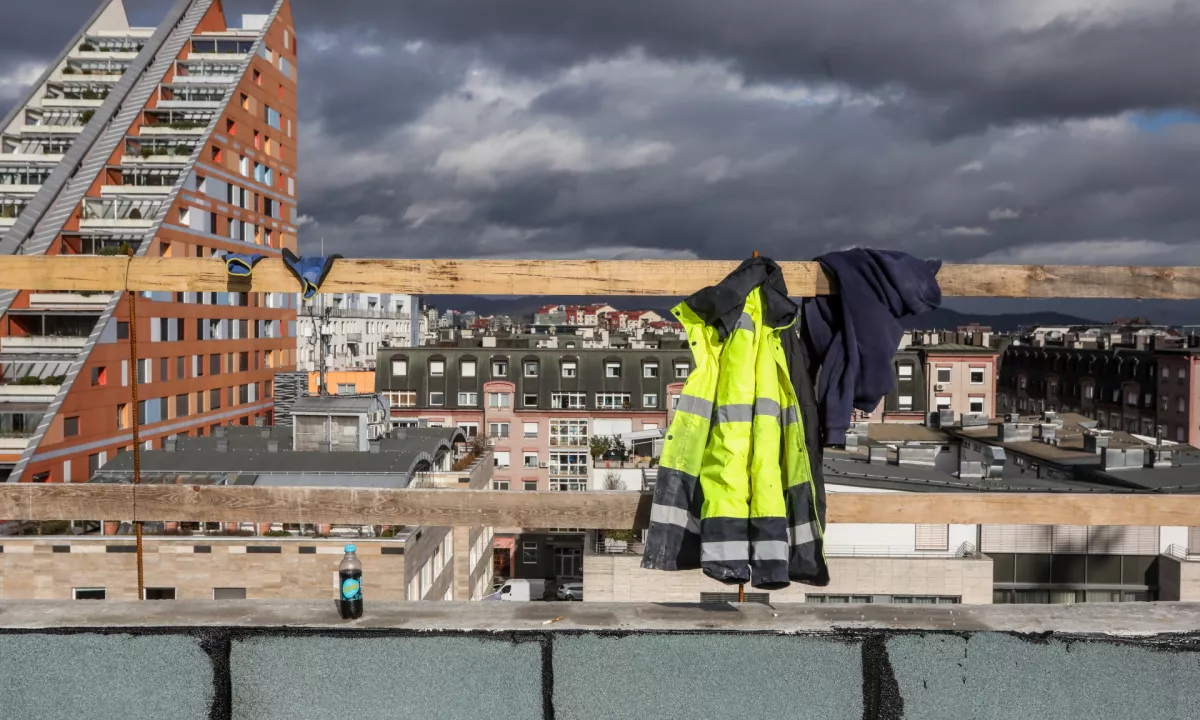
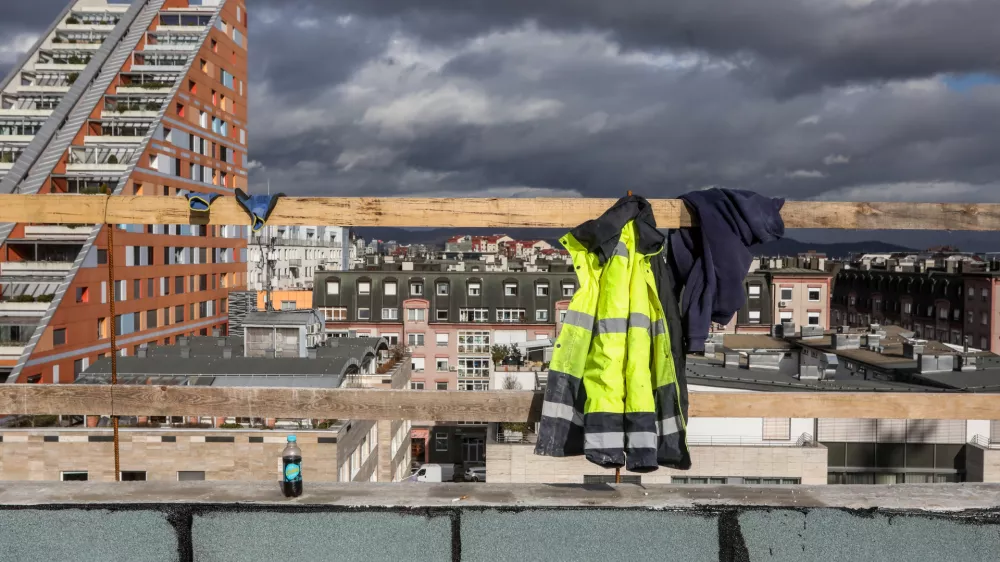
Experts point out that differences between countries are not primarily the result of personal decisions by employees, but rather a reflection of the organization of the labor market and the economic structure of each country. Photo: Bojan Velikonja
Slovenians consider themselves very hardworking, but what do the official statistics show?
The latest data from the European statistical office Eurostat reveal large differences in the number of actual working hours between European countries.
In the countries of the European Union, the average working week in 2024 was 35.9 hours. The data includes both full-time and part-time employees, aged 20 to 64, and refers to hours actually worked in the main job.
The Greeks have the longest working week among EU members, who work an average of 39.6 hours per week. Followed by Bulgaria with 38.7 hours and Romania with 38.2 hours. If we also take into account the candidate countries for EU membership and EFTA members, Turkey is at the top with 42.4 hours per week, followed by Bosnia and Herzegovina with 40.9 hours and Serbia with 40.6 hours.
These are also the only European countries where the average number of hours worked exceeds 40 hours per week. The data thus show that the countries of southeastern Europe generally have a longer working week than the countries of the north and west of the continent.
A Dutch specialty: almost half of the employees work part-time
At the other end of the scale is the Netherlands, where employees work an average of only 31.9 hours per week. According to Eurostat, one of the key reasons is the extremely widespread part-time work. Almost 43 percent of all employees have this form of employment, which is by far the highest in the EU.
The Netherlands is followed by Germany, Norway and Denmark, where the average working week is 33.9 hours. Austria, Belgium and Finland are also under 35 hours.
However, it is important to emphasize that a shorter average working week does not mean that full-time employees work significantly fewer hours. In the Netherlands, the working week for full-time employees is still close to 40 hours. Since, as mentioned, a large proportion of employees work part-time, this significantly lowers the national average.
Germany works less than France, Italy and Spain
Among the four largest EU economies, Germany has the shortest working week, where employees work an average of 33.9 hours per week. In France, the average is 35.6 hours, in Italy 36.1 hours, and in Spain 36.3 hours. The difference between Germany and Spain thus exceeds two hours per week.
According to experts, shorter working hours in Germany partly reflect the strong role of unions and collective bargaining on working conditions, which limit excessive working hours.
Where is Slovenia?
According to Eurostat data, Slovenia ranks above the European Union average. The average number of hours actually worked per week is about 38 hours, which puts the country closer to Central and Eastern European countries than to Northern European economies.
Compared to Germany or the Netherlands, Slovenians work more hours on average, but the difference is much smaller compared to the Balkan countries, which occupy the top of the ranking.
Why are the differences so great?
Experts point out that differences between countries are not primarily the result of personal decisions by employees, but rather a reflection of the organization of the labor market and the economic structure of each country.
An important factor is the prevalence of part-time work. Countries with a large number of such jobs generally record a shorter average working week. The same applies to countries with stronger collective bargaining, where unions and employers often set lower work obligations and stricter limits on overtime.
The share of the self-employed also has an impact, as they work more hours on average than employees, especially if they run their own business and employ other people. Differences also arise due to the economic structure. Some activities require a longer presence at work, while others allow for shorter working hours or greater flexibility.
Farmers and managers work the most
Eurostat data also show large differences between individual professions. The longest working week is for skilled workers in agriculture, forestry and fishing, who work an average of 42 hours per week.
This is followed by managers and executives with an average of 40.6 hours and members of the armed forces with 39.4 hours of work per week.
On the other side of the scale are those employed in simple professions, where the average is 31.8 hours per week. Administrative workers and employees in service and sales activities also have a relatively short working week.