
April 28, 2026 at – 2:48 p.m.
Fighting over a toy is almost a childhood rite. But if the crossings go from “they shout and they pass them by” to fear, harm or sustained humiliation, it is worth taking a closer look. These signs of sibling rivalry help you decide when to consult a professional.
The sibling rivalry usually mixes affection, competition and rehearsal boundaries: discuss in turns, compareprovoke. In reasonable doses, it is part of social learning. The alarm appears when the conflict becomes frequent, intense and unequaland begins to affect the safety or mental health at home.
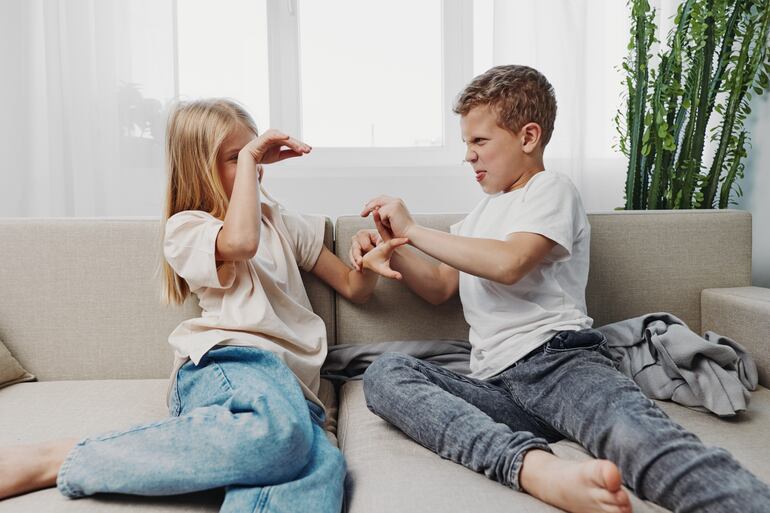
A useful hint: it is not only what do they dobut how is the atmosphere after. If no one recovers—or if one always “loses”—we are no longer talking about daily friction.
Read more: Jealousy between siblings: what to do to maintain family peace
Signs you crossed a worrying line
There are behaviors that justify consulting with a professional (child psychologist, family therapist, pediatrician or child and adolescent psychiatrist, depending on the case), especially if they are repeated:

- Violence that escalates or becomes dangerous.
- Hitting with intent to hurt, pushing near stairs, use of objects as “weapons”, credible threats (“I’m going to…”). It is not “guy things” if there is a real risk.
- Marked asymmetry (bullying inside the house). One brother dominates, humiliates or terrorizes the other in a sustained way: insults, degrading nicknames, control (“you can’t play with…”), coercion or invented punishments. If one lives “on tiptoe,” it is a sign.
- Visible psychological damage. Nightmaressomatizations (tummy pain, headache), setbacks (enuresis), isolation, constant irritability, drop in performance or fear of being alone with the brother.
- Inappropriate or coercive sexual behavior. Any sexualized interaction with a power difference, pressure or imposed secrecy requires immediate consultation. Here it is not advisable to “wait and see”.
- Self-harm, threats of suicide or despair. Although they may sound impulsive, they are taken seriously and urgent help is sought.
- Conflict becomes the center of family life. If it’s all about separating, refereeing, and “putting out fires,” and the adults are overwhelmed or arguing with each other about how to handle it, it’s also time for professional support.
Read more: Jealousy, possessiveness and exclusivity: when Oedipus and Electra stop being normal
When to ask for professional help, in practice?
A simple rule for families: if there is danger, sustained humiliation or fear, consult. If there is no urgency, but the boss takes several weeks and the usual strategies (limits, consequences, time alone, mediation) do not change anything, asking for guidance prevents it from taking hold.

If there are injuries, serious threats either immediate riskthe way can be guard/emergency or contact local emergency services.
What to do today, before the first consultation
First, separate and regulate: physical pause, low tone, no “you decide” when they are out of control.

Then, name what is observable (“there was a push”, “there was an insult”) and set a short rule: in this house there is no hitting/no humiliation.

It helps a lot to keep a brief record: when it happens, what triggers it (screens, tiredness, tasks), who was there, and how it ends. This “map” gives the professional concrete material and the family, patterns.
and a hack that seems small but changes the climate: individual time (10–15 minutes) with each child, without correcting or comparing. Sometimes rivalry subsides when attention stops feeling like a scarce resource.
Read more: Using AI chatbots can increase anxiety in the long term
Which specialist to go to depending on the case
The pediatrician can rule out medical factors and make a referral.
A child psychologist works on emotional and coexistence skills; Family therapy orders roles and rules when the problem is systemic.
If there is self-harm, severe violence or intense symptoms, a child and adolescent psychiatrist may intervene for a comprehensive evaluation.
The clearest sign that the consultation is worth it: when the objective is no longer “to get along”, but that they are safe and They can live together without fear.
Line 155: mental health support
Anxiety, suicidal risk or emotional crisis? Call 155 and you can receive support. It’s free, confidential and works all day, nationwide.