“In the Javanese Year 1960 – this new year – the Sasi Suroh, or the first day of Suroh, the Sidjie Suroh or Satu Suroh, or the New Year’s Day, is all about 1960 Tahun ‘Be’, which stands for: the Year of Blessing and Prosperity after Hard Sacrifices. According to cultural expert and Javanese spiritual leader, Edward Redjopawiro, specialized in legal sociological subjects, the Javanese language stands for New Year, known in Suriname as the Sasi Suroh or the first day of the month of Suroh, the Sidjie Suroh or Satu Suroh, dedicated to the eight-year annual cycle, the ‘Windu’. “These eight years have a Buddhist background and are called: 01. Tahun Alip 02. Tahun Ehe 03. Tahun Jemawal 04. Tahun Je 05. Tahun Dal 06. Tahun Be 07. Tahun Wawu 08. Tahun Jimahi.
Text Tascha Aveloo
Image Collection Redjopawiro
Last year, 2025, was 1959 Tahun DAL, the fifth year of the Windu Cycle, the year of sacrifice. The year 1960, the sixth year of the Windu, has the origin story that 1960 years ago the Sultan (King) of Central Java constructed the existing Solar and Lunar Calendar into the current Javanese Calendar. “Because these two existing calendars caused confusion among his Javanese subjects, the sultan then combined these two calendars into a Javan calendar.”
“According to the criteria used in both Indonesia and Suriname, Javanists are considered to be those who profess and practice the religious principles of Javanese doctrine, also called Kedjawen or Javanism”
According to Redjopawiro, within the Weton Djowo (Javanese numerology), the Sidjie Suroh (astronomy and astrology) is considered a special, noble and holy day, which is ideally suited for fulfilling religious obligations.
“These are spiritual activities aimed at prayer for recovery, harmony and peace. In this context, the Slametan (thanksgiving and prayer services), Possoh (fasting) and Toppoh, a period of meditation and reflection on the past year and what the future will bring, are held.”
Religious acts
In recent days, the Javanese New Year, Sasi Suroh, has been celebrated at various locations in Suriname. Religious and cultural Javanese organizations reflected on the significance of this special period, which is all about reflection, gratitude and spiritual deepening. “I have been extra busy this past week,” says Redjopawiro. “Traditional and religious meetings have been organized not only in my home, but also in various residential communities where mainly Surinamese Javanese live.” Depending on the chosen day within the month of Sasih Suro, after a period of fasting, the spiritual leaders, the Modin, lead the Slametan: prayer and thanksgiving services in which they pray for harmony, prosperity and well-being for the new year.
Redjopawiro explains that the month of Sasi Suroh is considered a sacred, noble and blessed period within Javanese tradition. For this reason, Javanese are banned from organizing weddings, parties, relocations and the construction of homes during this month.
“These religious, cultural and social precepts are generally accepted and respected by Javanists. They are part of Javanese customary law, Adatrecht, and have been an important guideline for the daily life and spiritual experience of the community for generations,” said Redjopawiro.
Just like in Indonesia, Java and Suriname, the Sidjie Suroh is not only celebrated by Javanese. Although the celebration has its origins in Javanism, followers of other faiths also participate in the religious and cultural activities.
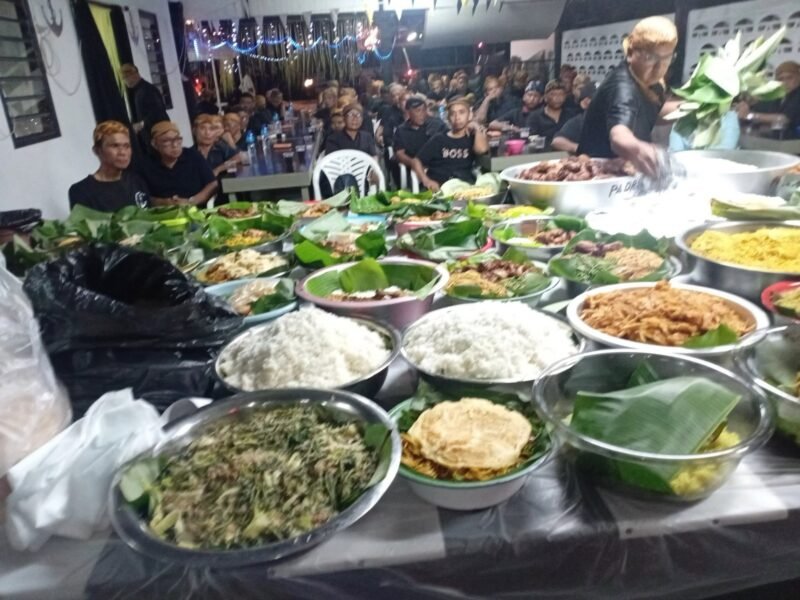
At the Javanist organization Pernatan Sedjatie Adat Djowo Suriname, which honors the original Javanist religion and traditions, a Slametan was held on Wednesday evening, prior to the Sidjie Suroh. held for the members. The meeting took place in the Kenduren (meeting hall) and concluded with a communal, blessed meal: the traditional Berkat.
According to ancient custom, the Berkat is served in artfully folded leaves of the Warimbo plant, a plant found in both Indonesia and Suriname. The men walk past with containers filled with rice, noodles and other traditional dishes and scoop a portion of each dish into the artfully folded leaves. In addition, the meal usually contains sweets, a piece of boiled banana and some small bacon.
After the prayer service and the communal meal, those present continued to chat for quite some time, enjoying the Berkat in a relaxed atmosphere and strengthening the interconnectedness within the community. State Counselor Paul Somohardjo and Indonesian Embassy in Suriname Agus Priono were also present during this service.
According to Priono and Ibu Annisa, many activities are held in Java, the Sidjie Suroh, ranging from lavish parades, meals for the underprivileged and extensive Slametan. The ambassador is very happy to see that religious and traditional expressions are still preserved in Suriname.
Javanism has been legally recognized as a religious belief in Suriname since 1997. According to the criteria used in both Indonesia and Suriname, Javanists are considered those who profess and practice the religious principles of Javanese doctrine, also called Kedjawen or Javanism. This includes observance and respect of traditional customs and ceremonies, such as the Slametan, Bersi Deso, Sasi Suroh, the commemoration and veneration of deceased relatives and ancestors, the Weton Djowo, the Adatrecht, Gotong Royong, Sambatan, the Surinamese-Javanese medicinal heritage and the Primbon.
Based on the criteria applicable in Suriname and Indonesia, the number of followers of Javanism in Suriname is estimated at at least 30,000 people. This group includes not only Surinamese Javanese, but also Surinamese from other ethnic backgrounds who identify with the Javanese religion and traditions.