Naalakkersuisut is now rolling at long last a new chrome-plated and sensational plan out. Critics might say it’s old wine in new bottles.
Naalakkersuisut launches two new tenders for fishing quotas in West and East Greenland, primarily halibut and cod.
Naalakkersuisut is now rolling at long last a new chrome-plated and sensational plan out. Critics might say it’s old wine in new bottles.
Naalakkersuisut launches two new tenders for fishing quotas in West and East Greenland, primarily halibut and cod.
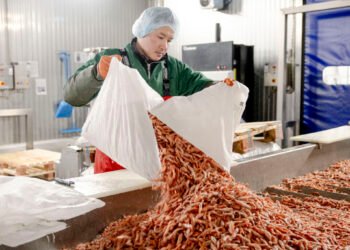
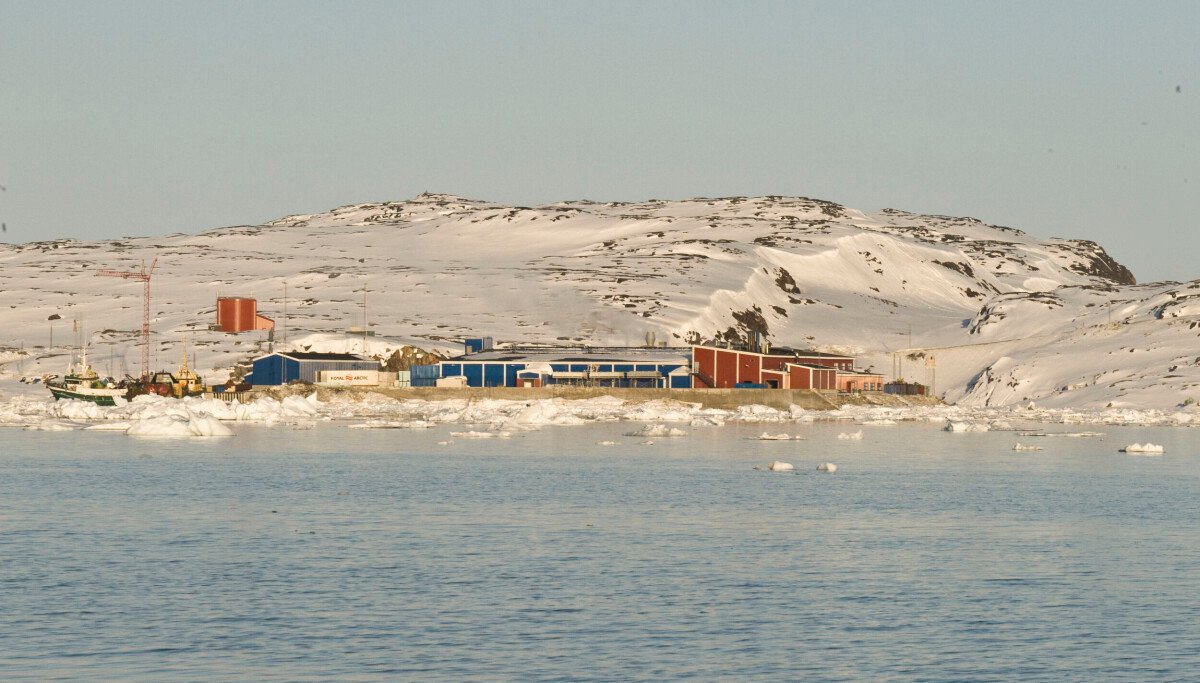
The new tender round is not least aimed at securing jobs in Aasiaat and thus maintaining production at Polar Raajat’s fish and shrimp factory in the city.
The new tenders come in the wake of the old tender from last year being canceled by Naalakkersuisut.
This appears from a press release from Naalakkersuisut.
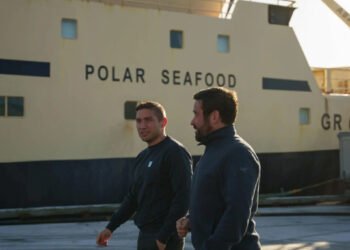
There has long been drama about the factory’s future. The factory, headed by Polar Seafood Greenland’s managing directors Bent Salling and Miki Brøns, announced earlier this year that it would be closed in the autumn due to a lack of supply of raw materials. Unless there is a political solution from Naalakkersuisut. And that will only come now.
The company Polar Raajat, which owns the factory, is owned by the Danish company Polar Seafood Denmark and the Greenlandic company Polar Seafood Greenland.
The factory is the city’s lifeblood and for many years has been Aasiaat’s largest workplace with well over 100 employees.
After previous intense discussions and negotiations between naalakkersuisoq for fishing and catching, the democrat Peter Borg, and Polar Seafood’s managers in the spring and early summer, on Thursday 26 June, Naalakkersuisut has at long last sent out two tenders for outside quotas in 2026 to a number of interested players in the fishery.
Will spread the ownership
Naalakkersuisut’s two new offers in West Greenland and East Greenland waters respectively have a total of just over 4,900 tonnes of halibut, 5,000 tonnes of cod and up to 200 tonnes of halibut.
The application deadline is set for 27 July.
– Naalakkersuisut’s background for reserving part of the halibut, halibut and cod quota for a tender is the desire to spread ownership to as many people as possible and to give access to new, preferably young, players in the sea-going fishery. In addition, to ensure employment in Aasiaat, via increased supply of raw materials. These wishes are reflected in the requirements and conditions for the tender and are in line with the intention of the Fisheries Act.
This is what Naalakkersuisut and the Department for Fisheries, Catching, Agriculture and Self-Sufficiency write to one of the fishing companies about the tender.
Set a number of requirements for bidding on the quotas
Among the requirements and conditions for actors to now bid for the quotas are:
-
It must be a company established at the time of application, which must be 100 percent Greenlandic-owned in accordance with the definition of Greenlandic ownership in section 9 Inatsisartutlov on fishing.
-
Emphasis will be placed on the number of owners, of which companies with the largest possible number of owners will be given priority.
-
The actor and the owners of the company must not already be involved in sea-going fishing. It must be a new actor who does not currently have quotas in sea-going fishing. However, a pension company may well be co-owners, even if it is also co-owner of other existing fishing companies. This is to ensure as wide a spread of ownership as possible.
-
The actors are welcome to be involved in the coastal fishing, including actors in the coastal fishing for shrimp until 2024.
-
Documentation for the financing of the company and vessel as well as the operation of the vessel for utilization of the quotas must be attached, including information about the vessel that is owned or planned to be purchased.
The requirements are also published on Naalakkersuisut’s website.
12 applied for the first tender
It is safe to say that part of Nalakkersuisut’s two offers of three large fishing quotas this year is old wine in new bottles.
Last year, 12 companies and fishermen applied for a tender of 4,600 tonnes of halibut, up to 2,000 tonnes of cod and up to 200 tonnes of halibut in West Greenland.
Among the applicants was the new company Avalleq, which is owned by former Siumut fisheries minister Karl-Kristian Kruse and SIK’s pension fund, SISA. SISA is also part owner of Polar Seafood Greenland.
Among other applicants were Siku Trawl, which is owned by KNI’s managing director, Jeppe Jensen, and three fishermen from Sisimiut, including Tsatso Efraimsen. Another applicant was the company Halibut Greenland.
According to Sermitsiaq’s information, most of the 12 applicants have had their applications rejected. According to Naalakkersuisut, all applicants have been informed that the first tender has been cancelled.
And Naalakkersuisut decided on Thursday 25 June to cancel the first tender.
Why was tender canceled by Naalakkersuisut?
To one of the applicants, whom Sermitsiaq has chosen to keep anonymous, Naalakkersuisut writes i.a. on the cancellation of the first tender at West Greenland:
1. Lack of dispersion of ownership.
The majority of applicants do not fulfill the purpose of the tender to ensure a wider spread of ownership. Most applicant companies have only a few owners, which would involve a transfer of values from society to a very small group of people. To ensure a real spread of ownership, Naalakkersuisut wants applicants with a larger number of owners.
2. Applications for the entire offered quota.
The applicants have applied for the entire quota offered, even though the tender suggested that quota could be awarded to two companies. This would also help to spread ownership in the ocean-going fishery.
3. Plans for the use of foreign capacity.
Most applicants planned to use foreign capacity until they could acquire their own vessel. However, it is economically and socially most appropriate to utilize the available fishing capacity in the existing Greenlandic fleet. Use of foreign capacity can also open up foreign influence, which goes against the principles of the Fisheries Act.
4. Desire to secure employment in Aasiaat.
Naalakkersuisut wants part of the quota to be targeted to secure jobs in Aasiaat. This requires a new tender with specific requirements.
5. Administrative law considerations
In order to ensure transparency, equal treatment and a solid decision-making basis, it is necessary to cancel the existing tender and carry out a new process with the new requirements and conditions.
The protests
Both local and national politicians have protested against the prospect of closing Polar Seafood’s factory in Aasiaat.
– If it closes, it will hit many companies in Aasiaat that service the factory, and the fishing vessels, hard. There is no doubt about that. Therefore, we hope the factory will not close, says Søren Hansen, chairman of Greenland’s Business, GE, in Region Disko to Sermitsiaq on 8 March this year.
He is the manager of the logistics and transport company Blue Water Greenland’s branch in Aasiaat.