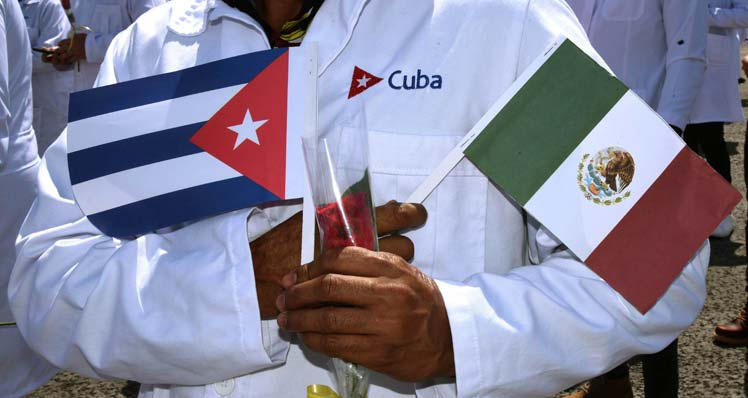
Madrid/The “reporting of forced labor practices” and the “application of visa restrictions” are some of the measures that, the United States presumes, have managed to successfully combat the “Cuban regime’s human trafficking scheme.” This is stated in the chapter dedicated to the Island of the report on human trafficking 2026, published this Thursday by the State Department.
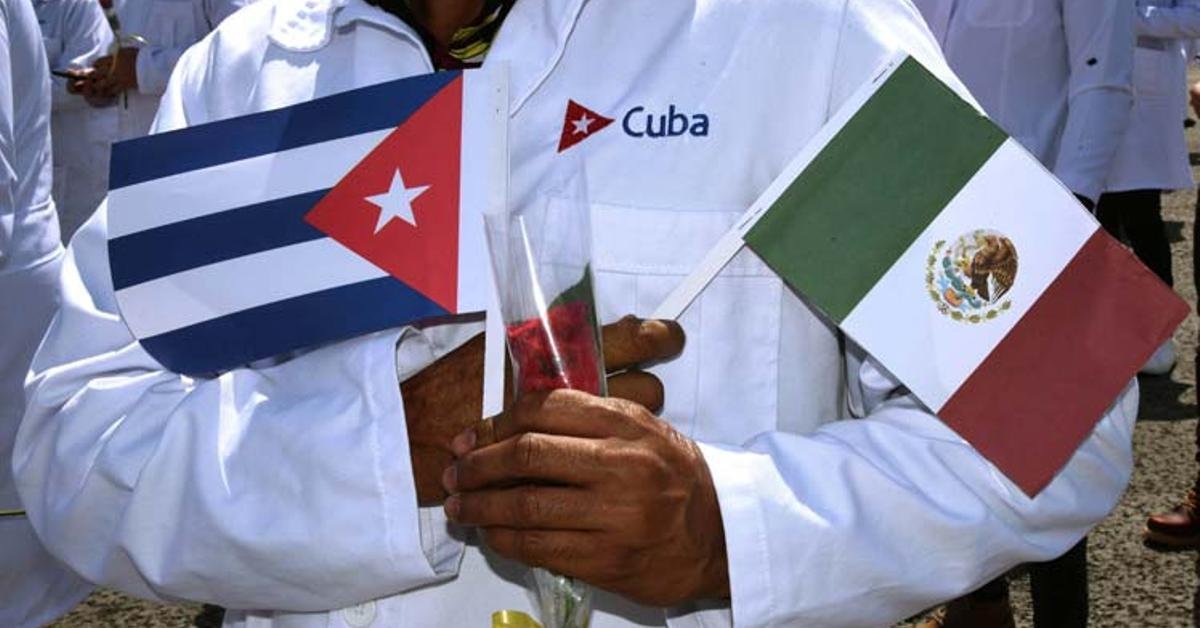
As established in the report, Cuba maintains a “government policy or pattern” of forced labor “in the regime’s labor export program, including its medical missionsHowever, he continues, “greater diplomatic activity” by the US Administration has “drastically” reduced the number of workers linked to the regime, from the 24,000 at the beginning of 2025 – when Donald Trump took office – to between 15,000 and 18,000 in 2026.
Likewise, the State Department indicates that although there are still workers in 53 countries this year, the number of nations receiving international missions has been reduced. The agency points out, without naming them, “four countries” that in 2025 “ended their bilateral agreements with the regime.”
To date, Honduras, Guatemala, Antigua and BarbudaDominica, Guyana and Saint Vincent and the Grenadines have broken their agreements with Havana, while others have preferred to reform them to hire specialists directly, as is the case of the Italian region of Calabria, Uruguay and, as was learned this Wednesday, Jamaica.
Some governments pay workers “a stipend or salary directly for their services,” but do not carry out “the necessary supervision.”
The report refers to this type of agreement, saying that although “some governments” pay workers “a stipend or salary directly for their services – maintaining some initial control over what they receive” – they do not, however, carry out “the necessary supervision to prevent the Cuban regime from coercing said workers to remit a considerable percentage of their income.”
The document is blunt: “Wage confiscation, a practice that appears to be almost universal, leaves workers with extremely low remuneration and dependent on the program, since they lack the resources to modify their situation. The most serious thing is that said confiscation gives the regime continuous coercive control over these workers.”
Health professionals, the report indicates, “represent 75% of the civilian workforce exported by Cuba,” which also sells the services of teachers, coaches and athletes, artists, engineers, forestry technicians, construction workers or sailors. Doctors are, the text recalls, “a vital source of income for the regime, generating billions of dollars in hard currency,” as the Government appropriates “between 50% and 95% of salaries” in exchange for “meager remuneration, lower than that received by other professionals who perform similar tasks.”
Likewise, the text denounces the string of vicissitudes to which specialists are subjected: passport control, curfews and surveillance, undermining the right to freedom of movement, and “laws and regulations that, if questioned or breached, entail arbitrary punishments, such as exile.” The report states that some “survivors” even reported that the regime forced them to engage in criminal activities, “forcing them to falsify medical records and invent procedures to justify the records they generated.”
The testimonies also spoke of “coercive and deceptive recruiting practices,” “intimidation,” “threats,” and “unsafe and precarious living and working conditions.”
Testimonies also spoke of “coercive and deceptive recruiting practices,” “intimidation,” “threats,” and “unsafe and precarious living and working conditions.”
Likewise, the report notes that the methods by which governments pay the regime “vary and are difficult to independently corroborate,” due to the regime’s “deliberate efforts to hide information.” The countries that pay directly to the Cuban State, they question, “tend to exercise minimal supervision over the conditions faced by workers, delegating said responsibilities to the regime itself.”
The entities used by the Government of the Island to manage contracts for doctors – the Cuban Medical Services Marketing Company, the Central Medical Cooperation Unit (UCCM) or the Ministry of Public Health itself – have been precisely included in the sanctions issued in recent months in the heat of Trump’s May 1 executive order.
But although it recognizes some progress in the prosecution of trafficking crimes that mainly affect minors, the State Department concludes that Cuban authorities have not adopted sufficient measures against forced labor. In particular, it points out that they have not investigated, prosecuted or convicted cases of forced labor or sexual exploitation of adults and that regime officials continue to participate in the management of labor export programs.
Among its main recommendations, Washington calls on Havana to end the threats and deceptive practices used to recruit workers destined for foreigners and to modify contracts signed with foreign governments to guarantee that Cubans receive treatment in accordance with international labor standards.
Finally, the United States maintains Cuba at “level 3” of its classification on human trafficking, the worst group, considering that the Cuban Government does not meet the minimum standards for the elimination of this crime and is not making significant efforts to achieve them.