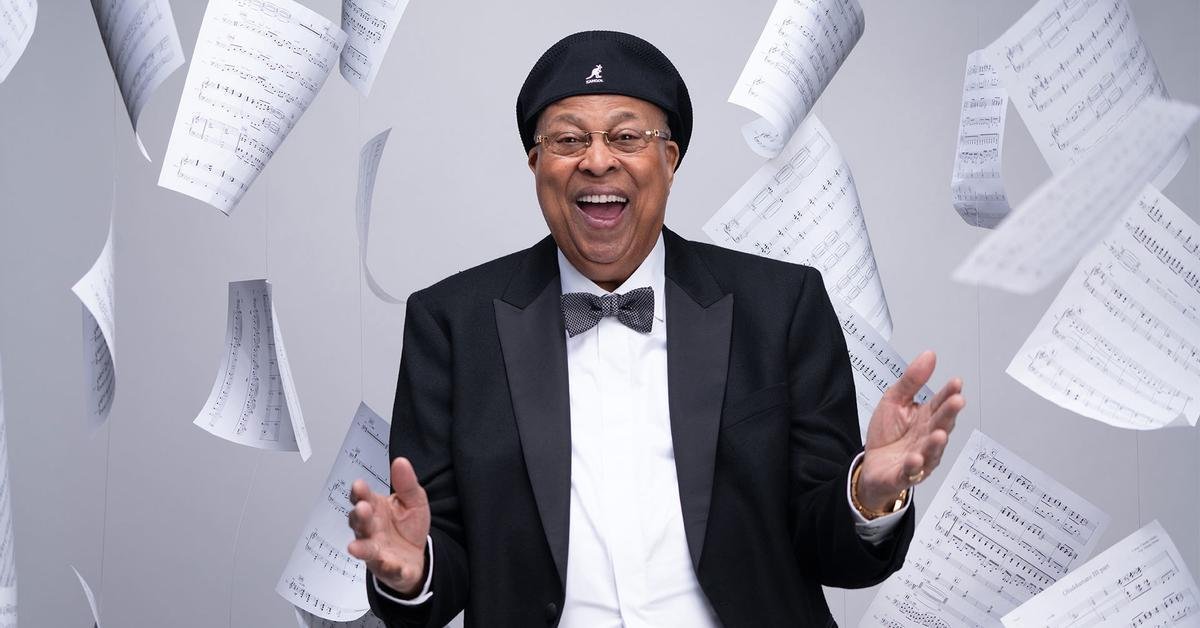
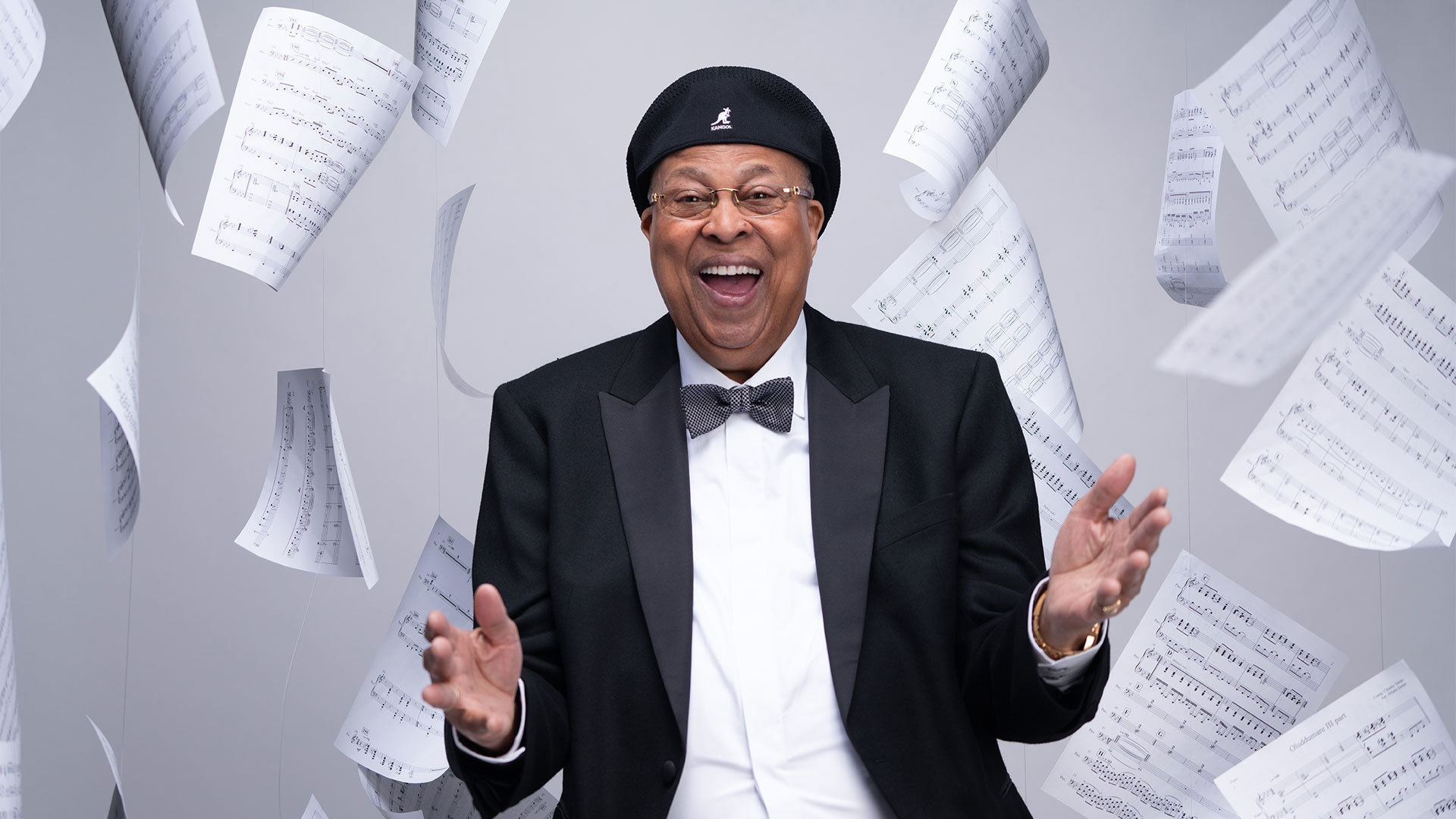
New York/The Cuban pianist Chucho Valdés reaches the age of 85 “very motivated” and with the same musical curiosity that led him to combine jazz with Afro-Cuban roots, before celebrating the anniversary with two concerts in New York, his “second musical home,” and which he conceives as “a recounting of what he has experienced,” he says in a telephone interview with EFE.
Valdés, who had his birthday on October 9, will celebrate the anniversary this Friday and Saturday at the Rose Theater at Lincoln Center, in a city to which he has been linked since his group Irakere debuted at Carnegie Hall in 1978.
He will be accompanied, among others, by saxophonist Joe Lovano to cover seven decades of his career: “My fundamental idea is to play the songs that I started with when I was 15,” explains Valdés, who today lives between Malaga and Miami.
He says he is “excited to share the stage with musicians I have learned from throughout my life,” such as Terence Blanchard, whom he considers “a musical prodigy,” and who is the author of soundtracks for Spike Lee films and opera. Fire Shut Up in My Bonesthe first by a black composer performed at the prestigious Metropolitan Opera in the Big Apple.
“He told me: Chucho, that’s great, but it’s important that you look for yourself in what you’re doing, in what you’re developing. Look for Chucho.”
Valdés, son of the legendary Bebo Valdés (1918-2013), assures that his career is and will continue to be “closely linked” to Irakere, the group he founded in 1973 and that revolutionized Cuban music by fusing jazz, classical music and Afro-Cuban traditions.
“Then I wasn’t aware that I was leading a musical revolution. I swear I wasn’t. No, nothing like that,” says the musician. “Since I was a student, I had many ideas in my head, but they were only dreams. Of course, I said to myself: What if these things are combined with these others?”, he comments.
And his father, Bebo, whom he considers his “first teacher,” was decisive on that path. When he was young he wanted to play like him and learned all his solos from records, but his father advised him to find his own voice. “He told me: Chucho, that’s great, but it’s important that you look for yourself in what you’re doing, in what you’re developing. Look for Chucho,” he remembers.
Thus began a musical process that took shape in the sixties with Mambo influencedone of his most emblematic pieces, in which he fused jazz with Afro-Cuban rhythms and anticipated the language he later developed with Irakere.
To that search he added the rhythms, songs and elements of the Yoruba religion and Santeria that he met in his neighborhood with Black masswhere he brought percussion and ritual sounds to the complex terrain of jazz. “That’s where I found Chucho without separating from Bebo,” he summarizes.
“Debuting at Carnegie Hall was one of the most beautiful things that has happened to me in my life”
His “special relationship” with New York also marks this anniversary: Valdés remembers his first visit, in 1978, when Irakere performed at Carnegie Hall after arousing the interest of producer Bruce Lundvall, then president of the CBS network, who knew the group through references from trumpeter Dizzy Gillespie.
“Debuting at Carnegie Hall was one of the most beautiful things that has happened to me in my life,” he recalls, since “it was a milestone for the Cuban band and opened a relationship with the American public” that he has tried to keep alive for decades.
Among his favorite places is the Village Vanguard, the historic jazz club in New York’s Greenwich Village, which opened its doors in 1935.
“It practically became Chucho Square,” he says about the legendary venue, where he recorded live for the first time in 1999 and where he found “a space to develop myself in front of smaller groups.”
“We recorded it in a single take, I got carried away by the music. I sat down at the piano to play and play and play. There were no cuts, there was no editing, there was nothing”
At 85 years old, the pianist, winner of seven Grammys, five Latin Grammys and an honorary Grammy for his entire career, says he wants to “continue evolving” and has just published Uncuta solo piano album that he considers “very fresh and a little daring.”
“We recorded it in a single take, I got carried away by the music. I sat down at the piano to play and play and play. There were no cuts, there was no editing, there was nothing,” he says.
Regarding current Cuban jazz, Valdés highlights David Virelles, Gonzalo Rubalcaba, Omar Sosa and “a younger generation with its own language that has also made its own path but always starting from the roots.”
According to him, his legacy lies not only in having expanded the boundaries of Afro-Cuban jazz, but in “demonstrating that the tradition remains alive,” something that happens “when each generation finds a way to make it their own.”