The regime of Daniel Ortega and Rosario Murillo continues to embrace Russian promises. This time, the bet focuses on promising a vaccine against “dengue fever” that would have been developed at the request of the dictator, a promise that is not new and that dates back more than a decade.
Veronika Skvortsova, director of the Federal Medical-Biological Agency (FMBA), assured that Russian scientists have developed a vaccine against dengue. According to information released by the Russian Embassy in Nicaragua, the drug arises in response to a request from Ortega, within the framework of bilateral cooperation with Moscow.
The Russian diplomatic delegation describes it as a “modern recombinant vaccine against dengue” and presents it as an example of technological cooperation between both countries.
This “dengue vaccine” – they added – is a “clear example of how Russia helps friendly countries in the fight against dangerous infections and develops cutting-edge medical technologies.”
Beyond the announcement, however, no technical data, studies or results have been released to support its effectiveness or safety. There is also no known commercial name or details about its coverage against the different serotypes of the virus, but Skvortsova pointed out that “the vaccine is now ready and clinical trials will begin shortly.”
How is a vaccine tested?
Clinical trials, according to the Pan American Health Organization (PAHO), consist of applying treatments or vaccines under controlled conditions to “evaluate the effects on health outcomes.”
Before any vaccine is used—according to PAHO—manufacturers must comply with a rigorous process, passing clinical trials with people to reach the “preliminary authorization” phase. They then go through regulatory evaluations that determine whether they meet “quality, safety and efficacy criteria.”
Once authorized, they can be subjected to international prequalification processes, a key step for their eventual use in public health programs.
A trailing promise
Having a dengue vaccine in Nicaragua is not a new idea, and it did not begin with cooperation with Russia. In August 2013, the then PAHO representative in the country, Socorro Gross, noted that Nicaragua was among the possible countries where a vaccine would be introduced once it was available.
That year, an inoculant was expected to hit the market in both the United States and Brazil and it was projected that it could arrive between 2015 and 2017. However, that expectation did not materialize.
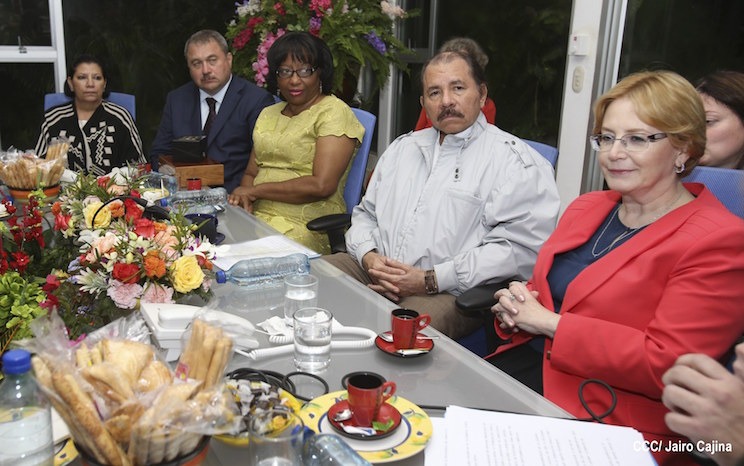
In October 2016, Skvortsova—then Russian Health Minister—visited Nicaragua to participate in the inauguration of the Mechnikov Latin American Institute of Biotechnology plant, located in Managua, and met with Ortega.
Russia for the first time raised the possibility of developing a dengue vaccine within the framework of bilateral cooperation.
“At that meeting, new work plans were agreed upon, expansion of work plans, and the production of vaccines against dengue. Special research is going to be done so that a vaccine against dengue can be produced here“Murillo reported after the meeting.
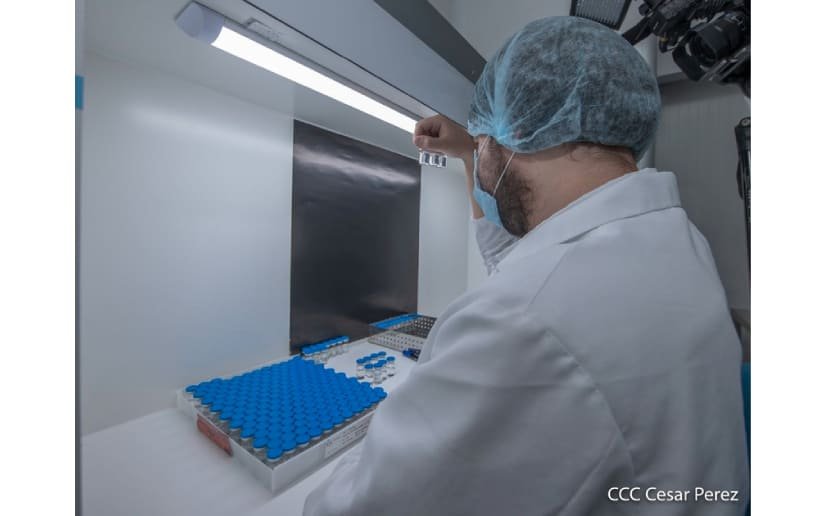
In 2023, the Russian promise of a dengue vaccine came to light again. Skvortsova assured that scientists from the Russian-Nicaraguan joint venture Mechnikov Laboratory had already prepared the inoculant, supposedly at Ortega’s initiative.
According to him, the development would enter the clinical trial phase “in the near future,” which implies that the product already existed at least at an experimental level.
Regime has made international propaganda
Martha Reyes, who served as Minister of Health in Nicaragua until October 2024, addressed the issue in June 2023 in an interview with the Russian network RT, where she described the joint work as an “achievement” and presented it as a “technological advance.”
Reyes did not offer details about the time frame in which the vaccine could be ready, nor if it would be applicable to protect against the four types of dengue. “Studies must be done to verify the immunity response of people,” he said while highlighting the importance of developing studies at the local level.
On April 18, 2026, the Russian official returned to the issue and the official media presented it as a project promoted by the Russian president, Vladimir Putin, and Ortega, highlighting that Nicaragua would have a “leading role.”
To date, neither the Pan American Health Organization (PAHO) nor the World Health Organization (WHO) have issued public statements on this vaccine.
Nor did they do so in 2016, when the then director of the PAHO, Carissa F. Etienne (1952–2023), participated in the inauguration of the Mechnikov laboratory, despite the fact that the executive director of the Nicaraguan Social Security Institute, Roberto López, and Ortega himself referred to a new stage of production of dengue vaccines in the laboratory, which since its inauguration was offered as a center for the production and distribution of medicine.
Nicaragua boasts, but it only packs and packs
There are several antecedents to Russian promises. In November 2025, the Ministry of Health (Minsa) announced that the plant was producing the Russian inoculant Convacell —which had been announced in 2022—, but the reality is that the laboratory only does the “filling, packaging and packaging.”
“I am not aware of any test that has been carried out, nor any evaluation, for a vaccine production certification,” he told then. CONFIDENTIAL an anonymous Public Health doctor.
A month earlier, in October 2025, the regime made the decision to involve Nicaraguans in clinical trials of the Russian cancer vaccine EnteroMix. And in 2022, the regime reported on a batch of monkeypox vaccines donated by Russia, but they did not specify what type of vaccine it was, nor how many doses arrived. In both cases, no further information was known.
Almost 17 cases per day of dengue in Nicaragua
Dengue, according to PAHO, is a disease that affects people of all ages, with symptoms that vary from a mild fever to situations that can be severe.
According to data from the Ministry of Health (Minsa), analyzed by CONFIDENTIAL, A total of 1,828 people were diagnosed with dengue until epidemiological week number 16, which covers until April 18, 2026. In this period, the Minsa reported an average of almost 17 daily cases of dengue.
The largest number of cases was recorded in the third epidemiological week, when 175 diagnoses were reported. From that point on, the curve shows a general downward trend, although with variations that show that the virus continues to circulate.
Although the Minsa develops a strategy to combat dengue, it does not include a vaccine against this disease in its national immunization campaigns; Actions focus on prevention, mosquito control and case management.