The visual health of Moroccans today faces numerous challenges which, according to private ophthalmologists, risk affecting the quality of care and patients’ access to safe and innovative treatments. Gathered last Thursday at a press briefing around a series of demands deemed priorities, the National Union of Liberal Ophthalmologists of Morocco (SNOLM) calls for a mobilization of public authorities and players in the sector to initiate reforms that it considers to have become essential.
The Union recalls that these recommendations are the result of a broad consultation carried out during the “SNOLM Day”, organized on February 28 in Bouznika. This meeting brought together ophthalmologists, experts, learned societies and institutional representatives around a national memorandum devoted to the sector’s priorities.
Cataract: practices that worry the profession
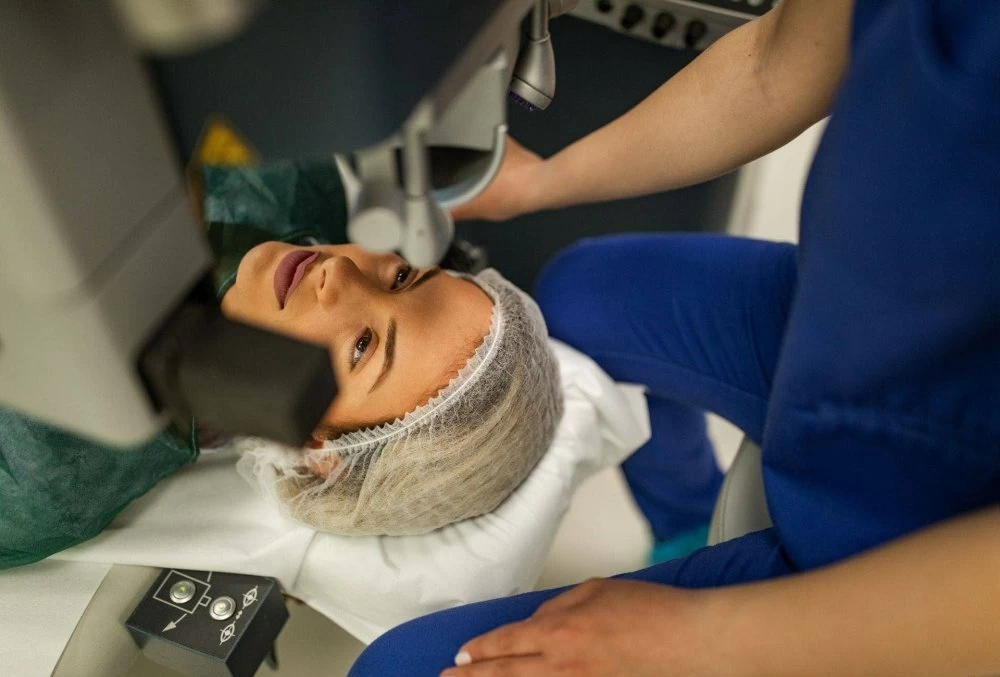
Among the major concerns raised by SNOLM are certain cataract surgery campaigns carried out, according to it, outside of optimal safety conditions. The Union believes that these interventions can expose patients to infectious risks and sometimes irreversible postoperative complications.
For professionals, these practices also contribute to trivializing a complex surgical procedure while creating competition deemed unfair with respect to structures respecting current medical standards.
Corneal transplantation, a national challenge
Another area of concern: access to corneal transplantation. The SNOLM recalls that national needs are estimated between 6,000 and 8,000 transplants per year, while only 500 to 600 interventions are currently carried out.
“The current situation of corneal transplantation in Morocco constitutes a national emergency,” affirms the union, which points to a strong dependence on the importation of grafts as well as a concentration of this activity in a limited number of structures.
To remedy this situation, SNOLM is calling for the opening of imports to qualified structures, the creation of national eye banks and the development of ocular tissue donation.
Facilitate access to retinal treatments
The Union is also requesting exceptional authorization for an anti-vascular endothelial growth factor (VEGF) drug widely used internationally, the cost of which is significantly lower than that of currently authorized products. According to him, this measure would improve access to treatment for a large number of patients suffering from retinal diseases.
In terms of prevention, the SNOLM calls for making an ophthalmological examination compulsory before entering primary school in order to early detect visual disorders likely to impact the child’s learning and development.
Pricing considered outdated
The revision of the National Reference Tariff (TNR) is also among the main demands of the Union. He emphasizes that this pricing has not been updated for more than twenty years despite the evolution of medical technologies and the continued increase in the operating costs of practices and clinics.
According to SNOLM, this situation weakens the economic balance of medical structures and risks, in the long term, affecting the quality of services offered to patients.
Medical advertising and media access
The Union is also concerned about certain practices considered to be disguised medical advertising. He believes that certain actors benefit from privileged visibility in the audiovisual media and on social networks, to the detriment of the principle of equality between professionals.
The SNOLM therefore calls for stricter supervision of promotional content linked to health and a uniform application of ethical rules.
Through this appeal, the Union reaffirms its desire to defend “a modern, ethical and secure Moroccan ophthalmology” and recalls that “the quality of care is not negotiable”.
For SNOLM, patient protection, equitable access to care and maintaining a high level of medical standards must remain at the heart of future reforms. The Union thus calls for the opening of a dialogue with the health authorities and all the stakeholders concerned in order to build “quality medicine, equitable and worthy of the ambitions of the Morocco of tomorrow”.