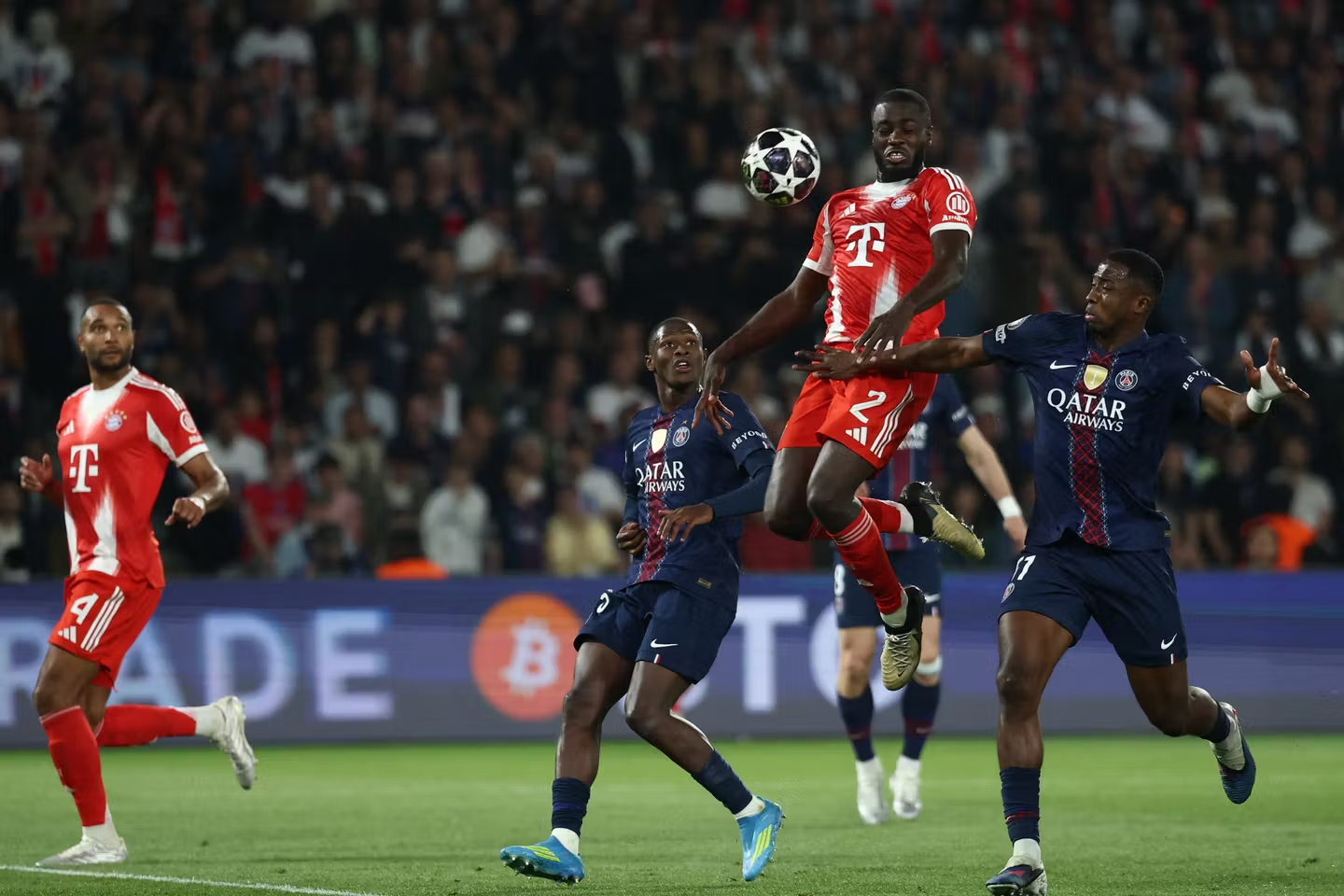
“The greatest match in Champions League history?” “A new turning point in the history of the game?” Even though it phrased its headlines as questions, the sports daily L’Equipe did not hold back its enthusiasm on Wednesday, April 29, the day after a breathtaking PSG-Bayern (5-4) in the first-leg semifinal of Europe’s most prestigious club competition. Refuting any claim of excessive French bias, the international press also raved, speaking of “football of the demigods,” a “masterpiece” and the “game of the century.”
With its flurry of goals (nine in total), exceptional moments and countless twists, the match deserved every superlative. Yet, this instant canonization raises questions about what makes a football match “legendary,” and how we gauge its chances of going down in history.
The first paradox is that this consecration is bestowed on a first leg, before its true sporting significance is revealed in the return leg on Wednesday at Munich’s Allianz Arena. Most of the European matches that have become legendary are those that produced a decisive outcome – qualification or final victory – ideally against all odds. The “Miracle of Istanbul,” which crowned Liverpool in 2005, is one such example. On the French side in the 1990s: Marseille-AC Milan 1991, PSG-Real Madrid 1993, Bordeaux-AC Milan 1996.
Don’t overuse the term ‘feat’
The ultimate significance of a victory only becomes clear when the winner’s journey ends. The famous and unimaginable “remontada” by Barcelona against PSG in 2017, for example, has lingered more in the history of the vanquished than the victors, who were eliminated in the following round.
Few commentators recalled last season’s epic two-legged battle between Barcelona and Inter Milan (4-3, then 3-3), at the same stage of the competition. Perhaps that is because its impact was diminished by the Italians’ collapse in the final against PSG (0-5). Yet other semifinals seem to have been forgotten, such as the Manchester City-Real Madrid clashes in 2022 (4-3, then 1-3) or Liverpool-AS Roma in 2018 (5-2, then 2-4).
You have 54.64% of this article left to read. The rest is for subscribers only.