
SPRING COLLECTION IN INATSISARTUT 2026
All parties in Inatsisartut agree that democracy can be strengthened if citizens are given the opportunity to have issues dealt with in Inatsisartut via digital signature collections. Siumut emphasizes, however, that the scheme should be introduced with care.
The possibility that citizens can submit proposals directly to Inatsisartut, if they collect the required number of signatures within a set period, have moved one step closer to broad support in Inatsisartut.
The possibility was discussed in Inatsisartut on Thursday, June 11, on the basis of a motion for resolution by Pipaluk Lynge (IA), who wants to order Naalakkersuisut to establish such an arrangement.
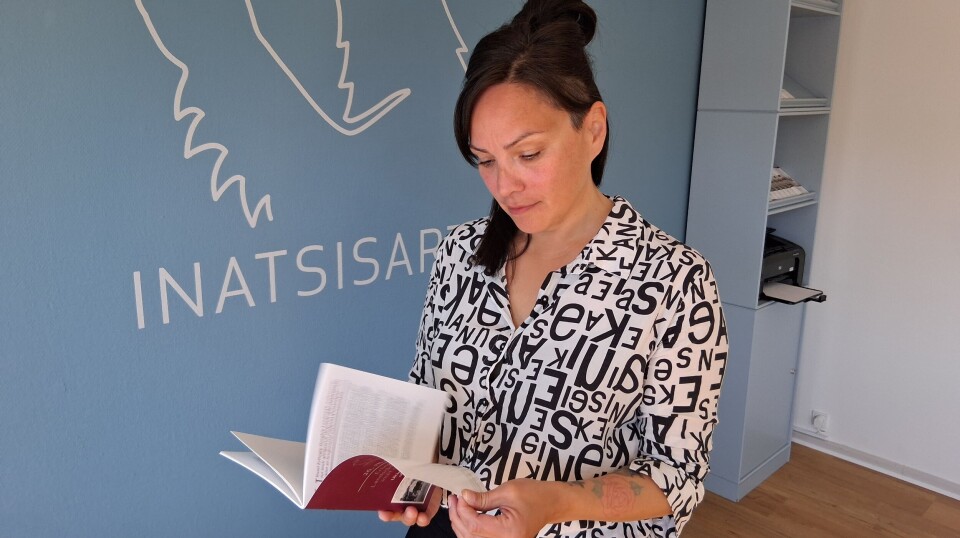
The parties in Inatsisartut agree that the scheme can help strengthen democracy. However, Siumut emphasizes that caution is needed.
– Giving citizens the opportunity to make proposals can be perceived as populism. At the same time, there is a risk that associations and individuals will actively use the scheme to promote their own interests, says Erik Jensen (S).
Siumut: It requires consideration
Siumut believes that it requires consideration if associations and individuals are to have the opportunity to make proposals based on their own interests.
– It is also important to avoid that in this way the responsibilities of the elected representatives are avoided, or that the political discussions move outside the established framework and powers, says Erik Jensen.
The party also emphasizes that it is important to ensure a balance between settlements and smaller cities on the one hand and larger cities on the other.
It is already possible to collect signatures
At the same time, Siumut questions how big the difference really is between the proposed system and the options that already exist for collecting signatures.
In this connection, Erik Jensen pointed out that a majority in Inatsisartut still has not made a final decision in the case of the time zone.
As an example, he mentioned that citizens have collected more than 3,000 signatures to have the current time zone changed, and that the issue must therefore be dealt with again in Inatsisartut.
– But the case has once again been postponed. If there are also proposals for restrictions on catching, will Inatsisartut listen to them? That is the big question, says Erik Jensen.
Forwarded to committee
The proposal from Pipaluk Lynge was supported by all parties in Inatsisartut and forwarded to Inatsisartut’s Law Committee, where it must now be considered before it later comes to second reading.
Among other things, the committee must discuss how the scheme should be concretely designed, what considerations should be taken and how the process should be organized before the proposal returns to Inatsisartut for second reading.